Every year, around the world, seasonal changes transform entire landscapes and draw in millions of creatures as these great events unfold. This fantastic series combines the epic scale of Planet Earth and the intimate, emotional stories of charismatic animals as they struggle to survive. Using state of the art technology, these programmes capture the Earth's most dramatic and epic wildlife spectacles and the intimate stories of the animals caught up in them. The Great Melt: The summer melt of Arctic ice, opening up nearly three million square miles of ocean and land, provides opportunities for millions of animals, including beluga whales, families of Arctic foxes, vast colonies of seabirds, and the fabled Arctic unicorn, the narwhal. For polar bears, however, it is the toughest time of year. Why? How will they survive? A mother polar bear and her cub make their first journey together onto the sea ice. They are looking for ringed seals, their favourite prey. It is a serious business but the cub just wants to play. The melting ice makes it harder for them to hunt and threatens their survival. In a unique aerial sequence, the migration of narwhal with their distinctive unicorn-like tusks is filmed for the first time. The whales' journey is risky as they travel along giant cracks in the ice. If the ice were to close above them, they would drown. Hundreds of beluga whales gather in the river shallows. They rub themselves on smooth pebbles in one of the most bizarre summer spectacles. Guillemot chicks take their first flights from precipitous sea cliff nests to the sea 300 metres below. They attempt to glide to safety but many miss their target. Their loss is a bonus for the hungry Arctic fox family waiting below. As the melt comes to an end the bears gather, waiting for the sea to freeze again. Two 400kg males square up to each other to spar.
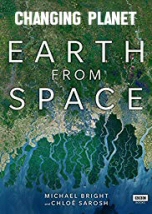
At a time when the Earth’s surface is changing faster than ever in human history, watch cities grow, forest disappear and glaciers melt. In the ever-growing grey of cities one man is feeding thousands of parakeets; in Sumatra a female orang-utan and her daughter face life in a forest under threat; while in Tanzania local people use satellites to replant a forest, securing the future for a family of chimpanzees. This is our home as we’ve never seen it before.
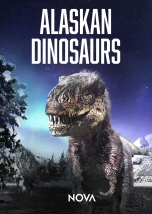
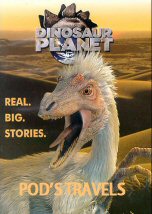
SETTING: 70 million years ago in Europe, near present-day Romania. Pod, a male pyroraptor, is alone in the world after his sisters die in a tidal wave that sweeps him out to sea. After landing on an island populated with dwarf-sized dinosaurs, Pod discovers that he's become the apex predator. But, Pod learns it's lonely at the top.
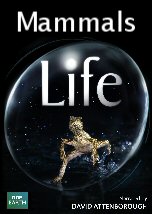
The third episode is devoted to the ways in which plants reproduce. Pollen and a stigma are the two components needed for fertilisation. Most plants carry both these within their flowers and rely on animals to transport the pollen from one to the stigma of another. To do this, they attract their couriers with colour, scent and nectar. It isn't just birds that help pollination: some mammals and reptiles also do so. However, it is mostly insects that are recruited to carry out the task. To ensure that pollen is not wasted by being delivered to the wrong flower, some species of plant have developed exclusive relationships with their visitors, and the gentian and its attendant carpenter bees is one example. Since pollen can be expensive to produce in terms of calories, some plants, such as orchids, ration it by means of pollinia and a strategically placed landing platform. Other orchids offer no reward for pollination, but instead mislead their guests by mimicking their markings and aroma, thus enticing males to 'mate' with them (Pseudocopulation). The most extreme fertilisation method is one of imprisonment, and one plant that uses it is the dead horse arum. It is often found near gull colonies, and mimics the appearance and smell of rotting flesh. Blow-flies are attracted to it, and are forced to stay the night before being allowed to depart in the morning, laden with pollen. Finally, Attenborough introduces the world's largest inflorescence: that of the titan arum.
Mammals dominate the planet. They do it through having warm blood and by the care they lavish on their young. Weeks of filming in the bitter Antarctic winter reveal how a mother Weddell seal wears her teeth down keeping open a hole in the ice so she can catch fish for her pup.
A powered hot air balloon produces stunning images of millions of migrating bats as they converge on fruiting trees in Zambia, and slow-motion cameras reveal how a mother rufous sengi exhausts a chasing lizard. A gyroscopically stabilised camera moves alongside migrating caribou, and a diving team swim among the planet's biggest fight as male humpback whales battle for a female.
Fish dominate the planet's waters through their astonishing variety of shape and behaviour. The beautiful weedy sea dragon looks like a creature from a fairytale, and the male protects their eggs by carrying them on his tail for months. The sarcastic fringehead, meanwhile, appears to turn its head inside out when it fights. Slow-motion cameras show the flying fish gliding through the air like a flock of birds and capture the world's fastest swimmer, the sailfish, plucking sardines from a shoal at 70 mph. And the tiny Hawaiian goby undertakes one of nature's most daunting journeys, climbing a massive waterfall to find safe pools for breeding.












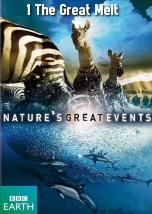





The Great Melt: The summer melt of Arctic ice, opening up nearly three million square miles of ocean and land, provides opportunities for millions of animals, including beluga whales, families of Arctic foxes, vast colonies of seabirds, and the fabled Arctic unicorn, the narwhal. For polar bears, however, it is the toughest time of year. Why? How will they survive? A mother polar bear and her cub make their first journey together onto the sea ice. They are looking for ringed seals, their favourite prey. It is a serious business but the cub just wants to play. The melting ice makes it harder for them to hunt and threatens their survival. In a unique aerial sequence, the migration of narwhal with their distinctive unicorn-like tusks is filmed for the first time. The whales' journey is risky as they travel along giant cracks in the ice. If the ice were to close above them, they would drown. Hundreds of beluga whales gather in the river shallows. They rub themselves on smooth pebbles in one of the most bizarre summer spectacles. Guillemot chicks take their first flights from precipitous sea cliff nests to the sea 300 metres below. They attempt to glide to safety but many miss their target. Their loss is a bonus for the hungry Arctic fox family waiting below. As the melt comes to an end the bears gather, waiting for the sea to freeze again. Two 400kg males square up to each other to spar.