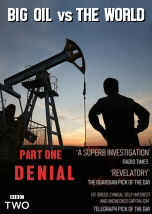
Even as the science grew more certain, the oil industry continued to block action to tackle climate change in the new millennium. In a revelatory interview, Christine Todd Whitman, George W. Bush's former environment chief, tells the story of how the industry successfully lobbied President Bush to reverse course on his campaign promise to regulate carbon emissions. Tensions grew between two of the world's biggest oil companies, ExxonMobil and BP, after the latter publicly called for action to tackle climate change. The election of Barack Obama provided hope for supporters of climate action, but the billionaire Koch brothers made an effort to block the new president's attempts to pass climate change legislation, and climate denialism became the mainstream position of the Republican Party. A lawyer who worked for Koch brothers through this period speaks on camera for the first time.
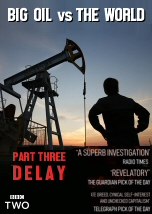
The last chapter explains how the 2010s became another lost decade in the fight against climate change – as the move to natural gas delayed a transition to more renewable sources of energy. Engineer Tony Ingraffea, in the 1980s, helped develop a new technique for extracting gas and oil from shale rock, which ultimately became known as 'Fracking'. It was to unleash vast new reserves of fossil fuels and was promoted as a cleaner energy source. But Ingraffea explains how he later came to regret his work when he realized that gas could be even worse for climate change than coal and oil. Dar-Lon Chang, a former ExxonMobil engineer, speaks for the first time on camera alleging that as the company increased its natural gas operations, it was not sufficiently monitoring methane leaks that were contributing to climate change. Now, after a year of unprecedented wildfires, drought and other climate-related disasters, multiple lawsuits are being brought in US courts in efforts to hold Big Oil legally accountable for the climate crisis.
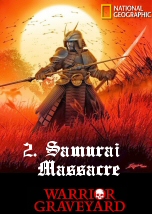
The unearthing of a gruesome grave filled with thousands of skeletons at the beach of Kamakura in Japan could be about to unlock the true extent of the merciless violence and mystery surrounding the true origins of one of the most feared and revered warriors of all time: the Samurai. In the Middle Ages, Kamakura was the capital of Japan. The 'Shogun', a kind of aristocratic military dictator, ruled here. This shogunate ended in 1333 with the Battle of Kamakura. A drastic event in Japanese history, because this resulted in not only political, but also social, philosophical and technical innovations. The remains of the samurai warriors who fell near Kamakura now provide scientists with detailed insights into the time of the Kamakura shogunate and the bloody conflict between the shogun and the emperor. The chilling burial ground dates back to 1333. Kamakura was one of the most heavily fortified regions of Japan. When the Emperor became angered by the growing powers of the ruling Hojo family, he sought to retake control of the region, setting the stage for a war that would change the shape of the nation. Among over 4000 sets of remains, six have a unique story to tell: the husband and wife involved in a sword fight to the death; the warrior monk; a peasant boy soldier; and members of the ruling Hojo family, captured and decapitated, with their heads displayed as trophies of victory. These remains reveal the secrets of the Samurai, their ferocious fighting skills and their merciless killing techniques.
Jeremy's restaurant opens in a matter of days, but it's all on the QT. Jeremy does not want the council to find out until just before it opens. Which is why Jeremy and Kaleb are laying pipes for water and electrics across a field in the dead of night. Pepper the heifer is still very much alive and is enjoying the company of Break Heart Maestro a lot. Two days until Restaurant Opening Day, Jeremy informs the council and it's game on: Alan and his team of builders work at full throttle, Pip and her team of chefs do too, and the blend of excitement and panic is affecting everyone. The day itself arrives. Will the Diddly Squat Farm Restaurant sink or swim? Or will the council shut it down before the first steak hits the grill?
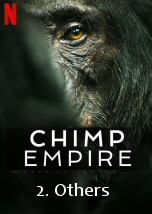
Dive into the heart of Uganda's Ngogo Forest, where a community of chimpanzees exhibits an intricate dance of politics, family ties, and territorial conflict. For a quarter-century, scientists and trackers have witnessed firsthand the chimps' evolving political dramas and familial bonds. Now, this series offers an unprecedented lens into this world, capturing the tribe's most defining moments: battles for dominance, growing offspring, budding romances, and the ever-shifting leadership. Join us for an intimate journey into the lives of the Ngogo chimps, where every day is a fight for survival and power. Don't miss this captivating look into the heart of the chimp empire. The first episode delves into the captivating world of chimpanzees, drawing parallels with human existence. As the narrative unfolds, viewers are taken on an enlightening journey into the lives of these primates, highlighting the profound similarities and unique stories they share with humans.
In the lush expanse of the Ngogo territory of Uganda, a chilling discovery sends ripples through the chimpanzee community: a chimp has been killed. As the investigation unfolds, it becomes clear that only one other group could be responsible for such a brazen act. As whispers of war grow louder, the Ngogo community braces itself for impending conflict. Will the Ngogo community overcome this threat? Or will the heart of their empire be torn apart? Find out in this gripping episode. 'Others' delves deep into the intricate social structures, alliances, and rivalries of our primate relatives, offering a gripping and emotional journey into the heart of the jungle. This is not just a tale of survival but a testament to the complexity of chimp society. Join us and witness the raw and untamed world of the chimp empire.












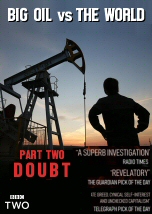









Tensions grew between two of the world's biggest oil companies, ExxonMobil and BP, after the latter publicly called for action to tackle climate change. The election of Barack Obama provided hope for supporters of climate action, but the billionaire Koch brothers made an effort to block the new president's attempts to pass climate change legislation, and climate denialism became the mainstream position of the Republican Party. A lawyer who worked for Koch brothers through this period speaks on camera for the first time.