








Last Watched

"Time"  Sort by

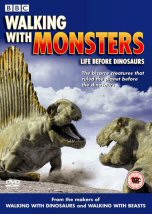
Walking with Monsters

   2005    Science
From the makers of Walking With Dinosaurs comes an epic and entertaining new exploration of early life on Earth, revealing that before the age dinosaurs, a succession of fantastical animals and plants ruled the planet. A time when a two-ton predatory fish came on land to hunt, when four-metre sea scorpions sliced sushi in the shallows and when just one species of lumbering reptile represented 80 per cent of all life. For the first time, this special two-hour presentation uncovers and recreates these creatures and the bizarre world they inhabited.

Pill Poppers

   2010    Medicine
Over a person's lifetime they are likely to be prescribed more than 14,000 pills. Antibiotics, cholesterol lowering tablets, anti-depressants, painkillers, even tablets to extend youth and improve performance in bed. These drugs perform minor miracles day after day, but how much is really known about them? Drug discovery often owes as much to serendipity as to science, and that means much is learnt about how medicines work, or even what they do, when they're taken. By investigating some of the most popular pills people pop, Horizon asks, how much can they be trusted to do what they are supposed to?

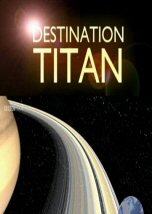
Destination Titan

   2011    Technology
It's a voyage of exploration like no other - to Titan, Saturn's largest moon and thought to resemble our own early Earth. For a small team of British scientists this would be the culmination of a lifetime's endeavour - the flight alone, some 2 billion miles, would take a full seven years. This is the story of the space probe they built, the sacrifices they made and their hopes for the landing. Would their ambitions survive the descent into the unknown on Titan's surface?

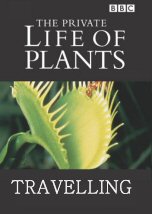
The Private Life of Plants: Travelling

   1994    Nature
Sir David Attenborough reveals plants as they have never been seen before - on the move and dangerously devious. About the major problems of life - growing, finding food, reproduction - and the varied ways plants have evolved to solve it. Filmed from the plant's point of view, using computer animations, fibre-optics and unique time-lapse photography. The first episode looks at how plants are able to move". The bramble is an aggressive example: it advances forcefully from side to side and, once settled on its course, there is little that can stand in its way. An altogether faster species is the birdcage plant, which inhabits Californian sand dunes. When its location becomes exposed, it shifts at great speed to another one with the assistance of wind — and it is this that allows many forms of vegetation to distribute their seeds. While not strictly a plant, the spores of fungi are also spread in a similar fashion. One of the most successful (and intricate) flowers to use the wind is the dandelion, whose seeds travel with the aid of 'parachutes'. They are needed to travel miles away from their parents, who are too densely packed to allow any new arrivals. Trees have the advantage of height to send their seeds further, and the cottonwood is shown as a specialist in this regard. The humidity of the tropical rainforest creates transportation problems, and the liana-species Alsomitra macrocarpa is one plant whose seeds are aerodynamic 'gliders'. Some, such as those of the sycamore, take the form of 'helicopters', while others, such as the squirting cucumber release their seeds by 'exploding'. Water is also a widely used method of propulsion. The tropical sea bean Entada gigas has one of the biggest fruits of all plants and is dispersed by water streams. However, most plants use living couriers, whether they be dogs, humans and other primates, ants or birds, etc., and to that end, they use colour and smell to signify when they are ripe for picking.
Series: The Private Life of Plants

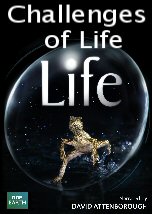
Life: Challenges of Life

   2009    Nature
Four years in the making, Life will set a new benchmark in family entertainment and natural history epics. Many animals and plants go to extremes to give themselves a chance. Aerial photography reveals how bottle-nosed dolphins trap fish in a ring of mud, and time-lapse cameras show how the Venus flytrap ensnares insect victims. The strawberry frog carries a tadpole high into a tree and drops it in a water-filled bromeliad. Fledgling chinstrap penguins undertake a heroic and tragic journey through the broken ice to get out to sea. Many can barely swim and the formidable leopard seal lies in wait
Series: Life

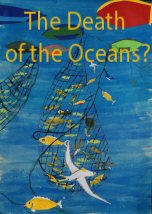
The Death of the Oceans

   2010    Nature
Sir David Attenborough reveals the findings of one of the most ambitious scientific studies of our time - an investigation into what is happening to our oceans. He looks at whether it is too late to save their remarkable biodiversity. Attenborough explores some of the ways in which we are affecting marine life - from over-fishing to the acidification of sea water. The film also uncovers the disturbing story of how shipping noise is deafening whales and dolphins, affecting their survival in the future.
The Crusades

The Crusades

2012  History
Clarkson Farm

Clarkson Farm

2021  Nature
The Last Narc

The Last Narc

2020  Culture
The Last Czars

The Last Czars

2019  History
Top Gear

Top Gear

2012  Technology
Walking with Dinosaurs

Walking with Dinosaurs

2025  Science
Fierce Queens

Fierce Queens

2020  Nature