






Last Watched

"CIA"  Sort by

The Genius of Charles Darwin: The Fifth Ape

   2008    Culture
Richard Dawkins deals with some of the philosophical and social ramifications of the theory of evolution. Dawkins starts out in Kenya, speaking with palaeontologist Richard Leakey. He then visits Christ is the Answer Ministries, Kenya's largest Pentecostal church, to interview Bishop Bonifes Adoyo. Adoyo has led the movement to press Kenya's national museum to sideline its collection of hominid bones pointing to man's evolution from ape to human.[5] The collection includes the Turkana Boy discovered by Kamoya Kimeu, a member of a team led by Richard Leakey in 1984. Dawkins discusses social darwinism and eugenics, explaining how these are not versions of natural selection, and that 'Darwin has been wrongly tainted'. He then meets with evolutionary psychologist Steven Pinker to discuss how morals can be compatible with natural selection. He goes on to explaining sexual selection, with peafowls as an example. To find out whether sexual selection plays a role for altruism and kindness among humans, he visits women who are looking for sperm donors, as well as a sperm bank manager. Dawkins also explains kin selection and selfish genes.
Footsteps in the Snow

   1993    History
This episode discusses the human exploration of Antarctica, in particular the mission led by Captain Robert Falcon Scott, whose team died on the way back from the South Pole. It shows the scientific work in the modern human bases in Antarctica, especially Mawson Base and its observation of Adelie Penguins (partially through tracking devices). The second half of the episode describes how the series was made. Most crucial was of course the camera work. To get access to the wildlife of the sea, for example, boats, divers, suspended capsules and remotely controlled cameras mounted on inflatables were used. Particularly dangerous to divers were Leopard Seals and other predators. The film concludes that although working in Antarctica is now much easier than during the early days of exploration, human footsteps on the continent are still exceedingly rare in part because of international treaties prohibiting industrial exploitation.
Series: Life in the Freezer

Is a Zombie Apocalypse Possible

   2014    Medicine
It is a nightmare that has stalked us for centuries: hordes of human beings transformed into mindless, cannibalistic monsters. Could this civilization-ending nightmare become reality? Scientists have discovered pathogens that turn insects into the walking dead. New strains of viruses are attacking humans every day. Mathematicians have calculated the likelihood of surviving a zombie virus outbreak: they’re not hopeful. Now neuroscientists are discovering how easy it is for us to lose conscious control of our bodies. Are we at risk of becoming puppets? If we were in the middle of a zombie apocalypse, would we even know it?
Series: Through the Wormhole Season 5

Will We Become God

   2014    Technology
Humanity’s potential seems limitless. But could we become as powerful as God? Scientific breakthroughs grant our species seemingly divine abilities. Biologists tinkering with DNA are figuring out ways to grow new life forms, while neuroscientists try to create artificial consciousness. Statisticians around the world are using big data to predict the future and computer scientists have discovered a "God algorithm" that could solve any global problem in an instant. But to truly become God, we not only have to be all knowing, but all being. Quantum physicists are figuring out how to teleport matter at the speed of light!
Series: Through the Wormhole Season 5

Red Army

   2015    Culture
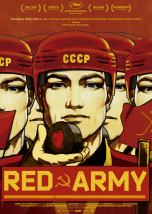
A feature documentary about the Soviet Union and the most successful dynasty in sports history: the Red Army hockey team. Told from the perspective of its captain Slava Fetisov, the story portrays his transformation from national hero to political enemy. From the USSR to Russia, the film examines how sport mirrors social and cultural movements and parallels the rise and fall of the Red Army team with the Soviet Union. RED ARMY is an inspiring story about the Cold War played out on the ice rink, and a man who stood up to a powerful system and paved the way for change for generations of Russians. From Oscar nominated and Emmy award-winning filmmaker Gabe Polsky.

Bitter Lake

   2015    Culture
And epic film by Adam Curtis that explains why the big stories that politicians tell us have become so simplified that we can’t really see the world any longer. The narrative goes all over the world, America, Britain, Russia and Saudi Arabia, but the country at the heart of it is Afghanistan. Because Afghanistan is the place that has confronted our politicians with the terrible truth, that they cannot understand what is going on any longer". The coumentary reveals the forces that over the past thirty years rose up and undermined the confidence of politics to understand the world. And it shows the strange, dark role that Saudi Arabia has played in this. But Bitter Lake is also experimental. Curtis has taken the unedited rushes of everything that the BBC has ever shot in Afghanistan - and used them in new and radical ways. He has tried to build a different and more emotional way of depicting what really happened in Afghanistan. A counterpoint to the thin, narrow and increasingly destructive stories told by those in power today.
Modern Masters

Modern Masters

2024  Art
The Future of Nature

The Future of Nature

2025  Nature
Ancient Greece

Ancient Greece

2013  History
Top Gear

Top Gear

2012  Technology