


Last Watched

"Earth"  Sort by

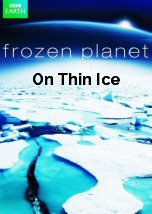
Frozen Planet: On Thin Ice

   2011    Science
Sir David Attenborough journeys to both Polar Regions to investigate what rising temperatures will mean for the people and wildlife that live there and for the rest of the planet. David starts out at the North Pole, standing on sea ice several metres thick, but which scientists predict could be Open Ocean within the next few decades. The Arctic has been warming at twice the global average, so David heads out with a Norwegian team to see what this means for polar bears. He comes face-to-face with a tranquilised female, and discovers that mothers and cubs are going hungry as the sea ice on which they hunt disappears. In Canada, Inuit hunters have seen with their own eyes what scientists have seen from space; the Arctic Ocean has lost 30% of its summer ice cover over the last 30 years. For some, the melting sea ice will allow access to trillions of dollars worth of oil, gas and minerals. For the rest of us, it means the planet will get warmer, as sea ice is important to reflect back the sun's energy. Next David travels to see what's happening to the ice on land: in Greenland, we follow intrepid ice scientists as they study giant waterfalls of meltwater, which are accelerating iceberg calving events, and ultimately leading to a rise in global sea level. Temperatures have also risen in the Antarctic - David returns to glaciers photographed by the Shackleton expedition and reveals a dramatic retreat over the past century. It's not just the ice that is changing - ice-loving adelie penguins are disappearing, and more temperate gentoo penguins are moving in. Finally, we see the first ever images of the largest recent natural event on our planet - the break up of the Wilkins Ice Shelf, an ice sheet the size of Jamaica, which shattered into hundreds of icebergs in 2009.
Series: Frozen Planet
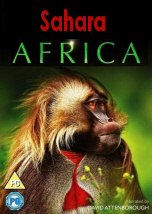
Sahara

   2012    Nature
Northern Africa is home to the greatest desert on Earth, the Sahara. On the fringes, huge zebras battle over dwindling resources and naked mole rats avoid the heat by living a bizarre underground existence. Within the desert, where the sand dunes 'sing', camels seek out water with the help of their herders and tiny swallows navigate across thousands of square miles to find a solitary oasis. This is a story of an apocalypse and how, when nature is overrun, some are forced to flee, some endure, but a few seize the opportunity to establish a new order.
Series: Africa with David Attenborough

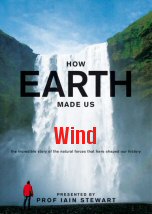
Wind

   2010    Science
Iain sets sail on one of the fastest racing boats ever built to explore the story of our turbulent relationship with the wind. Travelling to iconic locations including the Sahara desert, the coast of West Africa and the South Pacific, Iain discovers how people have exploited the power of the wind for thousands of years. The wind is a force which at first sight appears chaotic. But the patterns that lie within the atmosphere have shaped the destiny of continents, and lie at the heart of some of the greatest turning points in human history.
Series: How Earth Made Us

The Rivers

   2011    Culture
Rivers provide the essentials of life: fresh food and water. They often provide natural highways and enable us to live in just about every environment on Earth. But rivers can also flood, freeze or disappear altogether!Cities - Surviving the Urban Jungle Human Planet joins Sam Niang, a Laotian fisherman, as he walks a high wire strung above the raging Mekong River rapids on an extraordinary commute to work. There's also a look at the remarkable partnership between Samburu tribesmen and wild elephants in their search for water in the dried-out river beds of Northern Kenya. Plus, a father who must take his two children on a six-day trek down a frozen river - the most dangerous school run on Earth, and the ice dam busters of Ottowa with their dynamite solution to a city centre hold-up.

Arrival

   2010    Science
Sir Attenborough's journey begins in a forest near his childhood home in Leicester, where a fossil discovery transformed our understanding of the evolution of complex life. Travelling to the fog bound coastline of Newfoundland and the Australian outback, Sir Attenborough unearths the earliest forms of animal life to exist on Earth. These bizarre and wonderful creatures are brought to life with the help of cutting edge scientific technology and photorealistic visual effects. From the first animal forms that moved to the first mouths that ate, these were creatures that evolved the traits and tools that allow all animals, including ourselves, to survive to this day.
Series: First Life

Are...We Alone

   2014    Science
Is mankind alone, or are there aliens out there, either waiting to be discovered, or on their way to find Earth? Professor Brian Cox spends this episode asking such questions, and what he discovers may raise a few eyebrows. He begins by exploring the human race's efforts to find neighbours in outer space, including the launch of two golden discs containing a greeting from Earth in the 1970s; they are still travelling and are now the most distant man-made objects from the planet. Brian also meets members of the Search for Extra-Terrestrial Intelligence, who have been monitoring radio signals for 50 years without success, before discussing the ingredients needed to make an intelligent civilisation with astrophysicist Dr Frank Drake.
Series: Human Universe
Reel Rock

Reel Rock

2014  Culture
Meltdown: Three Mile Island

Meltdown: Three Mile Island

2022  Technology
Tiger

Tiger

2020  History
History of the Eagles

History of the Eagles

2013  History
Rise of Empires: Ottoman

Rise of Empires: Ottoman

2020  History
Super/Natural

Super/Natural

2022  Nature
Wings

Wings

  Nature