





Last Watched

"Earth"  Sort by

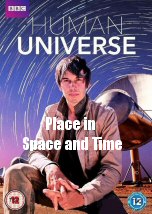
Place in Space and Time

   2014    Science
On a trip to the fortified Moroccan village of Ait-Ben-Haddou in the Atlas Mountains, Professor Brian Cox reveals how by watching the stars' motion across the night sky, it is quite natural for man to think he is at the centre of everything. That view was held for many ages, but innate human curiosity has eventually led to an understanding of mankind's true place in space and time, and an appreciation that Earth is not a focal point but a mere particle of rock in a possibly infinite expanse of space, 13.8 billion years from the beginning of the universe.
Series: Human Universe
The Insatiable Appetite

   1998    Nature
The next instalment focuses on dietary needs and how different species have evolved beaks to suit their individual requirements. The latter come in a multitude of forms. Blue tits and goldfinches have beaks akin to tweezers, with which to extract seeds, while the hawfinch's razor-like bill can deal with a cherry-stone. However, the crossbill is the only finch that can twist its mandibles in opposite directions. Jays store acorns for winter by burying them in the ground, whereas woodpeckers can keep up to 60,000 of them in one tree trunk. Sap is also desirable, and there are a variety of methods used to obtain it. The hoatzin is the only specialised leaf-eater, and accordingly has a digestive system more akin to that of cattle. Plants recruit birds to aid pollination, and offer nectar as a reward. Hummingbirds eat little else, and the sword-bill's beak is the longest of any bird in relation to its body. Insects are also highly prized, and Galapagos finches are shown to possess some ingenuity as they not only strip bark, but also use 'tools' to reach their prey. Crows are hailed as being among the most intelligent birds, and one is shown using a twig to spear a grub within a fallen log. The robin is an opportunist, and Sir Attenborough observes one seizing morsels as he digs a patch of earth. In South America, a cattle tyrant sits atop an obliging capybara and uses its vantage point to spot passing food that may be dislodged by its grazing partner.
Series: The Life of Birds

Evolution: The Evolutionary Arms Race

   2004    Science
Survival of the fittest: Raw competition? Intense cooperation? Both are essential. Interactions between and within species are among the most powerful evolutionary forces on Earth, and understanding them may be a key to our own survival.
Series: Evolution

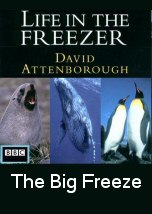
The Big Freeze

   1993    Nature
As almost all animal inhabitants of Antarctica are forced to migrate north, the sea underneath the frozen ice still provides a home to many specially adapted fish whose cells are protected from freezing through an 'antifreeze' liquid. Many of them feed on the faeces of other animals. The most notable larger animal that does not migrate north is perhaps the Weddell Seal, which can be found as close as 1300 kilometres to the pole. Groups of seals tear holes into the ice to dive for food and come up to breathe. The females come back to the ice to give birth. This episode also describes primitive plant life such as lichen, which can still be found on the continent in winter, even in the extremely dry and permanently frozen valleys conditions under which dead animals can lie frozen for many centuries without decomposing. It details the life of the Emperor Penguin, 'the only birds to lay their eggs directly on ice'. While other animals retreat, Emperors migrate not just to the ice, but into the Antarctic continent. The females lay eggs which are incubated by the males under the harshest conditions on Earth (huddling closely together for warmth), while the females return to the sea.
Series: Life in the Freezer

Does the Ocean Think

   2014    Science
There could be an undiscovered species on Earth unlike anything we’ve ever known. Not in the ocean, but the ocean itself! Its body spans thousands of miles; its heart beats with a one-thousand-year pulse. It could even have an immune system capable of annihilating all other life on earth. Just as our bodies function through the interaction of water with individual cells, including bacteria and other microorganisms, the ocean’s residents might collectively form a super-organism. A recent discovery suggests the ocean is a living being capable of thought. If so, what is the ocean thinking about us?
Series: Through the Wormhole Season 5

Is Gravity An illusion

   2014    Science
We feel it every moment of our lives but for physicists, gravity is the longest running unsolved mystery of the universe. Why do all objects that have mass pull on one another? Cutting-edge theories are proposing unexpected answers: Gravity could be another force in disguise, a thermodynamic mirage, or even, a shadow of a hidden holographic universe. If so, the force that holds us to the surface of the earth, and holds the earth in orbit around the sun, may be a trick of the mind. We feel it, but it may not be real. Is Gravity an Illusion?
Series: Through the Wormhole Season 5
Reel Rock

Reel Rock

2014  Culture
Meltdown: Three Mile Island

Meltdown: Three Mile Island

2022  Technology
Tiger

Tiger

2020  History
History of the Eagles

History of the Eagles

2013  History
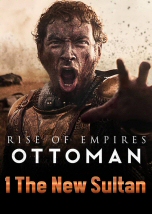
Rise of Empires: Ottoman

Rise of Empires: Ottoman

2020  History
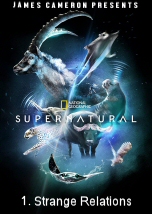
Super/Natural

Super/Natural

2022  Nature
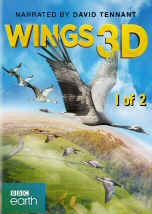
Wings

Wings

  Nature
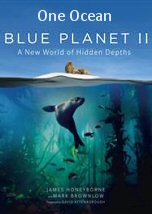
Blue Planet II

Blue Planet II

2017  Nature