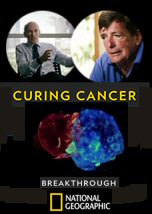
A thought-provoking and imaginative perspective on a scientific discovery. Follow maverick doctors who supercharge killer T cells, creating a breakthrough treatment for cancer.
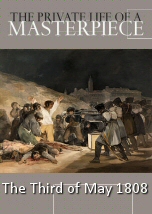
Arguably the most powerful painting about war ever achieved. It portrays the slaughter of civilians after Napoleonic troops entered Madrid in 1808. The programme reveals the historical truths behind the painting and shows exactly how Goya achieved this masterpiece of protest. he painting's content, presentation, and emotional force secure its status as a groundbreaking, archetypal image of the horrors of war. Although it draws on many sources from both high and popular art, The Third of May 1808 marks a clear break from convention. Diverging from the traditions of Christian art and traditional depictions of war, it has no distinct precedent, and is acknowledged as one of the first paintings of the modern era. According to the art historian Kenneth Clark, The Third of May 1808 is 'the first great picture which can be called revolutionary in every sense of the word, in style, in subject, and in intention'. Discover how Goya used drawings by authentic witnesses to depict a real firing squad.
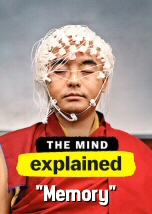
Ever wonder what's happening inside your head? From dreaming to anxiety disorders, discover how your brain works with this illuminating series. The first episode looks at how memory works and examines the way in which the brain stores, processes, and retrains memories. It also looks at the ways in which memory can fail and discusses how memories can warp over time. It talks to neuroscientists and a memory champion who explains her techniques.
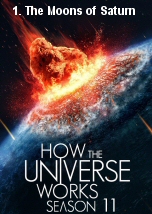
Our universe reveals itself in ways we’ve never seen before, thanks to new discoveries in astrobiology. Today, the advent of cutting-edge observational instruments is shedding light on amazing facts about life and the universe. NASA's next-generation space telescope TESS (Exoplanet Survey Satellite) has begun its search for Earth-like planets belonging to other star systems. How many of these 'exoplanets' can host life, and what kind of life forms can evolve in these environments?
In the last in the series Professor Jim Al-Khalili explores how studying the atom forced us to rethink the nature of reality itself. He discovers that there might be parallel universes in which different versions of us exist, finds out that empty space isn't empty at all, and investigates the differences in our perception of the world in the universe and the reality.
Julian Richards investigates the impact of the Vikings in Britain. This edition focuses on the archaeological trail left by the Vikings as they travelled from Norway along the sea road to Dublin. Settlements, a boat burial and evidence of trading have been discovered on the Scottish isles, and silver hoards found in Ireland suggest that Dublin was not only wealthy and important, but also a centre for trade in slaves.