In episodes 13 and 14, the war reaches a decisive new stage as the Allies prepare to launch Operation Overlord and open the long-awaited second front in Nazi-occupied France. Behind the invasion of Normandy lies an enormous gamble of planning, deception, weather, timing and nerve, with Dwight D. Eisenhower carrying the weight of one of the most dangerous military decisions in history. From the beaches of D-Day to the struggle to break through Hitler’s Atlantic Wall, the episode captures the fear, scale and sacrifice of the operation that begins the liberation of Western Europe. The story then moves to World War II’s often overlooked Asian theater, where Allied forces and Japan fight across jungles, mountains, plains and impossible supply routes. In Burma, India and China, commanders such as Joseph Stilwell, William Slim and Lord Mountbatten face a brutal war of disease, exhaustion, monsoon terrain and relentless Japanese resistance. From the Burma Road and the deadly airlift over the Hump to the fighting at Myitkyina, Imphal and Saipan, these episodes reveal a vast and punishing conflict far from Europe’s headlines, where survival itself becomes a battle and victory demands endurance on a staggering scale.
In episodes 15 and 16, the war begins to close in on the Axis powers not only across battlefields, but inside the societies that created it. Germany and Japan face the turning tide in radically different ways: Hitler’s regime tries to preserve the illusion of normal life while driving production through propaganda, forced labor and terror, while Japan demands sacrifice, austerity and total obedience from its people as American submarines cut the lifelines of empire. As bombing raids, shortages and fear shatter the home front, the documentary reveals how nations built on conquest begin to feel the terrible cost of the war they unleashed. The story then moves into one of the most powerful chapters of resistance in occupied Europe. As Allied armies advance from Normandy and Soviet forces push from the east, ordinary people and underground fighters rise against Nazi rule in France, Poland and even inside the machinery of extermination itself. From coded BBC messages and the liberation of Paris to the doomed Warsaw Uprising and the desperate courage of prisoners documenting the horrors of Auschwitz, these episodes show war at its most human and devastating: A struggle not only between armies, but between tyranny and the refusal to be erased.
In episodes 17 and 18, the Second World War enters its most devastating final phase as two distant battlefields become the stage for unimaginable destruction. Across the Pacific, American forces fight island by island against an enemy determined to resist to the very last soldier. Every beachhead is won at an unbearable cost, revealing a campaign where courage, sacrifice and survival are pushed beyond all human limits. As casualties mount and Japan refuses to surrender, the conflict descends into one of the bloodiest chapters in military history. Meanwhile, the Soviet Union launches its overwhelming final offensive into the heart of Nazi Germany. As the Red Army closes in on Berlin from the east and Western Allied forces advance from the west, Hitler's collapsing regime makes one last desperate stand. Street by street, the battle for the German capital becomes a brutal struggle that seals the fate of the Third Reich. Through extraordinary archival footage and firsthand accounts, these episodes reveal how two immense campaigns—one in Europe and one in the Pacific—brought the deadliest war in history to its dramatic and unforgettable conclusion.
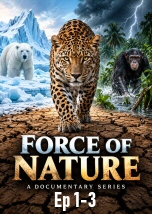
As climate chaos intensifies, animals across the planet are being pushed into conditions their bodies and instincts were never designed to face. Floods arrive where drought once ruled, storms grow stronger, seas warm and familiar habitats disappear. Narrated by Andrew Lincoln, this six-part natural history series follows wildlife confronting these extremes at close range, revealing not only the destructive power of a changing climate but also the extraordinary ingenuity, resilience and adaptability animals use to survive. In the first three episodes, the struggle begins on an increasingly extreme Earth. Burrowing owls on the North American Great Plains race to protect their chicks from tornadoes, cheetahs in Kenya battle record floods, polar bears search for vanishing sea ice and chimpanzees survive severe drought by digging their own filtered water holes. Rising waters then transform entire ecosystems: pygmy elephants face monsoon floods in Borneo, a platypus is swept into a violent flash flood in Australia, and a lone lioness in the Kalahari turns an unexpected flood into a rare hunting opportunity. Finally, along the world’s coasts, Caribbean flamingos confront a category-five hurricane, anole lizards cling on through violent winds, California sea otters struggle through huge storms and collapsing kelp forests, while clownfish on the Great Barrier Reef face a marine heatwave that threatens the very anemones on which their families depend.
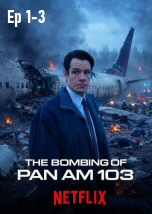
On 21 December 1988, Pan Am Flight 103 explodes over Lockerbie, Scotland, killing all 259 people on board and 11 residents on the ground. What follows is one of the largest and most complex terrorism investigations ever undertaken in Britain, forcing Scottish detectives and the FBI to work across borders, sift through an enormous debris field and reconstruct how a bomb was placed aboard the aircraft. Based on real events, the series follows both the painstaking search for those responsible and the devastating impact of the attack on the town of Lockerbie and on families on both sides of the Atlantic. In the first three episodes, the investigation begins amid chaos as police recover bodies and fragments of the aircraft while international pressure mounts for answers. Early clues lead investigators toward possible suspects and networks connected to the bombing, but every breakthrough raises new questions. When Scottish officers travel to the United States with potentially crucial evidence, tensions emerge between agencies, particularly over intelligence the CIA may be withholding about a possible bomb maker. The result is a gripping reconstruction of an inquiry in which forensic evidence, international politics and competing intelligence interests collide, while the families of the victims wait for the truth.
























The story then moves to World War II’s often overlooked Asian theater, where Allied forces and Japan fight across jungles, mountains, plains and impossible supply routes. In Burma, India and China, commanders such as Joseph Stilwell, William Slim and Lord Mountbatten face a brutal war of disease, exhaustion, monsoon terrain and relentless Japanese resistance. From the Burma Road and the deadly airlift over the Hump to the fighting at Myitkyina, Imphal and Saipan, these episodes reveal a vast and punishing conflict far from Europe’s headlines, where survival itself becomes a battle and victory demands endurance on a staggering scale.