








Last Watched

"Blood"  Sort by

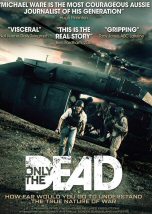
Only the Dead

   2016    History
A war story unlike any ever seen. A story of what happens when one ordinary man, Time magazine war correspondent Michael Ware, transplanted into the Middle East by the reverberations of 9/11, butts into history. Ware handpicked and given a shattering video tape by the most feared, most hated terrorists on the planet to announce his arrival of the world stage sets out on an epic journey into the deepest recesses of the conflict as he seeks answers. Answers that he thinks will lead him to the Truth. The invasion of Iraq has ended, and the Americans are celebrating victory. The year is 2003. Alone and in secret one man, Abu Musab al Zarqawi is planning the real war. Step- by-step he lays out his plan in a letter to Osama bin Laden: the suicide truck bombings; the bloody horrors of the civil war; the televised beheadings. He carries out his grand design to transform the invasion into one of the most brutal conflicts our time and a catastrophe for the planet...and he does it all on camera. He gives the tape to Michael Ware. The tape sets our correspondent off on an epic voyage as he seeks answers. As he seeks what he thinks will be the Truth.

Cold War 2.0

   2015    Culture
For 45 years, America was locked in the Cold War with the Soviet Union, and fear of global nuclear annihilation was constant. The end of the Cold War in 1991 was supposed to usher in a new era of peace and cooperation, but it didn’t last. Tensions between the U.S. and Russia have been simmering for years. And now, the conflict in Ukraine has pushed the relationship to the brink of full-blown crisis. VICE Founder Shane Smith met Kremlin officials and American leaders to figure out what’s really driving the new standoff between the powers, while correspondent Simon Ostrovsky reported from the front lines of the bloody war in Eastern Ukraine.

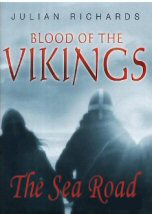
Blood Of The Vikings: The Sea Road

   2001    History
Julian Richards investigates the impact of the Vikings in Britain. This edition focuses on the archaeological trail left by the Vikings as they travelled from Norway along the sea road to Dublin. Settlements, a boat burial and evidence of trading have been discovered on the Scottish isles, and silver hoards found in Ireland suggest that Dublin was not only wealthy and important, but also a centre for trade in slaves.
Series: Blood of the Vikings

Life: Mammals

   2009    Nature
Mammals dominate the planet. They do it through having warm blood and by the care they lavish on their young. Weeks of filming in the bitter Antarctic winter reveal how a mother Weddell seal wears her teeth down keeping open a hole in the ice so she can catch fish for her pup. A powered hot air balloon produces stunning images of millions of migrating bats as they converge on fruiting trees in Zambia, and slow-motion cameras reveal how a mother rufous sengi exhausts a chasing lizard. A gyroscopically stabilised camera moves alongside migrating caribou, and a diving team swim among the planet's biggest fight as male humpback whales battle for a female.
Series: Life

The Normans: Normans of the South

   2010    History
Professor Robert Bartlett explores the impact of the Normans on southern Europe and the Middle East. The Normans spread south in the 11th century, winning control of southern Italy and the island of Sicily. There they created their most prosperous kingdom, where Christianity and Islam co-existed in relative harmony and mutual tolerance. It became a great centre of medieval culture and learning. But events in the Middle East provoked the more aggressive side of the Norman character. In 1095, the Normans enthusiastically answered the Pope's call for holy war against Islam and joined the first crusade. They lay siege to Jerusalem and eventually helped win back the holy city from the muslims. This bloody conquest left a deep rift between Christianity and Islam which is still being felt to this day.

To the Bitter End

   2007    History
The determination of the German forces to keep on fighting in the face of defeat had disastrous consequences. After the Allied landings in the summer of 1944, the Wehrmacht was on the defensive on all fronts. It was clear to the German generals interned at Trent Park that Germany would soon lose the war. In mid-1944, Gerhard Graf von Schwerin chose to use common sense instead of blindly obeying Hitler's orders. He decided to surrender the city of Aachen to the US army to avoid bloodshed. Other commanders such as Field Marshal Ferdinand Schorner kept on pushing their soldiers to give their all. Despite being outnumbered by the Soviet forces, Schorner forced his soldiers to hold out in Sworbe, a 200 square kilometre peninsula on the coast of Estonia. Thousands of soldiers died. Yet Schorner's attitude and the urging by Hitler and Goebbels to hold out were accepted by a large number of young soldiers. By April 1944, the Ruhr pocket was completely surrounded, yet Field Marshal Model refused to surrender, so that 1.2 million German soldiers and a large number of Allied soldiers died between January and May 1945.
Series: The Wehrmacht
Tiger

Tiger

2020  History
Bronze Age

Bronze Age

2016  History
Ancient Greece

Ancient Greece

2013  History
The Universe

The Universe

2011  Science
Apocalypse: World War 1

Apocalypse: World War 1

2014  History