








Last Watched

"Death"  Sort by

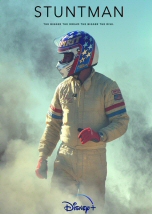
Stuntman

   2018    History
The film follows legendary stuntman Eddie Braun as he prepares and attempts the most dangerous stunt in cinematic history. Contemplating retirement and having survived over three decades of hellacious car crashes, explosions, high falls and death-defying leaps, Eddie decides to complete what his childhood hero never finished – the infamous Snake River Canyon rocket jump – an audacious televised event that almost killed famed daredevil, Evel Knievel.

The Kennedys: A Fatal Ambition

   2018    History
From Patrick Kennedy's emigration in 1849 to the death of JFK Jr. in 1999, the films charts the family's rise from poor Irish immigrants to an all-powerful dynasty, exploring the lives, careers, personal tragedies and scandals that have given rise to the idea of a Kennedy curse.
Featuring interviews with family members, and including rare archive, photos and letters, 'The Kennedys: A Fatal Ambition' sets the events in historical context, examines the family's unique characteristics and asks what part they may have played in many of the misfortunes.

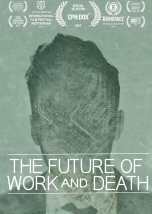
The Future of Work and Death

       Technology
The film explores the growth of exponential technology and where it is taking us. It focuses on how future technology could significantly change the two inevitable features of the human experience; punching the clock and fading away. 'The Future of Work and Death' explores how advanced automation, AI and technological singularity could be achievable in the next 30 years.
How job obsolescence and technological unemployment could consequently occur and how digital immortality can occur may not be a thing of science fiction. But what are the socio-political repercussions of these innovations and are we ready for them? Does working less mean living more and is ending ageing incumbent on us? Worldwide experts in the fields of futurology, anthropology, neuroscience and philosophy share their thoughts on these future advancements.

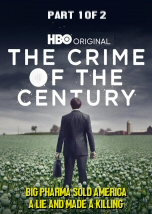
The Crime of the Century part 1of2

   2021    Medicine
This series is a searing indictment of Big Pharma and the political operatives and government regulations that enable over-production, reckless distribution and abuse of synthetic opiates. Exploring the origins, extent and fallout of one of the most devastating public health tragedies of our time, with half a million deaths from overdoses this century alone, the film reveals that America's opioid epidemic is not a public health crisis that came out of nowhere.
In the first part, a look at how Purdue Pharma worked with the FDA to get OxyContin approved for wider use, promoting the highly profitable pain medication's safety without sufficient evidence, and creating a campaign to redefine pain and how it's treated.
Series: The Crime of the Century

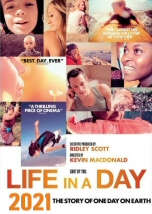
Life in a Day 2020

   2021    Culture
On July 25th, 2020, people all over the world filmed their lives and shared their stories to be part of a documentary film. When all the submissions were tallied, the filmmakers had received over 300,000 videos from 192 countries. The result is a stirring film about love, death, heartbreak, and hope that looks beyond geography and circumstance to explore what connects us as humans.
Series: Life in a Day

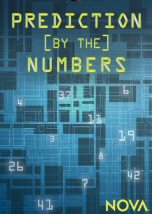
Prediction By The Numbers

   2018    Science
Predictions underlie nearly every aspect of our lives, from sports, politics, and medical decisions to the morning commute. With the explosion of digital technology, the internet, and 'big data,' the science of forecasting is flourishing. But why do some predictions succeed spectacularly while others fail abysmally? And how can we find meaningful patterns amidst chaos and uncertainty? From the glitz of casinos and TV game shows to the life-and-death stakes of storm forecasts and the flaws of opinion polls that can swing an election, 'Prediction by the Numbers' explores stories of statistics in action. Yet advances in machine learning and big data models that increasingly rule our lives are also posing big, disturbing questions. How much should we trust predictions made by algorithms when we don't understand how they arrive at them? And how far ahead can we really forecast?