













Last Watched

"Predator"  Sort by

Birth of Humanity

   2010    History
We will nvestigate the first skeleton that really looks like us –Turkana Boy– an astonishingly complete specimen of Homo erectus found by the famous Leakey team in Kenya. These early humans are thought to have developed key innovations that helped them thrive, including hunting large prey, the use of fire, and extensive social bonds. The program examines an intriguing theory that long-distance running –our ability to jog– was crucial for the survival of these early hominids. Not only did running help them escape from vicious predators roaming the grasslands, but it also gave them a unique hunting strategy: chasing down prey animals such as deer and antelope to the point of exhaustion. Birth of Humanity also probes how, why, and when humans' uniquely long period of childhood and parenting began.
Series: Becoming Human
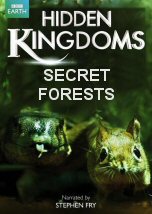
Secret Forests

   2014    Nature
This is the story of two tiny animals coming of age. In the wild woods of North America, a young chipmunk is gathering a vital store of nuts ahead of his first winter - in his way are ruthless rivals and giant predators. In the steaming rainforest, a young tree-shrew is forced deep into the jungle to find food. She must draw on all her intelligence and agility if she is to escape the ultimate jungle predator - a reticulated python!
Series: Hidden Kingdoms

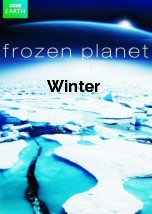
Frozen Planet: Winter

   2011    Nature
There is no greater test for life than winter, as temperatures plummet to 70 below and winds reach 200kph. Darkness and ice extend across the polar regions and only a few remarkable survivors gamble on remaining. We join a female polar bear trekking into the Arctic mountains to give birth as the first blizzards arrive. Out on the frozen ocean, the entire world's population of spectacled eider ducks brave the winter in a giant ice hole kept open by ferocious currents. Arctic forests transform into a wonderland of frost and snow - the scene of a desperate and bloody battle between wolf and bison, but also where a remarkable alliance between raven and wolverine is made. Beneath the snow lies a magical world of winter survivors. Here tiny voles dodge the clutches of the great grey owl, but cannot escape the ultimate under-show predator - the least weasel. Midwinter and a male polar bear wanders alone across the dark, empty icescape. Below the snow, polar bear cubs begin life in an icy den while fantastical auroras light the night skies above. In Antarctica, we join male emperor penguins in their darkest hour, battling to protect precious eggs from fierce polar storms. Weddell seals escape to a hidden world of jewel-coloured corals and alien-looking creatures but frozen devastation follows as sinister ice stalactites reach down with deadly effect.
Series: Frozen Planet

The Mastery of Flight

   1998    Nature
The second programme deals with the mechanics of flight. Getting into the air is by far the most exhausting of a bird's activities, and Sir Attenborough observes shearwaters in Japan that have taken to climbing trees to give them a good jumping-off point. The albatross is so large that it can only launch itself after a run-up to create a flow of air over its wings. A combination of aerodynamics and upward air currents (or thermals), together with the act of flapping or gliding is what keeps a bird aloft. Landing requires less energy but a greater degree of skill, particularly for a big bird, such as a swan. Weight is kept to a minimum by having a beak made of keratin instead of bone, a light frame, and a coat of feathers, which is maintained fastidiously. The peregrine falcon holds the record for being fastest in the air, diving at speeds of over 300 km/h. Conversely, the barn owl owes its predatory success to flying slowly, while the kestrel spots its quarry by hovering. However, the true specialists in this regard are the hummingbirds, whose wings beat at the rate of 25 times a second. The habits of migratory birds are explored. After stocking up with food during the brief summer of the north, such species will set off on huge journeys southwards. Some, such as snow geese, travel continuously, using both the stars and the sun for navigation. They are contrasted with hawks and vultures, which glide overland on warm air, and therefore have to stop overnight.
Series: The Life of Birds

Growing

   1994    Nature
The second episode is about how plants gain their sustenance. Sunlight is one of the essential requirements if a seed is to germinate, and Attenborough highlights the cheese plant as an example whose young shoots head for the nearest tree trunk and then climb to the top of the forest canopy, developing its leaves en route. Using sunshine, air, water and a few minerals, the leaves are, in effect, the "factories" that produce food. However, some, such as the begonia, can thrive without much light. To gain moisture, plants typically use their roots to probe underground. Trees pump water up pipes that run inside their trunks, and Attenborough observes that a sycamore can do this at the rate of 450 litres an hour — in total silence. Too much rainfall can clog up a leaf's pores, and many have specially designed 'gutters' to cope with it. However, their biggest threat is from animals, and some require extreme methods of defence, such as spines, camouflage, or poison. Some can move quickly to deter predators: the mimosa can fold its leaves instantly when touched, and the Venus flytrap eats insects by closing its leaves around its prey when triggered. Another carnivorous plant is the trumpet pitcher that snares insects when they fall into its tubular leaves. Attenborough visits Borneo to see the largest pitcher of them all, Nepenthes rajah, whose traps contain up to two litres of water and have been known to kill small rodents.
Series: The Private Life of Plants

The Private Life of Plants Living Together

   1995    Nature
The fifth programme explores the alliances formed between the animal and plant worlds. Attenborough dives into Australia's Great Barrier Reef and contrasts the nocturnal feeding of coral, on microscopic creatures, with its daytime diet of algae. Some acacias are protected by ants, which will defend their refuge from any predator. Besides accommodation, the guards are rewarded with nectar and, from certain species, protein for their larvae as well. Fungi feed on plants but can also provide essential nutriment to saplings (Mycorrhiza). The connection is never broken throughout a tree's life and a quarter of the sugars and starches produced in its leaves is channelled back to its fungal partners. Meanwhile, fungi that feed on dead wood leave a hollow trunk, which also benefits the tree. Orchids enjoy a similar affiliation. Lichens are the product of a relationship between fungi and a photosynthetic associate, usually algae. They are extremely slow-growing, and a graveyard is the perfect location to discover their exact longevity. Mistletoe is a hemiparasite that obtains its moisture from a host tree, while using own leaves to manufacture food. Its seeds are deposited on another by the mistletoe tyrannulet, following digestion of the fruit. The dodder (Cuscuta) is also parasitic, generally favouring nettles, and siphons its nourishment through periodic 'plugs' along its stem. The rafflesia has no stem or leaves and only emerges from its host in order to bloom — and it produces the largest single flower: one metre across.
Series: The Private Life of Plants
Cooked

Cooked

2016  Culture
Apocalypse: World War 1

Apocalypse: World War 1

2014  History
Arnold

Arnold

2023  History
Senna

Senna

2010  Culture
Vietnam in HD

Vietnam in HD

2011  History
The Universe

The Universe

2010  Science
Life In Cold Blood

Life In Cold Blood

2008  Nature