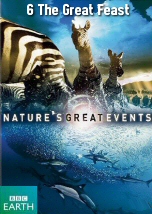
Every summer in the seas off Alaska humpback whales, sea lions and killer whales depend on an explosion of plant life, the plankton bloom. It transforms these seas into the richest on Earth. But will these animals survive to enjoy the great feast? The summer sun sparks the growth of phytoplankton, microscopic floating plants which can bloom in such vast numbers that they eclipse even the Amazon rainforest in sheer abundance of plant life. Remarkably, it is these minute plants that are the basis of all life here. But both whales and sea lions have obstacles to overcome before they can enjoy the feast. Humpback whales migrate 3,000 miles from Hawaii, and during their 3 month voyage lose a third of their body weight. In a heart-rending scene a mother sea lion loses her pup in a violent summer storm, while another dramatic sequence shows a group of killer whales working together to kill a huge male sea lion. In late summer the plankton bloom is at its height. Vast shoals of herring gather to feed on it, diving birds round the fish up into a bait ball and then a humpback whale roars in to scoop up the entire ball of herring in one huge mouthful. When a dozen whales work together they employ the ultimate method of co-operative fishing - bubble net feeding. One whale blows a ring of bubbles to engulf the fish and then they charge in as one. Filmed from the surface, underwater and, for the first time, from the air, we reveal how these giant hunters can catch a tonne of fish every day.
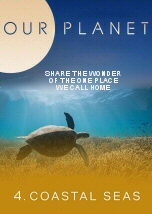
Immense shoals of fish throng our shallow seas. Small fish, in turn, sustain bigger ones. The rich coastal seas are the fishing grounds of our planet and can provide an abundance of food for wildlife and humanity. The seas fringing land make up less than a tenth of the world's oceans but 90 percent of marine creatures live in coastal waters, from fearsome sharks to lowly urchins. Protecting these habitats is a battle humanity must win.
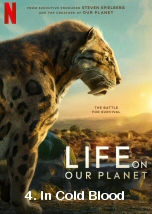
The polar regions of our planet may seem beyond the reach of most of us, but they are not beyond our influence. We, unintentionally, are changing these frozen worlds, and these changes will not just affect the poles but the whole planet. On the unforgiving frontier of climate change, polar bears, walruses, seals and penguins find their icy Edens in peril.
Nicholas II abdicates, and civil war erupts. In May 1918, a year after the revolution, the Bolsheviks sent Anastasia, Alexei, Tatiana and Olga to join the rest of the family in Ekaterinburg. They're put in the Ipatiev mansion and It's given the name 'The House of Special Purpose.' As pro-royalist forces close in on the house where the Romanovs are imprisoned, the family's fate is sealed.
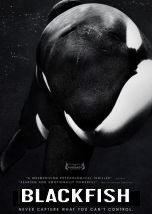
The story of Tilikum, a captive killer whale that has taken the lives of several people , including a top killer whale trainer, underscores the consequences of keeping these powerful animals in captivity, the problems within the sea-park industry, the man's relationship to nature, and how little has been learned about these highly intelligent and sentient mammals. Tilikum was captured in the northern Atlantic Ocean in 1983 and taken to Sealand of the Pacific, a now-shuttered park near Victoria, British Columbia. Former Sealand trainers interviewed in 'Blackfish' say the park’s female killer whales would aggressively gang up on Tilikum, particularly when they were confined in a 20-foot-by- 30-foot pool overnight.
In 1940, France has fallen and Hitler orders Operation Sealion, the invasion of Great Britain. But first the Luftwaffe must defeat the RAF for seaborne landings to succeed. In July 1940 an epic struggle in the skies above England begins. Only a brilliant defensive system and the bravery of young pilots stand in the Luftwaffe’s way. Wave after wave of German bombers are attacked by British planes. Featuring the last interview with the youngest Spitfire-pilot in the battle, Geoffrey Wellum.






















In late summer the plankton bloom is at its height. Vast shoals of herring gather to feed on it, diving birds round the fish up into a bait ball and then a humpback whale roars in to scoop up the entire ball of herring in one huge mouthful. When a dozen whales work together they employ the ultimate method of co-operative fishing - bubble net feeding. One whale blows a ring of bubbles to engulf the fish and then they charge in as one. Filmed from the surface, underwater and, for the first time, from the air, we reveal how these giant hunters can catch a tonne of fish every day.