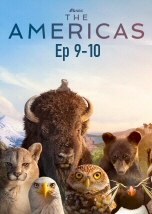
In the final two episodes, the journey reaches the Pacific edge of North America and the remote wilderness of Patagonia, two spectacular regions shaped by powerful oceans, towering forests and extreme weather. Along the West Coast, wolves comb the shoreline for food, sea otters battle crashing surf, blue whales gather in a rare display of speed and movement, and giant Pacific octopuses devote everything to protecting the next generation. High in the redwood canopy, even tiny salamanders perform extraordinary leaps to survive, revealing how life has adapted to one of the continent’s most dramatic coastal environments. The series then travels to the far south of the Americas, where Patagonia delivers a fittingly wild finale. Pumas stalk guanacos through snowy mountains, rockhopper penguins fight their way through violent waves to reach their colonies, giant stag beetles climb immense trees to compete for mates, and elephant seals clash for dominance along the coast. In one of the most remarkable scenes, a family of orcas passes down a dangerous hunting technique from one generation to the next, showing how survival here depends not only on strength, but also on experience, cooperation and learning.
A daring covert operation, a decade of relentless pursuit, and the manhunt that changed history. This gripping documentary pulls back the curtain on the classified strategies, intelligence breakthroughs, and high-stakes decisions that led to one of the most consequential missions of the 21st century. With exclusive access to military insiders, CIA analysts, and rarely seen footage, it reconstructs the tense hours before the raid and the global aftermath that followed. All three episodes of this riveting series are available now on our website—immerse yourself in the full story as it unfolds from start to finish.
Sir David Attenborough presents Asia, an epic seven-part series that takes viewers on an extraordinary journey through the vast and diverse landscapes of the largest continent on Earth. From snow-capped mountain ranges and ancient forests to searing deserts and rich coastlines, this groundbreaking series reveals the astonishing wildlife and hidden natural wonders that define Asia’s breathtaking beauty and complexity. The adventure begins in spectacular fashion beneath the surface of Asia’s oceans. In this visually stunning first episode, we dive into a world few have seen—an underwater realm filled with vibrant coral gardens, mysterious sunken ruins, and pristine marine habitats untouched by time. Alongside renowned marine scientists and local experts, we encounter majestic whale sharks, soaring manta rays, ancient sea turtles, glowing jellyfish, and otherworldly nudibranchs. But as we uncover the secrets of these magical ecosystems, we also face the urgent environmental challenges that threaten their survival. Awe-inspiring and thought-provoking, this opening episode sets the tone for a series that is as visually dazzling as it is vital to understanding the future of our natural world.
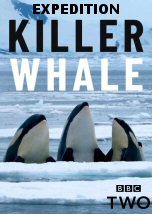
In Antarctica, one the most sophisticated hunting behaviours in the animal kingdom takes place – killer whales creating waves to wash seals off pieces of floating ice. A team of scientists and filmmakers travel heads to these freezing waters to find out more about these unique animals and how they do it. But their mission is not just to deepen our understanding of this extraordinary hunting behaviour. The team are also intent on learning more about the secret – and more tender side – of the lives of these killer whales.
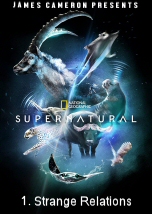
Witness the secret powers of extraordinary animals, experience the world as they do and see the SUPER/NATURAL side of nature as never before. Executive produced by James Cameron and narrated by Benedict Cumberbatch, this series uses the scientific innovations and leading-edge filmmaking technology to reveal the secret powers and super-senses of the world’s extraordinary animals. See flowers in bee-vision to eavesdropping on conversations between elephant seals to soaring the length of a football field with glow-in-the-dark squirrels. They say in nature that only the strongest survive. But when cooperation and communication bring animals and plants together and superpowers combine even the most vulnerable can become unstoppable. If you think you know nature, think again.
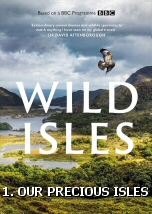
In the first episode, Sir David Attenborough reveals the unexpected wildlife riches of the British Isles, showcasing the dramatic and spectacular habitats that rival any across the globe. This journey uncovers the diversity of life in the UK's unique landscapes, from the intricate world of bumblebees to the swift lives of kingfishers. The episode captures extraordinary scenes of nature, including killer whales preying on seals, golden eagles in the Scottish mountains, the cunning tactics of woodland plants, and the perilous life of puffins evading gulls. It highlights Britain's geological diversity as a cornerstone of its natural wealth, contributing to an array of habitats and supporting a wide range of life. Britain's importance extends to being a haven for migratory birds, with our seas feeding 65% of the world's gannets and supporting the largest colony of northern gannets on Scotland's Bass Rock. The west coast of Scotland offers sanctuary to barnacle geese due to its abundant food and mild climate, though they remain vigilant against hunting sea eagles. Despite these natural treasures, Britain faces challenges as one of the most nature-depleted countries globally. Sir David Attenborough emphasizes the need to conserve and restore these wild isles for the enjoyment and benefit of future generations.

























The series then travels to the far south of the Americas, where Patagonia delivers a fittingly wild finale. Pumas stalk guanacos through snowy mountains, rockhopper penguins fight their way through violent waves to reach their colonies, giant stag beetles climb immense trees to compete for mates, and elephant seals clash for dominance along the coast. In one of the most remarkable scenes, a family of orcas passes down a dangerous hunting technique from one generation to the next, showing how survival here depends not only on strength, but also on experience, cooperation and learning.