
Last Watched

"CIA"  Sort by

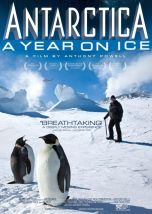
Antarctica: A Year on Ice

   2013    Nature
A visually stunning journey to the end of the world with the hardy and devoted people who live there year-round. The research stations scattered throughout the continent host a close-knit international population of scientists, technicians and craftsmen. Isolated from the rest of the world, enduring months of unending darkness followed by periods when the sun never sets, Antarctic residents experience firsthand the beauty and brutality of the most severe environment on Earth. Capturing epic battles against hellacious storms, quiet reveries of nature's grandeur, and everyday moments of work and laughter, this unique documentary shows a steadfast community thriving in a land few humans have experienced. Using specially modified cameras and spectacular time-lapse photography, filmmaker Anthony Powell captures the splendor of the region like no film before. ANTARCTICA: A YEAR ON ICE gives testament to the planet's natural wonders, humanity's thirst for adventure, and the emotional extremes that accompany a year within the last pristine wilderness on the planet.
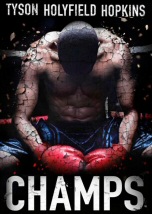
Champs

   2015    Culture
Boxing, 'the poor man's sport', has long given kids from America's roughest neighborhoods an opportunity to escape violence with violence. But with success in the ring comes new fights for which there is no training: champions are made and broken in the blink of an eye, and young men thrust into the spotlight are often ill-equipped for the fame, fortune, and hangers-on that accompany a title belt". And for many, the toughest bouts are fought during retirement, when health and financial issues begin to mount. Built around the stories of heavyweight legends as Mike Tyson, Evander Holyfield and Bernard Hopkins, We will examine their lives in and out of the ring.

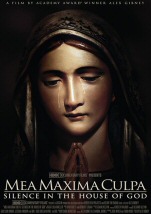
Mea Maxima Culpa: Silence in the House of God

   2012    Culture
Alex Gibney explores the charged issue of pedophilia in the Catholic Church, following a trail from the first known protest against clerical sexual abuse in the United States and all the way to the Vatican. The title is derived from the Latin phrase "mea maxima culpa". It is taken from the Confiteor that is part of the Roman Catholic Mass. It translates into English as "My most grievous fault" The film examines the abuse of power in the Catholic Church system through the story of four deaf men who set out to expose the priest who abused them during the mid-1960s. Each of the men brought forth the first known case of public protest against clerical sex abuse, which later lead to the sex scandal case known as the Lawrence Murphy case. Through their case the film follows a cover-up that winds its way from the row houses of Milwaukee, Wisconsin, through Ireland's churches, all the way to the highest office of the Vatican.

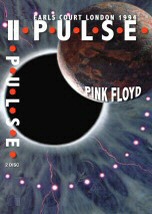
Pink Floyd: P. U. L. S. E. Live at Earls Court (II)

   2006    Art    HD
P.U.L.S.E is a Pink Floyd concert video taken from the 20 October 1994 concert at Earls Court, London. PULSE records the great psychedelic band Pink Floyd rocking out like only they can. Renowned for their hallucinatory special effects and lighting schemes, Pink Floyd goes all out at this spectacular (and very long) concert. Twenty-one of their classics are performed, including classic rock radio staples 'Dark Side of The Moon' and 'Wish You were Here". There was considerable delay in the release of the video edition of Pulse. The cause of the delays was reputed to be the continued modifications and additions to produce a high-quality release. The previous planned release date of 22 September 2005 for the two-disc DVD set was changed to 10 July 2006 for the UK and Europe, and 11 July 2006 everywhere else.
Series: P.U.L.S.E

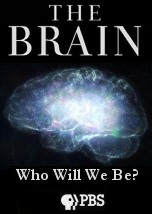
Who Will We Be

   2015    Medicine
In ‘Who will we be?’ Dr. David Eagleman journeys into the future, and asks what’s next for the human brain, and for our species. We stand at a major turning point, one where we might take control of our own development. We face a future of uncharted possibilities in which our relationship with our own body, our relationship with the world, the very basic nature of who we are is set to be transformed. For thousands of generations, humans have lived the same life cycle over and over. We are born, we control a fragile body, we experience a limited reality, and we die. But science and technology are giving us tools to transcend that evolutionary story. Our brains don't have to remain as we have inherited them. We are capable of extending our reality, of inhabiting new bodies, and possibly shedding our physical forms altogether. And we are discovering the tools to shape our own destiny. Who we become is up to us.
Series: The Brain with David Eagleman

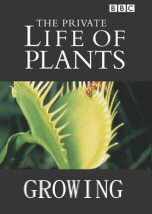
Growing

   1994    Nature
The second episode is about how plants gain their sustenance. Sunlight is one of the essential requirements if a seed is to germinate, and Attenborough highlights the cheese plant as an example whose young shoots head for the nearest tree trunk and then climb to the top of the forest canopy, developing its leaves en route. Using sunshine, air, water and a few minerals, the leaves are, in effect, the "factories" that produce food. However, some, such as the begonia, can thrive without much light. To gain moisture, plants typically use their roots to probe underground. Trees pump water up pipes that run inside their trunks, and Attenborough observes that a sycamore can do this at the rate of 450 litres an hour — in total silence. Too much rainfall can clog up a leaf's pores, and many have specially designed 'gutters' to cope with it. However, their biggest threat is from animals, and some require extreme methods of defence, such as spines, camouflage, or poison. Some can move quickly to deter predators: the mimosa can fold its leaves instantly when touched, and the Venus flytrap eats insects by closing its leaves around its prey when triggered. Another carnivorous plant is the trumpet pitcher that snares insects when they fall into its tubular leaves. Attenborough visits Borneo to see the largest pitcher of them all, Nepenthes rajah, whose traps contain up to two litres of water and have been known to kill small rodents.
Series: The Private Life of Plants
Catalyst

Catalyst

2017  Science
The Crime of the Century

The Crime of the Century

2021  Medicine
Cosmos

Cosmos

1980  Culture
Tiger

Tiger

2020  History