Dr Iain Stewart investigates the counter-attack that was launched by the global warming sceptics in the 1990s. At the start of the 1990s it seemed the world was united. At the Rio Earth summit the world signed up to a programme of action to start tackling climate change. Even George Bush was there. But the consensus didn't last. Iain examines the scientific arguments that developed as the global warming sceptics took on the climate change consensus. The sceptics attacked almost everything that scientists held to be true. They argued that the planet wasn't warming up, that even if it was it was nothing unusual, and certainly whatever was happening to the climate was nothing to do with human emissions of greenhouse gases. Iain interviews some of the key global warming sceptics, and discovers how their positions have changed over time.
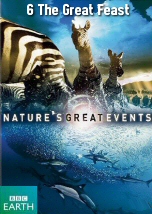
Every summer in the seas off Alaska humpback whales, sea lions and killer whales depend on an explosion of plant life, the plankton bloom. It transforms these seas into the richest on Earth. But will these animals survive to enjoy the great feast? The summer sun sparks the growth of phytoplankton, microscopic floating plants which can bloom in such vast numbers that they eclipse even the Amazon rainforest in sheer abundance of plant life. Remarkably, it is these minute plants that are the basis of all life here. But both whales and sea lions have obstacles to overcome before they can enjoy the feast. Humpback whales migrate 3,000 miles from Hawaii, and during their 3 month voyage lose a third of their body weight. In a heart-rending scene a mother sea lion loses her pup in a violent summer storm, while another dramatic sequence shows a group of killer whales working together to kill a huge male sea lion. In late summer the plankton bloom is at its height. Vast shoals of herring gather to feed on it, diving birds round the fish up into a bait ball and then a humpback whale roars in to scoop up the entire ball of herring in one huge mouthful. When a dozen whales work together they employ the ultimate method of co-operative fishing - bubble net feeding. One whale blows a ring of bubbles to engulf the fish and then they charge in as one. Filmed from the surface, underwater and, for the first time, from the air, we reveal how these giant hunters can catch a tonne of fish every day.
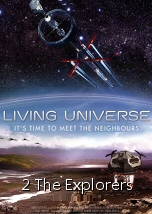
A look at the probes which explored our Solar System, laying the groundwork for a future spacecraft to search for life on a second Earth. That space craft must communicate, it must navigate, it must have power, it must have propulsion. We will have to give it all the intelligence necessary to make its own decisions. In 'The Explorers' the spacecraft Artemis initiates launch sequence and begins its 4.7 light year journey to Minerva B - an Earth-like exoplanet.
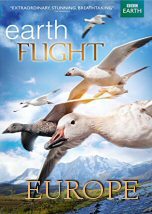
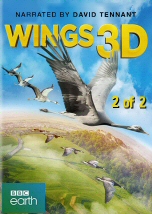
It's a universal dream To soar on wings into the heavens. But it's nothing compared to the reality. Experience our planet as never before: Through the eyes of birds. This is a journey that will embrace the world. A flight across the earth on feathered wings. It's a fantastic voyage following the changing seasons and taking in some of the greatest events on Earth. Experience a year in the life of our planet from the lush tropics to the frozen North and catch a glimpse of our world as never before: From a bird's-eye view.
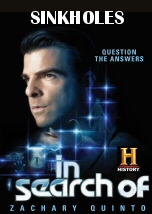
Zachary Quinto explores the unpredictable and terrifying phenomenon of sinkholes to determine just what causes them. He visits a Florida man whose brother was killed when their family home was literally swallowed whole by the Earth as well as a series of sinkholes that are forming a series of caves right below the houses of a quaint suburban neighbourhood. Whether they be a part of some biblical prophecy or further evidence of mankind's effect on our planet, he's alarmed to discover that all the same, they can strike anywhere in the world, at any time.
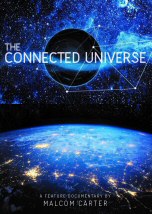
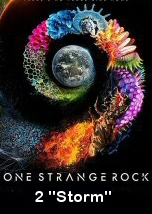
Space isn't vast and empty space but a dynamic, cosmic storm. It's a storm that could kill us, but without it we wouldn't be here at all. This is a story about the weird connections, the near misses, the lucky breaks that created this amazing world. For 4.5 billion years our planet has been battered and bruised and punched and pummeled but we're still standing. It's actually the battle that's built us and this is the tale of the tape. Ever wonder how our planet got here? It was born in a cosmic storm. The violence could have destroyed us, but instead it made us.







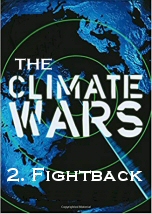




Iain examines the scientific arguments that developed as the global warming sceptics took on the climate change consensus. The sceptics attacked almost everything that scientists held to be true. They argued that the planet wasn't warming up, that even if it was it was nothing unusual, and certainly whatever was happening to the climate was nothing to do with human emissions of greenhouse gases. Iain interviews some of the key global warming sceptics, and discovers how their positions have changed over time.