




Last Watched

"Law"  Sort by

Playful Creatures

   2015    Nature
Spy in the Huddle use innovative techniques to reveal the incredible secrets of your pets' behaviour in ways never seen before. As astonishing photography explores the wild side of our playful pets, find out why hamsters love to run in a wheel, how dogs pick up the rules of the pack and how kittens learn to be solitary hunters. Featuring incredible views of plunge-diving dogs, babysitting cats, acrobatic hamsters and a playful cat outwitted by his prey" - you'll never look at your favourite companions in quite the same way again. The latest science also reveals why budgies talk, how a cat scales a vertical wall with the help of a special claw, why hamsters stuff their faces with more food than they can eat and the real meaning behind a rabbit's hop. Our pets are also given a chance to explore their wild side as we join the free-roaming pet dogs of Cusco Peru, pet rabbits living in a natural warren and the wild-living inhabitants of Cat Island, Japan. A range of innovative techniques such as moving X-rays, thermal imagery, minicam-carrying dogs and revelatory slow-motion photography shows why our pets play and how their true wild nature is just a whisker away.
Series: Pets: Wild at Heart
How Small is the Universe

   2012    Science
The biggest rabbit-hole in history: the search of the smallest thing in the Universe. It is a journey where things don't just become smaller but also a whole lot weirder. Scientists hope to catch a glimpse of miniature black holes, multiple dimensions and even parallel Universes. As they start to explore this wonderland, where nothing is quite what it seems, they may have to rewrite the fundamental laws of time and space.

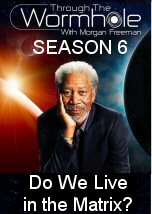
Do We Live in the Matrix

   2015    Science
Our universe seems real. But what if it’s a videogame? Scientists in a variety of fields are taking seriously the possibility that we live in a virtual reality. Maybe the Big Bang was just the moment someone flipped the switch and turned on our universe. Maybe what looks random has already been programmed to happen. If some advanced civilization did design and program our universe, would we ever know? Scientists are looking for glitches in the laws of the universe that may uncover its hidden code.
Series: Through the Wormhole Season 6

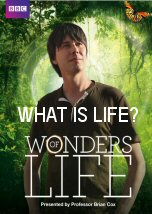
What is Life

   2013    Science
From the Philippines to the US, Madagascar and Mexico, Professor Brian Cox explores the globe to reveal how a few fundamental laws of science gave birth to the most complex and unique feature of the universe - life. In the first episode, Brian journeys to the volcanic landscapes of South-East Asia, seeking to understand how life first began and how that spark has endured to this day.
Series: Wonders of Life

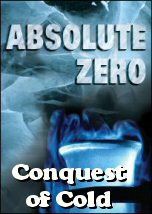
Absolute Zero Conquest of Cold

   2007    Technology
This scientific detective tale tells the story of a remarkable group of pioneers who wanted to reach the ultimate extreme: absolute zero, a place so cold that the physical world as we know it doesn't exist, electricity flows without resistance, fluids defy gravity and the speed of light can be reduced to 38 miles per hour. Absolute zero became the Holy Grail of temperature physicists and is considered the gateway to many new technologies, such as nano-construction, neurological networks and quantum computing. The possibilities, it seems, are limitless. The first episode Chronicles the major discoveries leading towards the mastery of cold, beginning with King James I's court magician, Cornelius Drebbel, who managed to air condition the largest interior space in the British Isles in 1620. Other stories will include the first "natural philosopher," Robert Boyle, a founder of the Royal Society in Great Britain; the Grand Duke Ferdinand II de Medici's involvement in the creation of the first thermometer; the establishment of the laws of thermodynamics by three young scientists, Sadi Carnot, James Joule and William Thomson; and Michael Faraday's critical achievement in liquefying several other gases which set the stage for the commercial application of cold to refrigeration and air conditioning.
Series: Absolute Zero

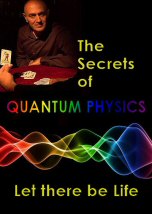
Let there be Life

   2014    Science
Professor of physics Jim Al-Khalili investigates the most accurate and yet perplexing scientific theory ever - quantum physics, the perplexing theory of sub-atomic particles. Turning his attention to the world of nature, can quantum mechanics explain the greatest mysteries in biology? The European robin navigates using one of the most bizarre effects in physics - quantum entanglement, a process which seems to defy common sense. Jim finds that even the most personal of human experiences - our sense of smell - is touched by ethereal quantum vibrations. According to new experiments it seems that our quantum noses are listening to smells. Jim discovers that the most famous law of quantum physics - the uncertainty principle - is obeyed by plants and trees as they capture sunlight during the vital process of photosynthesis. Jim wonders if the strange laws of the sub-atomic world, which allow objects to tunnel through impassable barriers in defiance of common sense, could effect the mechanism by which living species evolve?
Series: The Secrets of Quantum Physics
Leaving Neverland

Leaving Neverland

2019  Culture
The Last Czars

The Last Czars

2019  History
Chimp Empire

Chimp Empire

2023  Nature
The Sky at Night

The Sky at Night

2018  Science
The Crusades

The Crusades

2012  History
Mammals

Mammals

2024  Nature