Follow Will Smith on an extraordinary adventure around the world to explore Earth’s greatest wonders and reveal its most hidden secrets. Throughout the six-part series produced by filmmaker Darren Aronofsky, Will is guided by elite explorers on an awe-inspiring journey, getting up close and personal with some of the most thrilling spectacles on the planet — from volcanoes that roar in silence to deserts that move beyond our perception to animal swarms with minds of their own. Combining breathtaking cinematography with Will's boundless curiosity and enthusiasm, the blockbuster series is an exciting, multisensory ride through Earth’s most mind-bending portals. In the first episode, Will Smith enters a live volcano and discovers a mysterious world of sound.
A team of artists and activists exposes the hidden world of extinction with never-before-seen images that will change the way we see the planet. Two worlds drive extinction across the globe, potentially resulting in the loss of half of all species. The international wildlife black market at the expense of creatures that have survived on this planet for millions of years. And the other surrounds us, hiding in plain sight — a world that the oil and gas companies don’t want the rest of us to see. Using covert tactics and state-of-the-art technology, the Racing Extinction team exposes these two worlds in an inspiring affirmation to preserve life as we know it.
Following engineers and scientists on a groundbreaking mission as they build, test and launch the James Webb Space Telescope, the most powerful observatory ever constructed, and discovers the astonishing cosmological enigmas it will investigate. Using the latest CGI animation technology, the film will follow the journey and share the incredible cosmological images and mysteries that scientists believe the telescope will capture. This super-telescope is the next generation successor to the Hubble Space Telescope, with a mirror 6 times bigger. It will also be able to peer back in time. For the first time in space exploration, scientists will be able to explore the formation of the first stars and galaxies and search for planets that can support life.
How did the universe come to be? Thanks to a series of discoveries, our most powerful space missions have unravelled 13.8 billion years of cosmic evolution and revealed the story of our universe from its birth all the way to the arrival of our nascent civilization. Our guide on this odyssey back to the dawn of time is light. Telescopes are time machines - by looking out into the distant universe, they open a window to the past. One telescope more than any other has helped us journey through the history of the universe: NASA’s Hubble Space Telescope. Remarkably, Hubble has even found one of the first galaxies ever to exist in the universe, which was born some 13.4 billion years ago. It's a discovery that hints at the beginnings of our own Milky Way. Vivid CGI brings this ancient galaxy to life, allowing us to witness for ourselves the first dawn. It was the beginning of a relationship between stars and planets that would, on a faraway world, lead to the origin of life - and ultimately to us. Hubble’s incredible discoveries have allowed scientists to piece together much of our cosmic story, but it cannot take us back to the most important moment in history: the Big Bang. For decades, the moment the universe began was the subject of pure speculation, but by combining astronomy and cosmology, scientists have finally found a way to put their theories to the test and study the momentous events that took place during the Big Bang. They can do this because the European Space Agency’s Planck space telescope has seen the afterglow of the Big Bang itself – something we call the Cosmic Microwave Background. The unparalleled detail Planck gave us has helped confirm something remarkable: the Big Bang may not be the beginning. There was a time before the dawn – a place beyond anything we can comprehend. Professor Brian Cox transports us back to the fraction of a second before the Big Bang, when the seeds of our universe were planted.
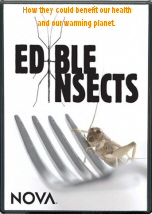
From crunchy crickets to nutty fly grubs, the film takes a tasty look at insect foods and how they could benefit our health and our warming planet. From Thailand to Texas, insect farmers are showing how the tiny critters stack up as an environmentally friendly alternative to beef protein and can, pound for pound, deliver better nutritional value than the finest steak. But will western people overcome the 'ick' factor and share the appetite of many cultures around the world for insect feasts?
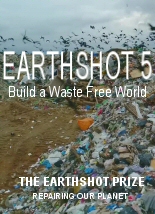
We have become too comfortable in societies that are immensely wasteful. As a consequence across the globe, the natural world about us is now suffering from the waste we throw away. Is it possible for us to keep what we have and continue to progress without generating waste? This film will expose the root causes of our wastefulness, highlight people around the world working on incredible solutions and it willl introduce you to the new projects shortlisted for the fifth goal of the Earthshot Prize.











In the first episode, Will Smith enters a live volcano and discovers a mysterious world of sound.