Washington, D.C. is in many ways a city of extremes. Starland Vocal Band, Marvin Gaye, Duke Ellington, Nils Lofgren, Chuck Brown, Henry Rollins, Fugazi and Trouble Funk all hail from D.C. In the early '70s, the music style go-go originated here, and has remained a local craze ever since. Dave Grohl sits down with Trouble Funk's Big Tony Fisher to talk about go-go, and explores its origins with Chuck Brown, the genre's undisputed godfather. He also chats with Don Zientara, owner of Inner Ear Studios, which the Virginia-raised Grohl says 'produced the entire soundtrack of my youth,' as well as with members of the harDCore band Bad Brains and Ian MacKaye of Teen Idles, Minor Threat and Fugazi, who all recorded at Inner Ear over the decades. The song 'The Feast and the Famine' is recorded during this episode.
The power of visual storytelling is not a modern phenomenon, feature films today are using techniques developed way back in the distant past. For thousands of years, artists grappled with ways to bring their stories alive, to engage their audience. This is the story of how our ancient ancestors made the discoveries that have given films such a hold over our imaginations.
Episode three explores the mind of one of the most fanatical of all Nazis and the insight that gives into the psychology of dictatorship. Hess is brought to Nuremberg from the UK where he had flown 4 years earlier much to the bemusement of the British. Overy explains that they must have quickly realised he was not normal. In the intervening time Hess’s mental state has further deteriorated and when interviewed by Chief Interrogator Colonel John Amen proclaims amnesia. Chief Interpreter Richard Sonnenfeldt explains that they brought in Göring to confront Hess but that he too failed to make an impression. Psychopathologist Prof. Edgar Jones proposes Hess’s behaviour patterns may be his way of escaping reality as he is forced to face the extent of the atrocities and choose between accepting his part of the blame or forsaking his Führer. However, as history Professor Robert Gellatel explains it is difficult to construct a case against Hess as he was imprisoned in England when the worst of the atrocities were carried out so British Prosecutor Mervyn Griffith-Jones must argue a conspiracy charge linking the pre-1939 persecutions to the post-1939 atrocities and a crimes against peace charge proving the flight to Scotland was merely a ruse.
A powerful depiction of Vladimir Mukhin's struggle to resuscitate an almost forgotten russian cuisine, going against the established tradition. Be prepared for stunning images of culinary creations at White Rabbit, some will leave you uneased. A fifth-generation chef, Mukhin worked in his father’s kitchen as a young man, preparing Soviet-era classics. So, like generations of youths before him, Mukhin had to rebel against the old man. He left his small hometown of Essentuki for Moscow and became obsessed with modern techniques and food from across Europe. It wasn’t until he worked as a sous chef in France, when he collaborated on a menu with chef Christian Etienne, that Mukhin realized Russian cuisine could exist within modern cooking. 'His French clients who ate it were amazed,' he says. ¡They loved his Russian cooking.'
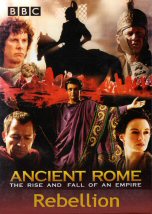
In Egypt, Caesar rebukes the advisers of the boy king, Ptolemy XIII, for their presumption in eliminating Pompey and demands the man who killed him. Caesar decides to intervene in the dispute between Ptolemy and his sister-wife, Cleopatra, to ensure both Rome's grain supply and his own access to Egypt's treasure. Antony, in an unusual show of prudence, advises against this with only half a legion in Alexandria and Cato and Scipio still at large in Africa. In Rome, Brutus gets a chilly reception from Servilia when he returns home from Greece.
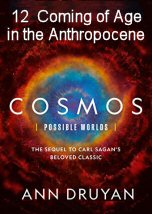
The 8th episode reviews Giovanni Cassini's life. His observations of Saturn and its moons would have an enduring effect on the scientific world. Neil deGrasse Tyson also narrates the mysterious untold story of the scientist who figured out how to go the Moon while fighting for his life in a WWI trench. Aleksandr Shargei changed his name to Yuri Kondratyuk out of fear for his life and wrote a manuscript on rocket motion and space colonization. This letter would end up capturing the attention of an engineer working on the Apollo program, John Houbolt, and would made the Apollo Mission possible. We will also know the saga of the twenty-year long odyssey of Cassini-Huygens spacecraft, a robotic explorer ordered to commit suicide on another world.
























He also chats with Don Zientara, owner of Inner Ear Studios, which the Virginia-raised Grohl says 'produced the entire soundtrack of my youth,' as well as with members of the harDCore band Bad Brains and Ian MacKaye of Teen Idles, Minor Threat and Fugazi, who all recorded at Inner Ear over the decades. The song 'The Feast and the Famine' is recorded during this episode.