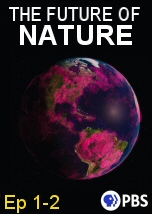
This visionary documentary series asks a bold and urgent question: how can the power of nature itself help repair the damage we have done to the planet and even reverse climate change? Drawing on cutting-edge science and filmed across some of Earth’s most vital ecosystems, the series reveals nature not as a victim, but as one of our strongest allies. It offers a hopeful glimpse into a future where working with natural systems could restore balance, resilience, and abundance on a global scale. In the first two episodes, the focus turns to oceans and grasslands, two of the planet’s most powerful yet underestimated climate regulators. Viewers discover how marine life plays a crucial role in removing carbon from the atmosphere, and how vast grasslands, sustained by thriving animal populations, lock away carbon beneath the surface. Through new research and striking imagery, the episodes show why protecting and restoring these ecosystems is essential to our future—and how human action can help them recover.
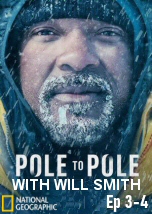
Inspired by his late mentor, Will Smith embarks on a 100-day, pole-to-pole odyssey that pushes him far beyond his comfort zone. Traveling alongside scientists, explorers, and local experts, he climbs remote mountains, dives beneath polar ice, and confronts the raw power of nature. The journey blends adrenaline and curiosity, revealing how extreme environments shape life—and how facing the planet’s edges can reshape us, too. In the first two episodes, the adventure begins with sweeping ambition and immediate immersion. Smith sets out on the global route with National Geographic, then plunges into the Amazon rainforest, tracking dangerous wildlife and learning from those who know the jungle best. It’s a vivid opening that sets the tone for a quest defined by discovery, risk, and awe at the natural world.
In episodes 3 and 4, the journey intensifies as Will Smith pushes deeper into both the physical and emotional extremes of the planet. In the Amazon, he ventures into dense, unforgiving jungle in search of the elusive green anaconda, confronting fear, danger, and the raw power of one of Earth’s most mysterious predators. Guided by local experts, the expedition becomes a test of courage and trust in a world where nature sets all the rules. The adventure then shifts dramatically to the Himalayas, where the challenge is no longer survival but meaning. High above the clouds, Will explores the idea of happiness alongside monks, scientists, and mountain communities, discovering how isolation, altitude, and ancient wisdom reshape the human mind. Together, these episodes connect the wildness of nature with the inner journey of self-discovery, revealing that the greatest expedition may be the one within.
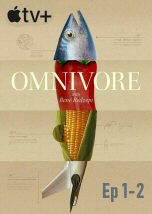
Across cultures and continents, this documentary explores how food has shaped civilizations, beliefs, and human identity throughout history. Narrated with a global perspective, it reveals how essential ingredients — from the simplest to the most prized — have influenced economies, traditions, and ways of life. From remote landscapes to bustling markets, it offers a captivating look at how what we eat connects the past with the future. In the first two episodes, the journey dives into the explosive story of chili peppers, tracing their path from humble origins to powerful cultural symbols across the world, from mild flavors to extreme heat. It then turns to bluefin tuna, uncovering how a once-overlooked fish became one of the most coveted and controversial delicacies on the planet, exposing a dramatic tale of demand, transformation, and global impact.
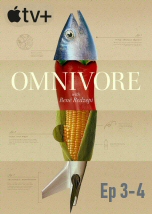
In episodes 3 and 4, a seemingly simple ingredient becomes the invisible force that has shaped civilizations, fueled exploration, and quietly dictated the fate of empires. From ancient trade routes to modern industry, salt emerges not just as a seasoning, but as a powerful driver of human history and survival. At the same time, the story shifts to something far more familiar yet equally unsettling: the global dominance of a single type of banana. What appears to be abundance hides a fragile system built on uniformity, where one disease could wipe out a staple food relied upon by millions. As the journey unfolds, the narrative exposes the hidden cost of convenience and monoculture, revealing how the loss of biodiversity is not a distant ecological concern but an immediate threat to our food security and future. With striking connections between past and present, these episodes invite you to rethink what you eat, where it comes from, and how something as ordinary as salt or a banana could hold the key to understanding the balance—and imbalance—of our world.
This powerful documentary examines the origins, ideology and evolution of one of the most feared organizations of Nazi Germany. It explores how the SS (Schutzstaffel) transformed from a small protective unit into a vast and ruthless machine that played a central role in the Holocaust. Through detailed analysis and historical evidence, it reveals the distorted beliefs, calculated strategies and systematic brutality that defined its actions, offering a chilling insight into how ordinary structures were turned into instruments of terror on an unprecedented scale. In the first three episodes, the focus turns to the rise of the SS and the individuals who helped shape its power. It traces how recruits were selected and why the organization appealed to certain men, uncovering the mindset behind their commitment. The story delves into the figure of Heinrich Himmler, an unlikely leader whose vision and ambition drove the expansion of the SS, as well as Reinhard Heydrich, whose cold and methodical approach made him one of the key architects of the Holocaust. Together, these episodes reveal how leadership, ideology and personal ambition combined to fuel one of history’s darkest forces.











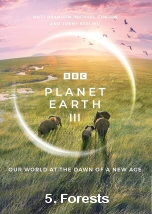











In the first two episodes, the focus turns to oceans and grasslands, two of the planet’s most powerful yet underestimated climate regulators. Viewers discover how marine life plays a crucial role in removing carbon from the atmosphere, and how vast grasslands, sustained by thriving animal populations, lock away carbon beneath the surface. Through new research and striking imagery, the episodes show why protecting and restoring these ecosystems is essential to our future—and how human action can help them recover.