For all of human history, the Sun, our home star, has measured our days and our seasons while fueling all life on Earth. Yet it remains an enigma. NASA's Parker Probe Plus is on a mission to change that, flying through dangerous radiation to become the closest spaceship to orbit our Sun. It's a journey to the center of our solar system, a mission to gather information about the most critical celestial body in the sky, our star.
How is the universe put together? How is it built? And how does it actually work? How the Universe Works Series 8 shows the inner workings of our planet, the solar system, the galaxies and the universe itself. In the first episode, if a massive asteroid collides with earth, it could end life on our planet as we know it. New discoveries and cutting-edge tech reveal just how close we are to apocalypse and what it would take for the world's leading space agencies to stop it.
The climate is changing faster than ever, which is why 'fix our climate' is one of the five goals of the Earthshot Prize. Prince William, Sir David Attenborough and Christiana Figueres highlight inspiring and often unexpected solutions to the challenge. In this film, we'll explain the scale of the problem posed by climate change and will introduce you to some amazing people already working on climate crisis. One of these three finalists will win the Earthshot Prize and get the platform and resources they need to scale their ground-breaking work. Nine more solutions for fixing our climate will receive the same support over the course of this decade.
Professor Brian Cox journeys across the vastness of time and space revealing epic moments of sheer drama that changed the universe forever. The series begins this epic exploration of the cosmos with a hymn to the great luminous bodies that bring light and warmth to the universe: the stars. It is estimated that there are two hundred trillion stars in the universe, each playing their part in an epic story of creation- a great saga that stretches from the dawn of time, with the arrival of the first star, through diverse generations until the arrival of our own star, the sun, and a civilization that has grown up in its light.
Does life exist on other planets? Astrobiology is a visionary new science that searches for life in space by combining the disciplines of astronomy, biology and geology. How did life evolve on Earth? What will life look like on other planets? These and other pertinent questions will be answered by a diverse group of scientists. Viewers will visit the Pilbara region of West Australia where the oldest evidence of life on Earth has been discovered. Travel to the moons of Jupiter and Saturn to test a theory that life could exist in the clouds of Venus. Finally, watch as experiments are done to see if life exists on exoplanets, earth-like planets beyond our solar system.
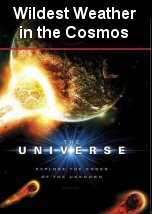
Imagine a tornado so powerful, it can form a planet, or winds sweeping across a planet but blowing at 6,000 miles per hour! How about rain....made of iron? Sounds like science fiction, but this type of weather is occurring daily in our solar system. Scientists are just beginning to unlock the secrets of these planets and their atmospheres. Can this research help scientists solve long unanswered questions that we have about Earth? As our own planet churns with the effects of global warming, it's natural to look into the heavens and wonder about the rest of the real estate.









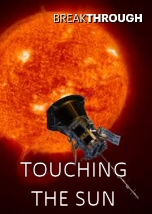




It's a journey to the center of our solar system, a mission to gather information about the most critical celestial body in the sky, our star.