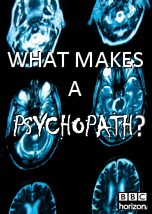
Psychopaths have long captured the public imagination. Painted as charismatic, violent predators lacking in all empathy, they provide intrigue and horror in equal measure. But what precisely is a psychopath? What is it that drives them to cause harm, even kill? And can they ever be cured? The film also features a series of candid interviews with prison inmates who not only describe their crimes but why they think they committed them. 'What Makes a Psychopath?' explores not only how each individual's crimes were shaped by their own life experiences, but also gives an insight into how these people think and behave. Working with the world's experts in the field, the film sheds light on the biological, psychological and environmental influences that shape a psychopath. And it looks to the future, with ground-breaking research that suggests a lifetime of incarceration is not the only option to manage violent and dangerous psychopaths.
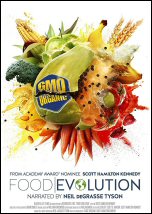
The film looks at one of the most critical questions facing the world today-that of food security-and demonstrates the desperate need for common sense, solid information, and calm logical deliberation. Using the often angry and emotional controversy over genetically-modified foods as its entry point, Food Evolution shows how easily fear and misinformation can overwhelm objective, evidence-based analysis. Food Evolution takes the position that science and scientists hold the key to solving the food crisis. But whose science? In the GMO debate, both sides claim science is on their side. Who's right? How do we figure this out? What does this mean for the larger issues of food security, sustainability, and environmental well-being? Food Evolution seeks to answer these critically important questions.
40,000 years ago the steppes of Eurasia were home to our closest human relative, the Neanderthals. Recent genetic and archaeological discoveries have proven that they were not the dim-witted cave dwellers we long thought they were. In fact, they were cultured, technologically savvy and more like us than we ever imagined! So why did they disappear? We accompany scientists on an exciting search for an answer to this question and come to a startling conclusion... A climate change due to a cataclysmic event.
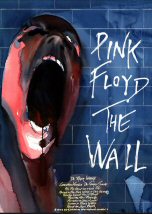
Three years in the making, Francis Whately’s film is a social and musical history of (probably) the world’s greatest music festival, as told by its principal curators, Michael and Emily Eavis, and many of the key artists who’ve appeared there between 1970 and 2019 – Billie Eilish, Thom Yorke, Florence Welch, Dua Lipa, The Levellers, Aswad, Orbital, Fatboy Slim, Linda Lewis, Noel Gallagher, Ed O’Brien, Chris Martin, Stormzy and more. Balancing the driving forces of social conscience and hedonism, Glastonbury has always been both a world apart and a barometer of the state of the nation. Looking at the hippie days, CND, the contribution of the travellers, dance music, Britpop, The Wall, the impact of television and the first black British solo headliner, this film takes viewers backstage and deep into the archive to reveal the forces that have driven this alternative nation between utopia and dystopia, the greatest night of your life and a muddy field in the middle of nowhere. This is not a chronological plod through the festival’s evolution so much as a thematic and story-driven exploration of the peaks and troughs, and the agonies and ecstasies, that have shaped Glastonbury’s 50 years and counting.
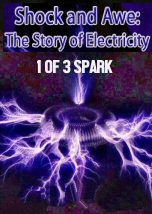
Professor Jim Al-Khalili tells the electrifying story of our quest to master nature's most mysterious force - electricity. Until fairly recently, electricity was seen as a magical power, but it is now the lifeblood of the modern world and underpins every aspect of our technological advancements.Without electricity, we would be lost. This series tells of dazzling leaps of imagination and extraordinary experiments - a story of maverick geniuses who used electricity to light our cities, to communicate across the seas and through the air, to create modern industry and to give us the digital revolution. Episode one tells the story of the very first 'natural philosophers' who started to unlock the mysteries of electricity. They studied its curious link to life, built strange and powerful instruments to create it and even tamed lightning itself. It was these men who truly laid the foundations of the modern world. Electricity was without doubt a fantastical wonder. This is the story about what happened when the first real concerted effort was made to understand electricity; how we learned to create and store it, before finally creating something that enabled us to make it at will - the battery.
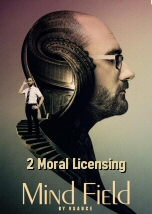
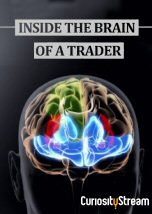
After several rogue traders stories made the headlines these last years, revealing the human factor behind the global economy, neuroscientists have started to scrutinize traders' brain and stress management. What stimulates and motivates them? How can their brain cope with such a high level of stress and competition? This film investigates further into Neuroeconomics, showing how traders are being governed by unconscious psychological and biological processes which can trigger borderline behaviours and have disastrous financial consequences on the financial markets.












'What Makes a Psychopath?' explores not only how each individual's crimes were shaped by their own life experiences, but also gives an insight into how these people think and behave. Working with the world's experts in the field, the film sheds light on the biological, psychological and environmental influences that shape a psychopath. And it looks to the future, with ground-breaking research that suggests a lifetime of incarceration is not the only option to manage violent and dangerous psychopaths.