
Last Watched

"TT"  Sort by

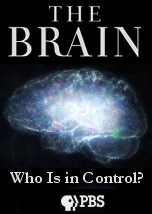
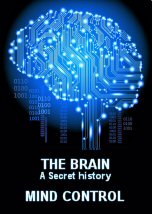
The Brain: Mind Control

   2011    Medicine
Dr Michael Mosley traces the sinister ways the experimental psychology has used to try to control our minds. He finds that the pursuit of mind control has led to some truly horrific experiments and left many casualties in its wake. Extraordinary archive captures what happened - scientists systematically change the behaviour of children; law abiding citizens give fatal electric shocks; a gay man has electrodes implanted in his head in an attempt to turn his sexuality. Michael takes a hallucinogenic drug as part of a controlled experiment to try to understand how its mind-bending properties can change the brain. This is a scientific journey goes to the very heart of what we hold most dear - our free will, and our ability to control our own destiny.
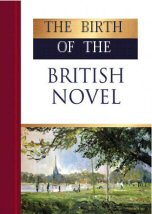
Birth of the British Novel

   2011    Art
Author Henry Hitchings explores the lives and works of Britain's radical and pioneering 18th-century novelists who, in just 80 years, established all the literary genres we recognise today. It was a golden age of creativity led by Daniel Defoe, Jonathan Swift, Henry Fielding, Laurence Sterne, Fanny Burney and William Godwin, amongst others. Robinson Crusoe, Gulliver's Travels, Tom Jones and Tristram Shandy are novels that still sparkle with audacity and innovation. On his journey through 18th-century fiction, Hitchings reveals how the novel was more than mere entertainment, it was also a subversive hand-grenade that would change British society for the better. He travels from the homes of Britain's great and good to its lowliest prisons, meeting contemporary writers like Martin Amis, Will Self, Tom McCarthy and Jenny Uglow on the way.

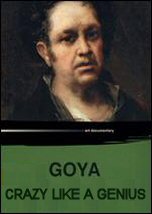
Goya: Crazy Like A Genius

   2007    Art
Written and presented by Robert Hughes, one of the world’s most prominent art commentators, this program explores the life and work of Francisco Goya—focusing on the painter’s subversive, often gruesome outlook. The video provides in-depth visual and intellectual analysis of dark Goya masterpieces, including The Dream of Reason, Witches in the Air, and The Third of May, as well as examples of his portraiture and early work—such as The Duchess of Alba, both Majas, and a gratuitously violent tapestry painting. Links between Goya’s work, deafness, and political stance are explored in detail, while observations from painter Leon Golub highlight Goya’s continuing relevance.

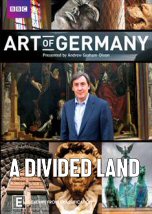
The Art of Germany: A Divided Land

   2010    Art
Andrew Graham-Dixon begins his exploration of German art by looking at the rich and often neglected art of the German middle ages and Renaissance. He visits the towering cathedral of Cologne, a place which encapsulates the varied and often contradictory character of German art. In Munch he gets to grips with the earliest paintings of the Northern Renaissance, the woodcuts of Albrecht Durer and the cosmic visions of the painter Albrecht Altdorfer. Andrew also embarks on a tour of the Bavarian countryside, discovering some of the little-known treasures of German limewood sculpture.
Series: The Art of Germany

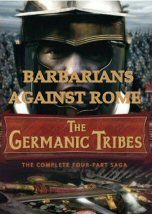
The Germanic Tribes: Barbarians Against Rome

   2007    History
This acclaimed multi-million dollar 4 part series shows the rise of the tribes of a primitive culture on the fringe of northern Europe to become the heirs of the Roman Empire. Since the age of Caesar this Roman-Germanic conflict was characterized not only by fierce battles but also by phases of co-existence & cooperation. the Germans dug the grave of the Roman Empire, but were also the preserves of the Roman legacy.
Series: The Germanic Tribes

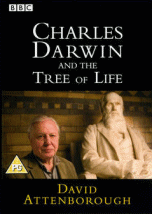
Charles Darwin and the Tree of Life

   2009    Science
David Attenborough asks three key questions: how and why did Darwin come up with his theory of evolution? Why do we think he was right? And why is it more important now than ever before? David starts his journey in Darwin's home at Down House in Kent, where Darwin worried and puzzled over the origins of life. David goes back to his roots in Leicestershire, where he hunted for fossils as a child, and where another schoolboy unearthed a significant find in the 1950s. And he revisits Cambridge University, where both he and Darwin studied, and where many years later the DNA double helix was discovered, providing the foundations for genetics. At the end of his journey in the Natural History Museum in London, David concludes that Darwin's great insight revolutionised the way in which we see the world. We now understand why there are so many different species, and why they are distributed in the way they are. But above all, Darwin has shown us that we are not set apart from the natural world, and do not have dominion over it. We are subject to its laws and processes, as are all other animals on earth to which, indeed, we are related.
Life In Cold Blood

Life In Cold Blood

2008  Nature
Building Giants

Building Giants

2019  Technology
The Story of the Jews

The Story of the Jews

2013  History
Leaving Neverland

Leaving Neverland

2019  Culture
Through the Wormhole

Through the Wormhole

2011  Science
Dark Net

Dark Net

2016  Technology