This archival-driven documentary delves into the early transformation of a young singer from Michigan into a global pop phenomenon between 1978 and 1992. Through rarely heard audio tapes and unseen footage, it reveals her vulnerabilities—her mother's untimely death, the losses of close friends, and the fierce ambition that fueled her rise. These emotional undercurrents are woven into a broader narrative of cultural rebellion: Embracing MTV, challenging conservative norms, and amplifying gay aesthetics—all leading to the provocative release of the Sex book and the emergence of an outspoken HIV/AIDS activist. Immersive and intimate, the film portrays a determined artist who became more than a pop star—she emerged as a cultural catalyst. Highlighting her reinventions, bold provocations, and personal losses, it reframes her ascent as not just fame, but identity forged.
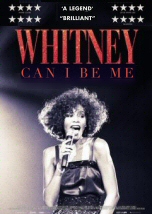
From the age of 15, Whitney Houston began to enter the world of music. In 1983, she signed a contract with Clive David from Arista Records. From then on, she began a life of excess, luxury, fame, drugs, and many scandals. The documentary pays special attention to her relationships with her mother, father, husband and daughter, as well as her former best friend Robyn Crawford. It also addresses the singer's history of drug use, including overdose allegations in the 1990s, her early days as a gospel singer, her discovery by Arista Records boss Clive Davis, and key moments such as the releases of her debut album in 1985 and the film The Bodyguard in 1992. The film tells the story of the life and death of Whitney Houston, who marked a before and after in the history of music. It has been made with archival footage of the artist, from her concerts, interviews and home videos.
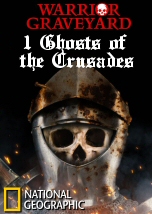
The series Warrior Graveyard uncovers some extraordinary warrior skeletons from history. Archaeologists and forensic scientists use remains to tell the story of famous warriors of the past and unleash the full force of modern forensics upon them: battle scars, bone deformations and recoverable scraps of DNA will all be tested and explored. CGI and drama will then bring them dramatically to life, revealing a revolutionary new picture of how these warriors lived - and died. An archaeological and forensic examination of six crusaders' bones brings to life the 1179 Battle of Jacob's Ford, revealing the wounds that killed the warriors in the Holy Land. With every sword slash comes an insight into an historic day. Excavations along the Israel/ Jordan border are unearthing skeletons and rewriting the history of the First Crusade. The site at Jacob's Ford is the only known Crusader battle site with complete skeletons. To secure the road between Akkon and Damascus, King Baldwin IV of Jerusalem had a mighty castle built at the Jacob's Ford of the Jordan River in October 1178. The fortress was a thorn in the side of Sultan Saladin, so he had it stormed a year later, before it was completed. Excavations have been taking place on the site of the legendary crusader castle since the early 1990s. Archaeologists and forensic experts have examined the remains of six fallen crusaders and uncovered fascinating details about the Battle of Chastellet. The programme has secured access to the excavation and remains of some of the 80 Crusader Knights and 750 foot soldiers stationed at the fort when it was attacked and its Crusaders massacred by Saladin's army in 1179, in the battle that changed the course of history in the Middle East.
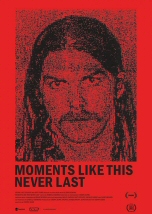
Dash Snow rejected a life of privilege to make his own way as an artist on the streets of downtown New York City in the late 1990s. Developing from a notorious graffiti tagger into an international art star, he documented his drug- and alcohol-fueled nights with the surrogate family he formed with friends and fellow artists Ryan McGinley and Dan Colen before his death by heroin overdose in 2009. Drawing from Snow's unforgettable body of work and involving archival footage, Cheryl Dunn's exceptional portrait captures his all-too-brief life of reckless excess and creativity.
A ground-breaking new trial at Imperial College London sees, for the first time ever under controlled conditions, a psychedelic drug tested head-to-head against a standard antidepressant as a treatment for depression. The film follows a pioneering team of scientists and psychotherapists as they compare the effects of psilocybin (the active ingredient of magic mushrooms) with an antidepressant on a small group of participants with clinical depression. This is scientific research at its most cutting edge. With over seven million people being prescribed antidepressants each year in England alone, this drug trial is an important milestone in understanding a completely different treatment for depression. How do psychedelic drugs measure up against the industry-standard antidepressants that have been popular since the 1990s? The empirical results of the trial are explored alongside the participants’ powerful lived experience.
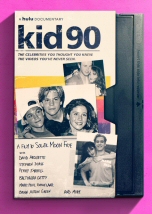
As a teenager in the 90s, Soleil Moon Frye carried a video camera everywhere she went documenting her group of friends as they grew up in Hollywood and New York City. Frye spent four years going through footage she had shot and used hundreds of hours of films to build an intimate look at young Hollywood starlets growing up in the 1990s. David Arquette, Balthazar Getty, Brian Austin Green, Stephen Dorff, Mark-Paul Gosselaar, Danny Boy O'Connor, Heather McComb appear in the film, while Harold Hunter, Justin Pierce, Jenny Lewis, Sara Gilbert, Charlie Sheen, Leonardo DiCaprio, Mark Wahlberg, Corey Feldman, Michael Rapaport, and Jonathan Brandis appear in the film through footage shot by Frye.







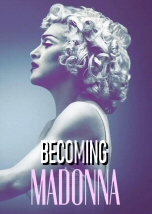


Immersive and intimate, the film portrays a determined artist who became more than a pop star—she emerged as a cultural catalyst. Highlighting her reinventions, bold provocations, and personal losses, it reframes her ascent as not just fame, but identity forged.