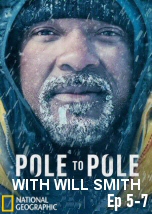
In 1914, Ernest Shackleton set out with 27 men aboard the Endurance on one of the boldest expeditions of the Heroic Age of Antarctic exploration: an attempt to cross the frozen continent from the Weddell Sea to the Ross Sea. But before they could even reach land, the ship became trapped in pack ice. Months later, crushed by the pressure, the Endurance was lost, leaving the crew stranded in one of the most hostile environments on Earth with no contact with the outside world. What follows is an extraordinary story of survival, leadership and endurance. Shackleton abandons the original goal and focuses entirely on bringing every man home alive, leading his crew across drifting ice, open ocean and some of the most dangerous seas on the planet. Using Frank Hurley’s remarkable original photographs and film footage, archived voices and letters from expedition members, interviews with their descendants and newly filmed images of the actual locations, the documentary brings this legendary 1914-1916 ordeal vividly back to life.
Historian Bettany Hughes journeys across ancient Anatolia, modern-day Türkiye, to uncover some of the earliest foundations of civilisation. From Göbeklitepe and Karahantepe to Sardis, Gordion, Ephesus and Cappadocia, she explores how the first settled communities developed agriculture, religion, trade and urban life, while remarkable discoveries such as early monumental buildings, ancient weapons and life-sized human sculptures reveal a world far more sophisticated than once imagined. Moving through landscapes where myth and history constantly overlap, Hughes follows the rise of kingdoms and empires, encounters the world of King Midas, and traces how Anatolia became a crossroads connecting cultures across continents. Presented here with both episodes combined into a single video, the series offers a sweeping archaeological journey into the places where some of humanity’s most important ideas, beliefs and institutions first began to take shape.
Around 12,000 years ago, humans began one of the most important transformations in history: the shift from hunting and gathering to farming and permanent settlements. Archaeological sites such as Gobekli Tepe reveal how these early communities lived, what they believed and how agriculture transformed diet, population and social life. Across Europe and the Middle East, prehistoric societies also created huge stone monuments, tombs and ceremonial sites, moving blocks weighing many tons with surprisingly limited technology. Presented here with both episodes combined into a single video, the documentary explores the birth of farming, organized communities, belief systems and monumental architecture during the Stone Age.
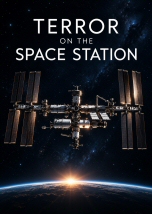
Orbiting Earth at around 27.000 km/h, the International Space Station is one of humanity’s greatest engineering achievements, but also one of the most unforgiving places ever built. Astronauts and mission controllers recount moments when routine work suddenly became a fight for survival: a spacesuit filling with water, toxic ammonia spraying across a spacewalker, dangerous temperature extremes, radiation, fire, contamination and the constant threat of collision. The series reveals how every mission depends on training, improvisation and split-second decisions in an environment where even a small failure can become fatal. Across the two episodes, presented here together in a single uninterrupted video, the danger escalates from the hazardous construction and maintenance of the station to the growing risks of life aboard it. Astronauts face micrometeoroids and space debris travelling at lethal speeds, docking emergencies and system failures, culminating in the extraordinary 2021 incident when the newly arrived Nauka module unexpectedly fired its thrusters and sent the entire ISS rotating out of control. With communications at risk and the structure under immense strain, crews in orbit and controllers on Earth must work together to regain control. The result is a gripping story of courage, science and survival inside a machine that has kept humans continuously living in space for more than two decades.
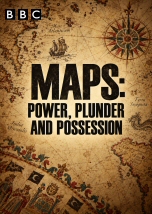
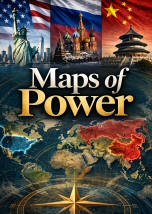
Professor Jerry Brotton reveals that maps are far more than neutral guides to places: they are expressions of the societies that create them and powerful instruments for shaping territory, belief and authority. Beginning with some of the earliest known maps, he traces how cartography evolved from marking land and ownership to serving kings, empires, scientists and governments. From Henry VIII’s coastal surveys and the Cassini family’s scientific breakthroughs to the drawing of modern national borders, the series shows how maps can define who controls land, who belongs where and even how entire peoples understand the world around them. Across the three episodes, presented here together in a single uninterrupted video, the journey moves from ancient and medieval worldviews to imperial expansion and the digital age. Brotton explores religious maps, Aztec symbolism, Victorian attempts to classify societies, the politics behind projections of the globe, and the rise of Google Earth and data-driven mapping. He then follows the mapmakers and explorers who turned distant lands into targets for conquest and profit, from Ptolemy and Columbus to Walter Raleigh and the trading empires that followed. The story ends in the Arctic, where new maps are once again being used to stake claims over oil, gas and minerals, proving that even in the twenty-first century, cartography remains inseparable from power, plunder and possession.
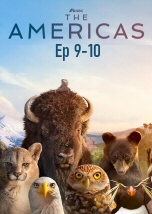
In the final two episodes, the journey reaches the Pacific edge of North America and the remote wilderness of Patagonia, two spectacular regions shaped by powerful oceans, towering forests and extreme weather. Along the West Coast, wolves comb the shoreline for food, sea otters battle crashing surf, blue whales gather in a rare display of speed and movement, and giant Pacific octopuses devote everything to protecting the next generation. High in the redwood canopy, even tiny salamanders perform extraordinary leaps to survive, revealing how life has adapted to one of the continent’s most dramatic coastal environments. The series then travels to the far south of the Americas, where Patagonia delivers a fittingly wild finale. Pumas stalk guanacos through snowy mountains, rockhopper penguins fight their way through violent waves to reach their colonies, giant stag beetles climb immense trees to compete for mates, and elephant seals clash for dominance along the coast. In one of the most remarkable scenes, a family of orcas passes down a dangerous hunting technique from one generation to the next, showing how survival here depends not only on strength, but also on experience, cooperation and learning.







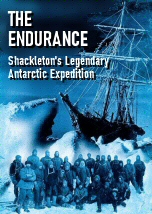


What follows is an extraordinary story of survival, leadership and endurance. Shackleton abandons the original goal and focuses entirely on bringing every man home alive, leading his crew across drifting ice, open ocean and some of the most dangerous seas on the planet. Using Frank Hurley’s remarkable original photographs and film footage, archived voices and letters from expedition members, interviews with their descendants and newly filmed images of the actual locations, the documentary brings this legendary 1914-1916 ordeal vividly back to life.