Professor Jerry Brotton reveals that maps are far more than neutral guides to places: they are expressions of the societies that create them and powerful instruments for shaping territory, belief and authority. Beginning with some of the earliest known maps, he traces how cartography evolved from marking land and ownership to serving kings, empires, scientists and governments. From Henry VIII’s coastal surveys and the Cassini family’s scientific breakthroughs to the drawing of modern national borders, the series shows how maps can define who controls land, who belongs where and even how entire peoples understand the world around them. Across the three episodes, presented here together in a single uninterrupted video, the journey moves from ancient and medieval worldviews to imperial expansion and the digital age. Brotton explores religious maps, Aztec symbolism, Victorian attempts to classify societies, the politics behind projections of the globe, and the rise of Google Earth and data-driven mapping. He then follows the mapmakers and explorers who turned distant lands into targets for conquest and profit, from Ptolemy and Columbus to Walter Raleigh and the trading empires that followed. The story ends in the Arctic, where new maps are once again being used to stake claims over oil, gas and minerals, proving that even in the twenty-first century, cartography remains inseparable from power, plunder and possession.
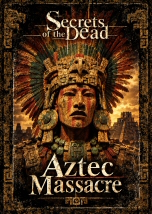
A mass grave at Zultepec, Mexico, containing more than 400 mutilated skeletons forces archaeologists to reconsider one of the most familiar stories of the Spanish conquest. Led by Aztec specialist Elizabeth Baquedano, the investigation follows forensic clues hidden in skulls, bones and artifacts to identify the victims and reconstruct what happened. Some remains prove to be European, including women, while Spanish-made iron objects and evidence of horses link the dead directly to the conquistadors who entered Mexico in the early sixteenth century. The evidence reveals a far more violent confrontation than the traditional image of an easy Spanish victory. Captured Spaniards and members of their entourage appear to have been imprisoned, ritually sacrificed, dismembered and, in some cases, consumed as part of ceremonial practices. By combining archaeology, forensic anthropology and Aztec codices, the documentary shows that indigenous resistance to the conquistadors could be organized, successful and terrifyingly effective, transforming Zultepec into crucial physical evidence of a conflict that history had long oversimplified.
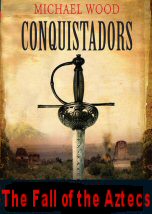
Hernan Cortes left Cuba in 1519 seeking riches in the island to the west. Instead he discovered, and ultimately destroyed, a hitherto unknown civilization. Join Micheal Wood as he retraces this fateful expedition. Read Spanish eyewitness accounts that describe the conquistadors' awe at the Aztec achievements and the lust for native treasure. Learn the Aztec' side of the story by scrolling trough pictographs that tell of the agonizing fall of the empire.
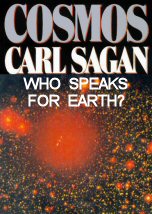
Sagan reflects on the future of humanity and the question of 'who speaks for Earth?' when meeting extraterrestrials. He discusses the very different meetings of the Tlingit people and explorer Jean-François de La Perouse with the destruction of the Aztecs by Spanish conquistadors, the looming threat of nuclear warfare, and the threats shown by destruction of the Library of Alexandria and the murder of Hypatia. The episode ends with an overview of the beginning of the universe, the evolution of life, and the accomplishments of humanity and makes a plea to mankind to cherish life and continue its journey in the cosmos. The Cosmos Update notes the preliminary reconnaissance of planets with spacecraft, the fall of the Berlin Wall and the end of apartheid in South Africa, and measures towards the reduction of nuclear weapons.
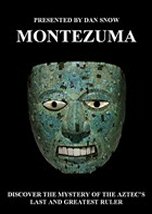
Montezuma Dan Snow journeys to the ancient heart of Mexico in search of the lost civilisation of the Aztecs and their last and greatest ruler, Montezuma II (1502-1520). Montezuma inherited an empire of five million people, stretching from present-day Mexico to Nicaragua, from his uncle. His rule was marked by incessant warfare. Enemy states were growing more powerful and conquered tribes were becoming more rebellious. Within months of taking the throne in 1502, he went changed a man of good reason into a pitiless autocrat who declared himself a god, believing that fear and ruthlessness were the only ways to stop the empire falling apart. Yet it was at the hands of Cortes and the Spanish conquistadors that Montezuma met his downfall. But what was his relationship with Cortes, and why did such a ruthless leader submit to his captors with such relative ease? As Dan Snow visits the ruins and picks through current excavations, he pieces together the evidence of a gripping story: a divine tragedy of errors, the clash of civilisations, the end of a world - and a very human God.







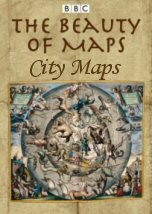
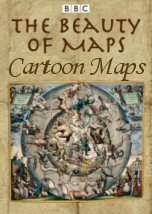



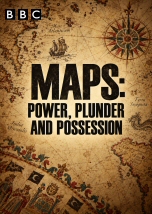

Across the three episodes, presented here together in a single uninterrupted video, the journey moves from ancient and medieval worldviews to imperial expansion and the digital age. Brotton explores religious maps, Aztec symbolism, Victorian attempts to classify societies, the politics behind projections of the globe, and the rise of Google Earth and data-driven mapping. He then follows the mapmakers and explorers who turned distant lands into targets for conquest and profit, from Ptolemy and Columbus to Walter Raleigh and the trading empires that followed. The story ends in the Arctic, where new maps are once again being used to stake claims over oil, gas and minerals, proving that even in the twenty-first century, cartography remains inseparable from power, plunder and possession.