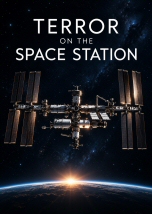
Orbiting Earth at around 27.000 km/h, the International Space Station is one of humanity’s greatest engineering achievements, but also one of the most unforgiving places ever built. Astronauts and mission controllers recount moments when routine work suddenly became a fight for survival: a spacesuit filling with water, toxic ammonia spraying across a spacewalker, dangerous temperature extremes, radiation, fire, contamination and the constant threat of collision. The series reveals how every mission depends on training, improvisation and split-second decisions in an environment where even a small failure can become fatal. Across the two episodes, presented here together in a single uninterrupted video, the danger escalates from the hazardous construction and maintenance of the station to the growing risks of life aboard it. Astronauts face micrometeoroids and space debris travelling at lethal speeds, docking emergencies and system failures, culminating in the extraordinary 2021 incident when the newly arrived Nauka module unexpectedly fired its thrusters and sent the entire ISS rotating out of control. With communications at risk and the structure under immense strain, crews in orbit and controllers on Earth must work together to regain control. The result is a gripping story of courage, science and survival inside a machine that has kept humans continuously living in space for more than two decades.
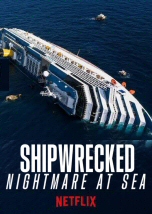
What begins as a dream Mediterranean holiday turns into an unimaginable fight for survival. On the night of January 13, 2012, passengers aboard the luxurious Costa Concordia are dining and putting children to bed when the ship sails dangerously close to the Italian island of Giglio and strikes underwater rocks. As the vessel loses power and begins to flood and tilt, confusion spreads through its glittering corridors. Passengers are initially told there is only an electrical problem, while precious minutes pass before an evacuation is ordered and lifeboats become increasingly difficult to launch. Through extraordinary footage recorded by those on board, black-box communications and deeply personal survivor testimony, the disaster unfolds almost minute by minute: Families desperately searching for a way off the ship, crew members risking their lives to help strangers, passengers trapped as corridors become walls, and rescuers entering the enormous wreck while it threatens to shift beneath them. Behind the terrifying struggle to survive emerges an equally disturbing question—how could a modern cruise ship carrying thousands of people end up on its side just metres from shore? The deaths of 32 people, the actions of Captain Francesco Schettino and the investigation that followed transform one catastrophic night at sea into a gripping story of human courage, fatal decisions and the consequences of failure when every second matters.
Jessie Buckley narrates the extraordinary story of the first transatlantic communications cable. In 16 August 1858, a short message is telegraphed from County Kerry to Newfoundland, 3,000km away: ‘Europe and America are united by telegraph. Glory to God in the highest, on earth peace, good will towards men.’ The Morse code message is conducted along the new underwater transatlantic telegraph cable laid across the bed of the Atlantic Ocean. Sending the same message by ship would have taken at least ten days, but the transmission takes just hours and heralds the dawn of the modern communications age. The quest is driven by visionaries and pioneers. Among them are Cyrus Field, a wealthy businessman who, despite his immense success, ends his life in poverty; Samuel Morse, inventor of the telegraph and Morse code; Isambard Kingdom Brunel, the British engineer who pushes boundaries and budgets; and Belfast physicist Lord Kelvin, who calculates how to achieve what had hitherto been deemed impossible. Together, their ingenuity and relentless pursuit helps realise one of the great scientific accomplishments of their age for which Valentia, on Ireland’s remote western coast, is ground zero.
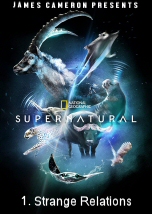
Witness the secret powers of extraordinary animals, experience the world as they do and see the SUPER/NATURAL side of nature as never before. Executive produced by James Cameron and narrated by Benedict Cumberbatch, this series uses the scientific innovations and leading-edge filmmaking technology to reveal the secret powers and super-senses of the world’s extraordinary animals. See flowers in bee-vision to eavesdropping on conversations between elephant seals to soaring the length of a football field with glow-in-the-dark squirrels. They say in nature that only the strongest survive. But when cooperation and communication bring animals and plants together and superpowers combine even the most vulnerable can become unstoppable. If you think you know nature, think again.
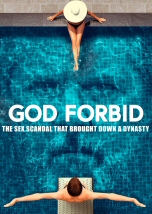
In this revealing documentary, Giancarlo Granda, former pool attendant at the Fontainebleau Hotel, shares the intimate details of his 7-year relationship with a charming older woman, Becki Falwell, and her husband, the Evangelical Trump stalwart Jerry Falwell Jr. Directed by Billy Corben, the film outlines Granda's entanglement with the Falwell's seemingly perfect lives and the overarching influence this affair had on a presidential election. The life of Jerry Falwell — the late Moral Majority televangelist who for decades helped catalyze the rightward shift of American evangelicals before his death in 2007 — is a quintessentially American story. But it’s in the next generation that the Falwell narrative becomes at once soap opera and morality tale. The film covers the graceless fall of Jerry Falwell Jr., who after the death of his father was placed in the presidency of the family’s conservative organ Liberty University. There, he seemed to remain painfully in thrall to his appetites. We hear testimony about his alleged tendency to drink on the job and discomfiting, slurry interviews between him and sympathetic media — but most crucially, we receive the testimony of Giancarlo Granda. Granda was a pool attendant at a Miami hotel when he met Falwell and his wife, Becki, in 2012. Today, he alleges that he was persuaded to have sex with Becki while Falwell watched, and that the pair engaged in an ongoing campaign of communication with him that could be described as coercive. His energies were consumed with managing their tempers and occasionally threatening behavior, and he blames the swirl of scandal around them for derailing his professional future. Plainspoken and only occasionally visibly emotional, Granda is his own best advocate as he describes a couple who, he says, craved his body and were willing to discard the rest of him.
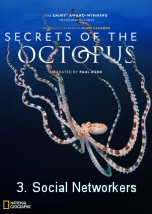
The third episode unveils the enigmatic world of octopuses, long believed solitary creatures, revealing their unexpected social behaviors. Follow Dr. Alex Schnell as she forms a unique bond with Scarlett, a shy female day octopus, challenging the long-held belief that these creatures are ultimate loners. Witness intense interactions, from rival confrontations to cooperative hunting with other species, shedding light on the complex social dynamics of these intelligent beings. The film also takes you deep beneath the ocean to octopus nurseries and an extraordinary octopus oasis where multiple species coexist. Discover how octopuses use their remarkable problem-solving abilities and sophisticated communication to navigate their environments and form selective social interactions. ‘Social Networkers’ redefines our understanding of these ancient, intelligent marine animals and their secret social lives, making it a must-watch for nature enthusiasts and curious minds alike.












Across the two episodes, presented here together in a single uninterrupted video, the danger escalates from the hazardous construction and maintenance of the station to the growing risks of life aboard it. Astronauts face micrometeoroids and space debris travelling at lethal speeds, docking emergencies and system failures, culminating in the extraordinary 2021 incident when the newly arrived Nauka module unexpectedly fired its thrusters and sent the entire ISS rotating out of control. With communications at risk and the structure under immense strain, crews in orbit and controllers on Earth must work together to regain control. The result is a gripping story of courage, science and survival inside a machine that has kept humans continuously living in space for more than two decades.