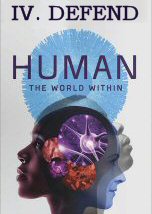
Physicist Jim Al-Khalili embarks on an extraordinary quest through 600 million years of evolution to reveal how the human brain — the most complex structure known in the universe — came to exist. With more than 100 billion neurons and 100 trillion connections, it surpasses even the stars of the Milky Way. Through breathtaking science and striking visuals, this documentary uncovers how nature transformed simple nerve cells into the ultimate thinking machine. From the first survival instincts of primates to the dawn of social intelligence, Jim explores how cooperation, relationships and empathy reshaped the brain and made us who we are. Working alongside his wife and leading researchers, he dives into fossil evidence, brain scans and the rise of artificial intelligence to answer one profound question: what makes the biological brain so unique — and can anything ever match it?
In the last four episodes, Eugene Levy’s journey turns into a celebration of contrast and courage. In the Maldives, he tries to find his sea legs at a luxurious private island resort that promises anything, anytime, anywhere. In South Africa, he experiences a powerful encounter with an elephant that changes the way he sees connection and empathy. In Portugal, he delights in rich Iberian cuisine, uncovering the soul of local traditions. Finally, in Tokyo, he steps into the ring as a sumo referee, embracing the balance between discipline, culture, and humor in a city bursting with life.
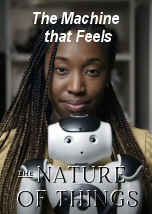
The film explores how artificial intelligence (AI) is catching up to us in ways once thought to be uniquely human: empathy, emotional intelligence and creativity. AI has the potential to reshape every aspect of our world – but most of us are unaware of what looms on the horizon. This documentary shows viewers what they need to know about a field that is advancing at a dizzying pace, often away from the public eye. Have AI the power to disconnect us from fellow humans? What does it mean when AI makes art? Can really AI interpret and understand human emotions? How is it possible that AI creates sophisticated neural networks that mimic the human brain? The documentary includes interviews with global leaders, commentators and innovators from the AI field, including Geoff Hinton, Yoshua Bengio, Ray Kurzweil and Douglas Coupland, who highlight some of the innovative and cutting-edge AI technologies that are changing our world.
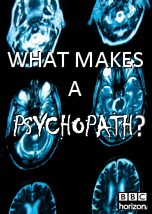
Psychopaths have long captured the public imagination. Painted as charismatic, violent predators lacking in all empathy, they provide intrigue and horror in equal measure. But what precisely is a psychopath? What is it that drives them to cause harm, even kill? And can they ever be cured? The film also features a series of candid interviews with prison inmates who not only describe their crimes but why they think they committed them. 'What Makes a Psychopath?' explores not only how each individual's crimes were shaped by their own life experiences, but also gives an insight into how these people think and behave. Working with the world's experts in the field, the film sheds light on the biological, psychological and environmental influences that shape a psychopath. And it looks to the future, with ground-breaking research that suggests a lifetime of incarceration is not the only option to manage violent and dangerous psychopaths.
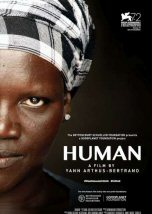
Filmmaker and artist Yann Arthus-Bertrand spent 3 years collecting real-life emotional stories from more than 2,000 women and men in 60 countries. Those emotions, those tears and smiles, those struggles and those laughs are the ones uniting us all. A combination of testimonies and exclusive aerial images, HUMAN is a unique documentary. This sensitive experience is an introspection into whom we are today as a community but also and most importantly as an individual. Through wars, inequalities, discriminations, HUMAN confronts us with the realities and the diversity of our human conditions. Beyond this darker side, testimonies show the empathy and the solidarities which we are capable of. All these contradictions are ours and HUMAN leads us to reflect about the future we wish to give to people and the planet today.
Cabeza de Vaca was shipwrecked off the coast of Texas in 1528 and lived with Indians for eight years. Upon his return to Spain, he wrote a book based on his experiences. His tale is one of empathy and respect for the Indians. Follow along as Michael Wood traces his journey.





















From the first survival instincts of primates to the dawn of social intelligence, Jim explores how cooperation, relationships and empathy reshaped the brain and made us who we are. Working alongside his wife and leading researchers, he dives into fossil evidence, brain scans and the rise of artificial intelligence to answer one profound question: what makes the biological brain so unique — and can anything ever match it?