Professor Jerry Brotton reveals that maps are far more than neutral guides to places: they are expressions of the societies that create them and powerful instruments for shaping territory, belief and authority. Beginning with some of the earliest known maps, he traces how cartography evolved from marking land and ownership to serving kings, empires, scientists and governments. From Henry VIII’s coastal surveys and the Cassini family’s scientific breakthroughs to the drawing of modern national borders, the series shows how maps can define who controls land, who belongs where and even how entire peoples understand the world around them. Across the three episodes, presented here together in a single uninterrupted video, the journey moves from ancient and medieval worldviews to imperial expansion and the digital age. Brotton explores religious maps, Aztec symbolism, Victorian attempts to classify societies, the politics behind projections of the globe, and the rise of Google Earth and data-driven mapping. He then follows the mapmakers and explorers who turned distant lands into targets for conquest and profit, from Ptolemy and Columbus to Walter Raleigh and the trading empires that followed. The story ends in the Arctic, where new maps are once again being used to stake claims over oil, gas and minerals, proving that even in the twenty-first century, cartography remains inseparable from power, plunder and possession.
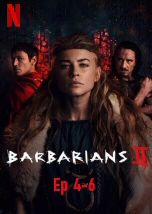
In the final three episodes of Season 2, the struggle for Germania reaches a breaking point as loyalty, vengeance and political ambition collide. Tiberius demands proof that Marbod truly stands with Rome, while Flavus makes a dangerous proposal to Germanicus. At the same time, the Germanic tribal leaders gather to proclaim Marbod king, hoping unity might finally give them the strength to resist Rome. But the fragile alliance is shattered by tragedy, and Marbod is forced to confront Tiberius directly as trust on both sides collapses. The conflict then accelerates toward open war. Thusnelda and Folkwin undertake a perilous mission, Gaius makes a shocking discovery in the forest, and Segestes offers Tiberius a treacherous bargain. With Roman reinforcements approaching by ship, Arminius and the tribes realize they may have only one chance left: strike the Roman camp before a new legion arrives. The season closes with betrayal, sacrifice and a desperate battle for freedom, as every decision threatens to determine whether the Germanic tribes remain divided or finally stand together against Rome.
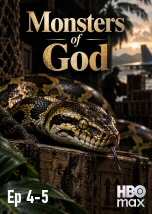
In the final two episodes of the series, the reptile trade enters a new and even more lucrative era. After prison, Tommy Crutchfield returns to find an industry transformed by the rise of genetically altered “morphs”, rare colour and pattern variations that can sell for enormous sums. What appears to be a more legitimate breeding business quickly collides again with illegal trafficking, as Operation Chameleon begins to expose the international network linking collectors, dealers and even major zoological institutions. The investigation then closes in on Anson Wong, the Malaysian trafficker described as one of the most powerful figures in the global reptile trade. As U.S. Fish and Wildlife agents work undercover to penetrate his organization, the story expands from rare snakes and lizards to critically endangered species such as the ploughshare tortoise, whose extraordinary black-market value has helped drive it toward extinction in the wild. These final episodes reveal how obsession, vast profits, corruption and international demand can turn the pursuit of exotic animals into a criminal empire with devastating consequences for wildlife.
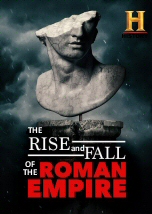
From a small and aggressive republic fighting for survival in the ancient Mediterranean to an empire that dominated much of the known world, Rome’s story is one of extraordinary ambition, conquest and transformation. The documentary follows the decisive struggles that shaped its rise, from the wars with Carthage and Hannibal to the upheavals of Spartacus, Julius Caesar and the collapse of the Republic, before Augustus establishes a new imperial order. Military power, political rivalry, engineering, law, spectacle and ruthless violence combine to reveal how Rome created a civilization of unprecedented scale, but also planted the seeds of its own destruction. At its height, the empire reaches astonishing levels of wealth and power under rulers such as Trajan and Marcus Aurelius, yet the system becomes increasingly difficult to control. Plague, civil conflict, destructive emperors such as Commodus, religious transformation and mounting pressure from Germanic peoples, Goths, Vandals and other invaders gradually weaken the foundations of Roman authority. From the Colosseum and the grandeur of imperial Rome to Attila and the invasions that accelerate its collapse, the two-part series shows how one of history’s greatest superpowers ultimately became a warning about the dangers of unchecked power and overextension. Presented here with both episodes combined into a single video, viewers can follow the complete rise and fall of Rome without interruption.
Click CC for subtitles. In the final three episodes of Season 1, Ari fully embraces his identity as Arminius and begins the dangerous task of turning divided Germanic tribes into a force capable of challenging Rome. While Varus believes he has placed a loyal Roman-trained leader at the head of the Cherusci, Arminius secretly works against him. Thusnelda and Folkwin seek support from the Bructeri, and Arminius realizes that defeating three Roman legions will require something almost impossible: convincing rival tribes to put aside their feuds and fight as one people. A political marriage between Arminius and Thusnelda strengthens their cause, while Folkwin, thought dead, is actually alive and enslaved in the Roman camp. Everything then moves toward the confrontation that will change history. Drawing on his intimate knowledge of Roman military tactics, Arminius persuades Varus to lead his legions through the forests and swamps of Germania, where their disciplined formations become a deadly weakness. As mistrust, betrayal and sacrifice threaten the fragile tribal alliance, Thusnelda takes an extreme step to preserve unity and Arminius prepares his ambush. The season culminates in the Battle of the Teutoburg Forest, where three Roman legions are drawn into a trap that will become one of the most devastating defeats in the history of the Roman Empire.
As a handful of tech billionaires accumulate unprecedented wealth, they are no longer just disrupting industries—they are challenging the very foundations of democracy, finance, and national sovereignty. With remarkable access to their world, this eye-opening investigation encounters figures such as cryptocurrency mogul Justin Sun, venture capitalist Tim Draper, and influential technology investor Peter Thiel, uncovering ambitious plans to create private cities, experimental micronations, and new technology-driven forms of government. From blockchain empires such as Tron to radical schemes designed to bypass traditional institutions, their ultimate goal may be nothing less than reshaping the global financial and political order. Travelling from Silicon Valley to controversial territories where these ideas are being tested, the film reveals the extraordinary ambitions of a new technological elite. As private fortunes gain influence once reserved for governments, one unsettling question emerges: are these visionaries building a freer future—or quietly creating a world governed by rules written by the ultra-rich?













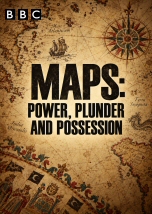


Across the three episodes, presented here together in a single uninterrupted video, the journey moves from ancient and medieval worldviews to imperial expansion and the digital age. Brotton explores religious maps, Aztec symbolism, Victorian attempts to classify societies, the politics behind projections of the globe, and the rise of Google Earth and data-driven mapping. He then follows the mapmakers and explorers who turned distant lands into targets for conquest and profit, from Ptolemy and Columbus to Walter Raleigh and the trading empires that followed. The story ends in the Arctic, where new maps are once again being used to stake claims over oil, gas and minerals, proving that even in the twenty-first century, cartography remains inseparable from power, plunder and possession.