In the shadows of American cities, far from the promises of prosperity and comfort, countless forgotten lives struggle to survive day after day. This deeply human documentary travels through streets, shelters, abandoned corners, and invisible communities where homelessness has become a harsh and permanent reality for many U.S. citizens. Through intimate encounters and raw testimonies, the film reveals the emotional wounds, broken dreams, addiction, loneliness, and resilience hidden behind faces most people pass without noticing. Accompanied by the haunting and unmistakable voice of Tom Waits, the documentary creates an atmosphere that is both poetic and devastating, transforming this journey into an unforgettable experience filled with humanity, sorrow, dignity, and reflection. More than a portrait of homelessness, it becomes a powerful exploration of abandonment, survival, and the fragile line separating ordinary life from complete social exclusion.
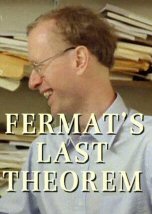
The Pythagorean Theorem is simple: x2 + y2 = z2. In this form, the equation can be solved. But what if the 2 is replaced with any positive integer greater than 2? Would the equation still be solvable? More than 300 years ago, amateur mathematician Pierre de Fermat said no, and claimed he could prove it. Unfortunately, the book margin in which he left this prophecy was too small to contain his thinking. Fermat's Last Theorem has since baffled mathematicians armed with the most advanced calculators and computers. Andrew Wiles methodically worked in near isolation to determine the proof for this seemingly simple equation.
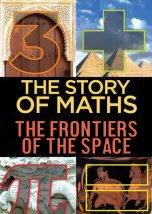
In the third episode we will see Europe by the 17th century taking over from the Middle East as the powerhouse of mathematical ideas. Great strides had been made in understanding the geometry of objects fixed in time and space. The race was on to discover the mathematics to describe objects in motion. This programme explores the work of Rene Descartes, Pierre Fermat, Isaac Newton, Leonard Euler and Carl Friedrich Gauss. Du Sautoy proceeds to describes René Descartes realisation that it was possible to describe curved lines as equations and thus link algebra and geometry. He talks with Henk J. M. Bos about Descartes. He shows how one of Pierre de Fermat’s theorems is now the basis for the codes that protect credit card transactions on the internet. He describes Isaac Newton’s development of math and physics crucial to understanding the behaviour of moving objects in engineering. He covers the Leibniz and Newton calculus controversy and the Bernoulli family. He further covers Leonhard Euler, the father of topology, and Gauss' invention of a new way of handling equations, modular arithmetic. The further contribution of Gauss to our understanding of how prime numbers are distributed is covered thus providing the platform for Bernhard Riemann's theories on prime numbers. In addition Riemann worked on the properties of objects, which he saw as manifolds that could exist in multi-dimensional space.





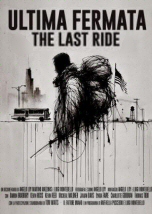

Accompanied by the haunting and unmistakable voice of Tom Waits, the documentary creates an atmosphere that is both poetic and devastating, transforming this journey into an unforgettable experience filled with humanity, sorrow, dignity, and reflection. More than a portrait of homelessness, it becomes a powerful exploration of abandonment, survival, and the fragile line separating ordinary life from complete social exclusion.