Artificial intelligence has moved from a fringe scientific dream to a technology capable of reshaping work, politics, creativity and even human survival. Through rare interviews and archival footage, pioneers such as Geoffrey Hinton and Demis Hassabis trace the breakthroughs that made modern AI possible, while former OpenAI staff and other researchers reveal the fierce rivalry, ambition and commercial pressure driving the race toward ever more powerful systems. But the deeper the film goes, the more unsettling the questions become. Hinton explains why he left Google to warn about the technology he helped create, while examples of deceptive behaviour, threatening chatbots and real-world harm expose how little even experts fully understand or control these systems. Moving with the tension of a thriller, the documentary asks whether humanity is building its greatest tool or creating something it may one day be unable to contain.
A constellation is a group of stars that are connected together to form a figure or picture. Explore some of the 88 official constellations and learn about some of the highlights of each.
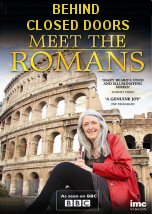
In this final episode, Mary Beard delves even deeper into ordinary Roman life by going behind the closed doors of their homes. She meets an extraordinary cast of characters - drunken housewives, teenage brides, bullied children and runaway slaves - and paints a more dynamic, lusty picture of Roman family life. Mary uncovers their preserved beds, furniture and cradles, tries on Roman wedding rings and meets some eccentric wives like Glyconis, praised by her husband for liking a drink or two, and Allia Potestas, who lived in a Roman menage a trois. Mary explores Roman parenting, childbirth and children, including Sulpicius Maximus, an 11-year-old schoolboy who was worked to death by his pushy parents, and Geminia Mater, a 5-year-old tomboy. Finally, Mary paints a more nuanced picture of Roman slavery and asks why if it was such a brutal institution did many Romans choose to be buried with their servants - living cheek by jowl in death, as in life
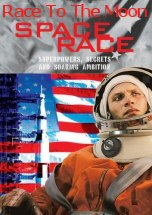
During 1964-1969 both sides now plan to put a man on the Moon - while the Soviets struggle, the Americans pull ahead in the space race with Project Gemini, but then suffer a disaster with the Apollo 1 fire. The Soviet space programme suffers its own blows: Sergei Korolev dies when his heart fails during an operation, Soyuz 1 crashes and kills cosmonaut Vladimir Komarov, and their planned moon rocket, the N-1 rocket, fails to successfully launch. In America, von Braun has difficulties with the Saturn V, but they are overcome, and the rocket successfully launches the first manned lunar mission, Apollo 8, and the first manned lunar landing, Apollo 11.






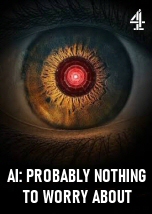



But the deeper the film goes, the more unsettling the questions become. Hinton explains why he left Google to warn about the technology he helped create, while examples of deceptive behaviour, threatening chatbots and real-world harm expose how little even experts fully understand or control these systems. Moving with the tension of a thriller, the documentary asks whether humanity is building its greatest tool or creating something it may one day be unable to contain.