(Click CC for subtitles) Ranjit, a farmer in India, takes on the fight of his life when he demands justice for his 13-year-old daughter, the victim of a brutal gang rape. His decision to support his daughter is virtually unheard of, and his journey unprecedented. Nominated for Best Documentary Award, the film has an undeniable and unshakable power. It is one of those documentaries where anyone who watches it won’t be the same person by the end as they were when it started. To Kill a Tiger offers the viewer remarkable access to village life, not just in the modest home where Ranjit’s family make roti on an open fire, but in the fields where they herd goats and collect water from a pump. The camera finds quiet details, like Ranjit’s daughter carefully weaving ribbons into her hair. Women and men insist that the community, not the criminal court, should solve the issue with a forced marriage—to remove the ‘stain on her’. The men become increasingly hostile—to the family, and eventually to the film crew itself.
Adam Rutherford meets a new creature created by American scientists, the spider-goat. It is part goat, part spider, and its milk can be used to create artificial spider's web. It is part of a new field of research, synthetic biology, with a radical aim: to break down nature into spare parts so that we can rebuild it however we please. This technology is already being used to make bio-diesel to power cars. Other researchers are looking at how we might, one day, control human emotions by sending 'biological machines' into our brains.
Hitler’s rise to power was a unique moment in history. Germany suffered a humiliating defeat in WWI; now it's crippled by massive war reparations. Hitler offers a scapegoat: the Jews. The Nazis are quick to institute anti-Semitic laws and stoke distrust of the Jews. Anyone deemed 'undesirable,' from political opponents, to the handicapped, gypsies and Jews are sent to camps. There they are either worked to death, starved or executed. But just how much did the rest of the world know of what was going on?
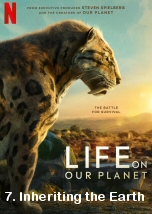
The seventh episode of the series takes us on an epic journey to discover the extraordinary dynasty of mammals. From their humble origins in the Jurassic forests to their dominance in the modern world, mammals have evolved and survived through cataclysmic events and drastic environmental changes. From the small coati in the jungle to the majestic Megacerops, passing through the elusive snow leopard in the Himalayas and the gigantic marine mammals like whales, the documentary illustrates the adaptability and diversity of these incredible beings. With stunning images and masterful narration, the documentary is a window to the resilience and beauty of life on Earth, celebrating the tenacity and ingenuity of mammals throughout the ages.
In the second episode of Asia – Above the Clouds, you will witness the incredible inhabitants of the continent’s mountainous regions. Watch elephants roaming the high-altitude tea plantations of India and swifts gathering in the majestic limestone caves of Thailand. In Pakistan, witness markhors battling on sheer cliffs, while in the forested foothills of the Himalayas in Nepal, you’ll encounter one of Asia’s most elusive mammals—the red panda. This episode unveils the secrets of life at the highest points on Earth and showcases how diverse species have adapted to the extreme conditions of the mountains.




















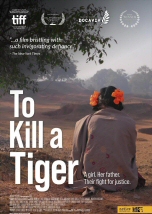







To Kill a Tiger offers the viewer remarkable access to village life, not just in the modest home where Ranjit’s family make roti on an open fire, but in the fields where they herd goats and collect water from a pump. The camera finds quiet details, like Ranjit’s daughter carefully weaving ribbons into her hair. Women and men insist that the community, not the criminal court, should solve the issue with a forced marriage—to remove the ‘stain on her’. The men become increasingly hostile—to the family, and eventually to the film crew itself.