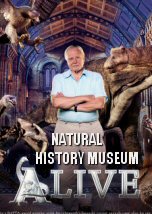
In this ground-breaking film, Sir David Attenborough takes us on a journey through the world-famous Natural History Museum in London in a captivating tale of discovery, adventure, and magic, where state-of-the-art CGI, science, and research combine to bring the museum's now long-extinct inhabitants to life to discover how these animals once roamed the planet. As the doors are locked and night falls, Attenborough stays behind and meets some of the most fascinating extinct creatures which come alive in front of his eyes; dinosaurs, ice age beasts, and giant reptiles. The film fulfils a lifelong dream of him, who said: 'I have been coming to the Natural History Museum since I was a boy. It's one of the great places to come to learn about natural history. In this film we have the technology to bring back to life some of the most romantic and extraordinary extinct creatures that can be conceived; some are relatively recent animals like the dodo, others older like the dinosaurs, and some we only know through fossil evidence. Using our current scientific knowledge, this film brings these creatures alive, allowing me to look at some of the biggest questions surrounding them.'
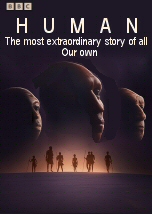
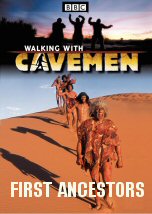
Spanning five gripping episodes presented together in one seamless video, this sweeping journey explores 300,000 years of human evolution, revealing groundbreaking discoveries that are reshaping everything we thought we knew about our origins. From the first appearance of Homo sapiens in Africa—at a time when at least six other human species walked the Earth—to the dramatic encounters with Neanderthals and the mysteries of their disappearance, each chapter uncovers the epic struggle for survival and dominance. As the Ice Age grips the planet, humanity pushes into the Americas, braving the harshest conditions in history. Finally, as the ice recedes, a transformation begins: the shift from wandering hunters to the builders of the first permanent settlements. This story brings to life the triumphs, dangers, and defining moments that made us who we are today.
For decades, scientists have sought to unlock the secrets of ancient DNA, a fragile genetic blueprint that rarely survives millions of years. Danish biologist Eske Willerslev had a groundbreaking idea: instead of searching for DNA in fossils or ancient tissues, he looked to frozen sediment. Initially dismissed as impossible, his work led to the recovery of genetic traces from over two million years ago, revealing lush ecosystems that existed before the Ice Age. These discoveries offer unprecedented insights into long-extinct species that thrived in warm, verdant Arctic landscapes.
Willerslev’s perseverance revolutionized DNA research, enabling scientists to reconstruct vanished ecosystems and uncover the genetic secrets of ancient worlds. By examining the DNA of past climates, researchers are paving the way to better understand Earth's deep history and adapt to current environmental challenges. This landmark breakthrough demonstrates that ancient DNA acts as a "time machine," allowing humanity to explore its distant past and draw lessons for the future.
We offer the complete second series of “Ancient Apocalypse” in a single video. In this series, journalist Graham Hancock travels to the Americas to search for evidence supporting his hypothesis: that an advanced civilization was lost to history during the cataclysms that marked the apocalyptic end of the last Ice Age, between 12,800 and 11,600 years ago. Each episode investigates new discoveries being made in the American hemisphere, which until recently has been largely under-explored by archaeologists interested in humanity’s origins. Graham reveals new findings and speculates about how those findings might suggest the existence of a globe-traveling advanced civilization that left traces of itself in ancient cultures. In episode one, evidence from New Mexico’s White Sands desert confirms the presence of people in the Americas long before it was possible to migrate across the Bering Straits that formed a land bridge during the lowered sea-levels of the Ice Age. The series takes us to multiple locations in the US, Mexico, Brazil, Peru and Easter Island to investigate when people first arrived in the “New World” and how they made the journey. The findings give Graham reason to question the accepted timeline of human history. During his journey, Graham interviews highly regarded archaeologists and historians as well as indigenous elders, who share their unique knowledge of the sites and their oral histories. Hollywood actor, Keanu Reeves, also joins Graham across the series, discussing, among other things, his insights into storytelling as an act of preserving culture. Experts in the series include American archaeologist Dr. Chris Davis, Brazilian palaeontologist Dr. Alceu Ranzi, and archaeo-botanist Dr. Sonia Cardinali of Rapa Nui, Easter Island, among others.
We offer this captivating full documentary series in a single video, inviting viewers to question everything they think they know about prehistory. Journalist Graham Hancock embarks on a global journey, exploring archaeological sites in search of clues to an advanced civilization that may have thrived thousands of years ago. Hancock presents a bold theory: during the last ice age, a sophisticated society existed but was wiped out by catastrophic meteor impacts roughly 12,000 years ago. He suggests that survivors of this lost civilization shared their knowledge with hunter-gatherers across the globe, sparking the development of early societies. Hancock visits intriguing sites and natural formations, presenting what he claims is evidence of this forgotten culture. He also asserts that mainstream archaeology may be overlooking—or even concealing—critical findings that support his theory. The series offers a fresh perspective on ancient history, blending mystery, controversy, and the thrill of discovery for those ready to rethink humanity's distant past. All eight episodes are available in a single, continuous video exclusively on our website.
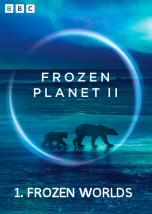
Journeying from pole to pole, The series 'Frozen Planet II' reveals surprising worlds that exist across the planet and the remarkable animals that make them their home. In a fragile world of beauty and hostility, nature finds a way to survive and thrive. David Attenborough explores a planet on the brink of major change. In the first episode, we begin our journey in the far south, in the most hostile place on earth, the frozen continent of Antarctica. After being raised on the ice in winter, emperor penguin chicks find themselves abandoned by their parents in spring. To survive, they must find their own way across the treacherous sea ice to the rich waters of the Southern Ocean. The waters surrounding Antarctica may be the richest of all, but they are also home to an exceptionally sophisticated predator, the killer whale. To reach their favored prey, Weddell seals, a family of killer whales have learnt to generate their own waves, washing the seals off their ice floes. It’s a technique that has been passed down over generations and is coordinated by the family matriarch, who can be over 100 years old. Leaving Antarctica and travelling north, we discover frozen habitats that are created by altitude. The greatest of these is the Himalaya, the tallest mountain range on earth, which contains so much ice and snow it is known as the third pole. In the shadow of the Himalaya lies a vast frozen grassy plain that is home to the fluffiest cat in the world, Pallas’s cat. It may have extremely dense fur, but if it’s to survive the Mongolian winter, it needs to catch lots of gerbils and voles. Easier said than done when you only have short legs and paws that are sensitive to the cold. North of the Great Steppe lies the boreal forest, which encircles the continents of North America, Europe and Asia, and remains frozen for six months of the year. Prowling these forests in the far east of Russia is the Siberian tiger, the largest cat in the world. In winter, it is on the lookout for black bears hibernating in caves, a high-risk strategy that only a cat of this size would attempt. Above the boreal forest, we cross into the Arctic Circle, where conditions become so extreme that trees can no longer grow. This is the tundra. Living here are relics of the last ice age, musk ox. In spring, their calves face a far greater danger than the cold, grizzly bears. Encounters can be brutal, but if just a few calves survive the gauntlet, the herd’s future is secure. To the north of the tundra is the Arctic Ocean, the only ocean that can completely freeze over. Living here is one of the most peculiar animals on earth, the hooded seal. Males have extraordinary inflatable noses, producing a bright red balloon out of their left nostrils. One male hopes this will make him irresistible. All of the frozen habitats share one thing in common: the threat posed by today’s climate change. Travelling to the island of Greenland, home to the largest body of ice in the northern hemisphere, we witness how global warming is melting its ice cap at faster rates than ever before, with profound consequences for global sea levels. Lastly, we visit the Arctic’s most iconic resident, the polar bear, as a mother bear struggles to provide for her cubs in a world of shrinking sea ice.














The film fulfils a lifelong dream of him, who said: 'I have been coming to the Natural History Museum since I was a boy. It's one of the great places to come to learn about natural history. In this film we have the technology to bring back to life some of the most romantic and extraordinary extinct creatures that can be conceived; some are relatively recent animals like the dodo, others older like the dinosaurs, and some we only know through fossil evidence. Using our current scientific knowledge, this film brings these creatures alive, allowing me to look at some of the biggest questions surrounding them.'