Orbiting Earth at around 27.000 km/h, the International Space Station is one of humanity’s greatest engineering achievements, but also one of the most unforgiving places ever built. Astronauts and mission controllers recount moments when routine work suddenly became a fight for survival: a spacesuit filling with water, toxic ammonia spraying across a spacewalker, dangerous temperature extremes, radiation, fire, contamination and the constant threat of collision. The series reveals how every mission depends on training, improvisation and split-second decisions in an environment where even a small failure can become fatal. Across the two episodes, presented here together in a single uninterrupted video, the danger escalates from the hazardous construction and maintenance of the station to the growing risks of life aboard it. Astronauts face micrometeoroids and space debris travelling at lethal speeds, docking emergencies and system failures, culminating in the extraordinary 2021 incident when the newly arrived Nauka module unexpectedly fired its thrusters and sent the entire ISS rotating out of control. With communications at risk and the structure under immense strain, crews in orbit and controllers on Earth must work together to regain control. The result is a gripping story of courage, science and survival inside a machine that has kept humans continuously living in space for more than two decades.
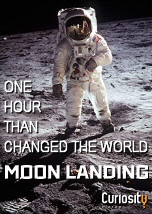
The Moon Landing celebrates the historic 50th anniversary of Apollo 11, in a fresh and distinctive style. This inspiring documentary subverts usual conventions by beginning with the momentous event, exploring the preceding dramatic sixty minutes in granular detail. Packed with surprising details which reveal a whole new perspective on the story of how humans landed on the moon, this documentary rewinds one hour before Neil Armstrong's famous footstep to reveal a whole untold story, hidden in the forensic moment-by-moment details driven by powerful footage from the time and authentic audio recordings from the capsule and the command module and mission control in Houston. In the last 60 minutes, the Apollo mission could fall apart. Without dazzling on-the-spot ingenuity, a 240,000-mile helpline to Houston, and almost unnatural abilities to remain calm under incredible pressure, the first step onto another world might not happen at all.
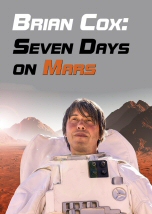
Professor Brian Cox fulfils a childhood dream by going behind the scenes at Nasa’s Jet Propulsion Laboratory (JPL), mission control for Mars 2020 – one of the most ambitious missions ever launched that may finally reveal if life ever existed on the red planet. In 1980, a young Brian Cox wrote to JPL asking for photos from some of their missions to the planets. The pictures they sent him from Voyager and the Viking mission to Mars were a source of inspiration that set him on the path to becoming a physicist. Now, over 40 years later, he has been granted privileged access to JPL, including key mission areas that are usually off-limits to film crews. Brian spends a week following the team who guide the Perseverance rover and the Ingenuity helicopter - the first powered aircraft ever sent to another planet - across the surface of Mars during a critical stage of the mission. Perseverance’s goal is to search for signs of long extinct life on the surface of Mars in an area called Jezero Crater, which, 3.8 billion years ago, was filled by a vast lake. If it finds evidence of that life, it could change everything we know about life in the universe - and even transform our understanding of our own origins.
















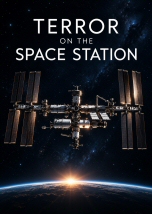




Across the two episodes, presented here together in a single uninterrupted video, the danger escalates from the hazardous construction and maintenance of the station to the growing risks of life aboard it. Astronauts face micrometeoroids and space debris travelling at lethal speeds, docking emergencies and system failures, culminating in the extraordinary 2021 incident when the newly arrived Nauka module unexpectedly fired its thrusters and sent the entire ISS rotating out of control. With communications at risk and the structure under immense strain, crews in orbit and controllers on Earth must work together to regain control. The result is a gripping story of courage, science and survival inside a machine that has kept humans continuously living in space for more than two decades.