Step into a time when the boundary between life and death was guided by magic, faith, and the written word. This documentary unearths an extraordinary artifact dating back to about 1880 BCE—a scroll known as potentially the oldest document in human history, lost for centuries and rediscovered in 1887. Through expert interviews, archeological evidence, and stunning visuals, viewers are taken on a journey across ancient Egypt: exploring how this manuscript shaped funerary beliefs, mortuary rituals, and the very concept of the afterlife. Witness the power of this papyrus as it reveals secrets of gods and judgment, spells to navigate dangerous gates, and the yearning for immortality. For anyone fascinated by history, spirituality, or mysteries from the distant past, this film brings alive a document that influenced civilization itself.
Writing itself is 5,000 years old, and for most of that time words were written by hand using a variety of tools. The Romans were able to run an empire thanks to documents written on papyrus. Scroll books could be made quite cheaply and, as a result, ancient Rome had a thriving written culture. With the fall of the Roman Empire, papyrus became more difficult to obtain. Europeans were forced to turn to a much more expensive surface on which to write: Parchment. Medieval handwritten books could cost as much as a house, they also represent a limitation on literacy and scholarship. No such limitations were felt in China, where paper had been invented in the second century. Paper was the foundation of Chinese culture and power, and for centuries how to make it was kept secret. When the secret was out, paper mills soon sprang up across central Asia. The result was an intellectual flourishing known as the Islamic Golden Age. Muslim scholars made discoveries in biology, geology, astronomy and mathematics. By contrast, Europe was an intellectual backwater. That changed with Gutenberg’s development of movable type printing. The letters of the Latin alphabet have very simple block-like shapes, which made it relatively simple to turn them into type pieces. When printers tried to use movable type to print Arabic texts, they found themselves hampered by the cursive nature of Arabic writing. The success of movable type printing in Europe led to a thousand-fold increase in the availability of information, which produced an explosion of ideas that led directly to the European Scientific Revolution and the Industrial Revolution that followed.









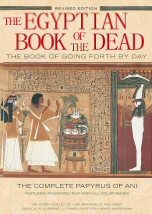
Witness the power of this papyrus as it reveals secrets of gods and judgment, spells to navigate dangerous gates, and the yearning for immortality. For anyone fascinated by history, spirituality, or mysteries from the distant past, this film brings alive a document that influenced civilization itself.