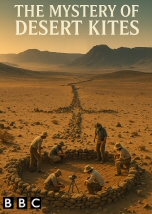
Across the Arabian desert stretch mysterious stone structures, vast kite -shaped formations that have baffled scientists for generations. An international team of archaeologists now sets out to uncover their secrets, combining cutting-edge technology with traditional fieldwork to piece together clues buried beneath the sands. Their discoveries suggest that these enigmatic megastructures may have been used for hunting, ritual, or social gatherings—evidence of a sophisticated culture that thrived thousands of years before the pyramids. From Saudi Arabia’s rugged plateaus to Jordan’s Black Desert, each site reveals astonishing traces of human ingenuity and survival. Sweeping aerial vistas and gripping on-site discoveries immerse us in a mystery that challenges established timelines and forces us to reconsider how early civilizations shaped their world.
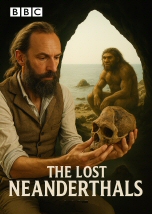
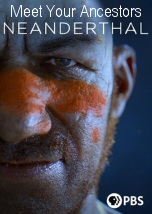
In the heart of southern France, the Mandrin Cave has drawn archaeologists for over three decades, its soils preserving an extraordinary archive of human life stretching back tens of thousands of years. Within its layers lie traces of fire, tools, and bones that tell the story of survival in a harsh prehistoric world. In 2015, the remarkable discovery of a Neanderthal individual—nicknamed Thorin—revealed that these ancient humans once lived side by side with the first Homo sapiens to arrive in the region. Following an international team of scientists, the investigation uncovers fragile relics of the Palaeolithic era that are rewriting our understanding of how two human species encountered one another. With every excavation, new details emerge about resilience, adaptation, and coexistence, offering a powerful re-examination of what it meant to be human 50,000 years ago. This is not only the story of the Neanderthals’ fate, but also of the deep roots of our own identity.
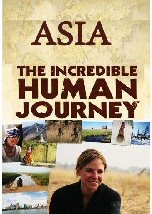
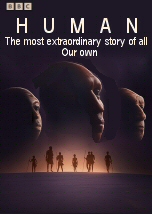
Spanning five gripping episodes presented together in one seamless video, this sweeping journey explores 300,000 years of human evolution, revealing groundbreaking discoveries that are reshaping everything we thought we knew about our origins. From the first appearance of Homo sapiens in Africa—at a time when at least six other human species walked the Earth—to the dramatic encounters with Neanderthals and the mysteries of their disappearance, each chapter uncovers the epic struggle for survival and dominance. As the Ice Age grips the planet, humanity pushes into the Americas, braving the harshest conditions in history. Finally, as the ice recedes, a transformation begins: the shift from wandering hunters to the builders of the first permanent settlements. This story brings to life the triumphs, dangers, and defining moments that made us who we are today.
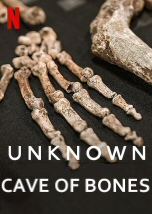
In the echoing chambers of a cave located in the Cradle of Humankind in South Africa, paleoanthropologist Lee Berger stumbles upon a revelation that could rewrite History. Not only has he uncovered the world's oldest graveyard, but it's also unlike anything we've ever seen. Amid the shadows, the faint glimmers of ancient hearths, mysterious tools and cryptic symbols hint at rituals beyond our understanding. A place where knowing what an ancient creature did means glimpsing into its very soul. This isn't just any discovery - it's a journey into a world of human-level complexity in an entirely different species from our own. A tale that beckons with the allure of the unknown, challenging everything we thought we knew about hominid evolution and the origins of belief. A story so profound, it demands respect from the entire human race. Dive into the mystery and experience the awe, spirituality, and eerie wonders of the 'Cave of Bones'.
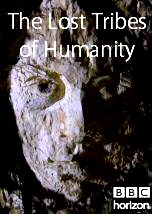
Alice Roberts explores the latest discoveries in the study of human origins, revealing the transformation that has been brought about in this field by genetics. Traditional Palaeoanthropology, based on fossils, is being transformed by advanced genome sequencing techniques. We now know that there were at least four other distinct species of human on the planet at the same time as us - some of them identified from astonishingly well-preserved DNA extracted from 50,000-year-old bones, others hinted at by archaic sections of DNA hidden in our modern genome. What's more, we now know that our ancestors met and interacted with these other humans, in ways that still have ramifications today. Alice uses these revelations to update our picture of the human family tree.






















From Saudi Arabia’s rugged plateaus to Jordan’s Black Desert, each site reveals astonishing traces of human ingenuity and survival. Sweeping aerial vistas and gripping on-site discoveries immerse us in a mystery that challenges established timelines and forces us to reconsider how early civilizations shaped their world.