






Last Watched

"Ant"  Sort by

Silk Roads and China Ships

   2016    History
Michael Wood tells the tale of China's first great international age under the Tang Dynasty (618-907). From the picturesque old city of Luoyang, he travels along the Silk Road to the bazaars of central Asia and into India on the track of the Chinese monk who brought Buddhism back to China. This tale is still loved by the Chinese today and is brought to life by storytellers, films and shadow puppet plays. Then in the backstreets and markets of Xi'an, Michael meets descendants of the traders from central Asia and Persia who came into China on the Silk Road. He talks to Chinese Muslims in the Great Mosque and across town hears the amazing story of the first reception of Christianity in 635. Moving south, Michael sees the beginnings of China as an economic giant. On the Grand Canal, a lock built in 605 still handles 800 barges every day! The film tracks the rise of the silk industry and the world's favourite drink - tea. Michael looks too at the spread of Chinese script, language and culture across east Asia. 'China's influence on the East was as profound as Rome on the Latin West', he says, 'and still is today'. Finally, the film tells the intense drama of the fall of the Tang. Among the eyewitnesses were China's greatest poets. In a secondary school in a dusty village, where the Chinese Shakespeare - Du Fu - is buried in the grounds, the pupils take Michael through one famous poem about loss and longing as the dynasty falls. And in that ordinary classroom, there is a sense of the amazing drama and the deep-rooted continuities of Chinese culture.
Series: The Story of China
What is the World Made of

   2010    History
In this episode, Michael demonstrates how our society is built on our search to find the answer to what makes up everything in the material world. This is a story that moves from the secret labs of the alchemists and their search for gold by the stone of the philosophers to the creation of the world's first synthetic dye - Purple - and onto the invention of the transistor. This quest may seem abstract and highly theoretical. Yet it has delivered the greatest impact on humanity. By trying to answer this question, scientists have created theories from elements to atoms, and the strange concepts of quantum physics that underpin our modern, technological world.
Series: The Story of Science

The God Delusion

   2006    Culture
Atheist and scientist Richard Dawkins visits England, America and Israel interveiwing prominant people of faith; Islamic, Hasidic Jews, and the new Christian sects popping up throughout the world, and expressing his view of the extent to which this fanaticism has degraded our civilisation, and will continue to degrade it. "The God Delusion" explores the unproven beliefs that are treated as factual by many religions and the extremes to which some followers have taken them. Dawkins opens the programme by describing the "would-be murderers ... who want to kill you and me, and themselves, because they're motivated by what they think is the highest ideal." Dawkins argues that "the process of non-thinking called faith" is not a way of understanding the world, but instead stands in fundamental opposition to modern science and the scientific method, and is divisive and dangerous.
Series: The Root of All Evil

Audrie and Daisy

   2016    Culture
The film is an urgent real-life drama that examines the ripple effects on families, friends, schools and communities when two underage young women find that sexual assault crimes against them have been caught on camera. From acclaimed filmmakers Bonni Cohen and Jon Shenk (The Island President, The Rape of Europa), AUDRIE & DAISY takes a hard look at American’s teenagers who are coming of age in this new world of social media bullying, spun wildly out of control.

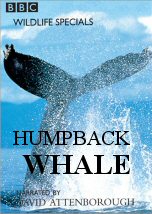
Humpback Whale

   2006    Nature
Few sounds are more beautiful or moving than the underwater songs of the humpback whale. Male whales compete with their songs, which often last for 10 minutes at a time, and can be repeated for hours on end. Whales separated by thousands of miles of sea will sing almost identical songs. Researchers have found that the songs change throughout the breeding months, following a mysterious pattern repeated across the waves. Whales also use sound to hunt. To catch herring, humpback whales release a stream of bubbles to form a shimmering, circular fishing net. Emitting a repetitive loud scream, they scare the fish into a tight ball, then lunge out of the water to swallow the shoal whole. Now it seems that the long-held image of the gentle giant must change to one of a ferocious and opportunistic hunter.
The Truth About

The Truth About

2018  Medicine
How to Grow a Planet

How to Grow a Planet

2012  Science
Mind Field Season 1

Mind Field Season 1

2017  Medicine
Untold

Untold

2021  Culture
The Planets

The Planets

2000  Science
Long Way Up

Long Way Up

2020  Culture