From a childhood marked by poverty on the American frontier to the presidency of a nation on the verge of collapse, this three-part historical biography traces how Abraham Lincoln became one of the defining figures in American history. Blending dramatic reconstruction with commentary from historians and political figures, it explores the ambition, empathy, wit and moral conviction that shaped his rise, his belief in democracy and equality, and the immense personal and political pressures that would eventually place him at the center of the struggle over slavery, union and the future of the United States. In the first episode, Lincoln’s journey begins far from power. Growing up in hardship, enduring the death of his mother and receiving little formal education, he develops a fierce determination to rise beyond obscurity. Through hard physical labor, self-education, storytelling and an emerging talent for public speaking, he begins to build the character and political instincts that will define him. His early encounters with slavery, his move into law and politics, and the relationships that shape his ambitions reveal the making of a man who is still searching for his place in the world, but already driven by the conviction that his life must amount to something.
From a small and aggressive republic fighting for survival in the ancient Mediterranean to an empire that dominated much of the known world, Rome’s story is one of extraordinary ambition, conquest and transformation. The documentary follows the decisive struggles that shaped its rise, from the wars with Carthage and Hannibal to the upheavals of Spartacus, Julius Caesar and the collapse of the Republic, before Augustus establishes a new imperial order. Military power, political rivalry, engineering, law, spectacle and ruthless violence combine to reveal how Rome created a civilization of unprecedented scale, but also planted the seeds of its own destruction. At its height, the empire reaches astonishing levels of wealth and power under rulers such as Trajan and Marcus Aurelius, yet the system becomes increasingly difficult to control. Plague, civil conflict, destructive emperors such as Commodus, religious transformation and mounting pressure from Germanic peoples, Goths, Vandals and other invaders gradually weaken the foundations of Roman authority. From the Colosseum and the grandeur of imperial Rome to Attila and the invasions that accelerate its collapse, the two-part series shows how one of history’s greatest superpowers ultimately became a warning about the dangers of unchecked power and overextension. Presented here with both episodes combined into a single video, viewers can follow the complete rise and fall of Rome without interruption.
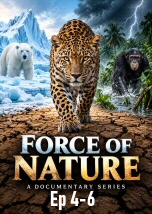
In the final three episodes, the series follows animals being pushed to the edge as melting ice, extreme heat and prolonged drought reshape the environments they depend on. In the Himalayas, a snow leopard is forced from familiar territory, while an Arctic ground squirrel in Alaska undertakes an extraordinary migration and a young Arctic fox in Svalbard faces her first winter alone. These cold-adapted animals must rapidly change behaviours that once worked for generations as their frozen worlds become increasingly unstable. The struggle then shifts to the opposite extreme, where wombats, leopards and kangaroo rats are tested by record heat and worsening drought, pushing their remarkable physical and behavioural adaptations to their limits. In the final episode, attention turns to the people working directly to help wildlife survive these new extremes, revealing rescue efforts, scientific interventions and conservation strategies in some of the planet’s harshest environments. Together, these final chapters show that survival now depends not only on the animals’ ability to adapt, but increasingly on how far humans are willing to go to protect them.
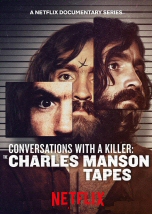
Previously unreleased prison calls, firsthand testimony and archival footage open a disturbing window into the world Charles Manson created around himself. Against the backdrop of the late-1960s counterculture, Manson draws vulnerable and disillusioned young people into a tightly controlled group built on promises of love, freedom and belonging. His manipulation gradually deepens into paranoia, domination and violence, culminating in the 1969 murders committed by members of the Manson Family, including the killings at the home of Sharon Tate, and in Manson’s delusional belief that the crimes could help ignite a racial apocalypse he called “Helter Skelter.” The story then follows the investigation, arrests and extraordinary 1971 trial, where Manson and his followers turn the courtroom into a spectacle and become symbols of a darker side of the era. Recordings of Manson himself are joined by voices from people who lived through the events, including material connected to followers such as Charles “Tex” Watson, Susan Atkins and Leslie Van Houten, revealing how charisma, coercion and group loyalty were transformed into lethal obedience. Presented here with all three episodes combined into a single video, viewers can follow the complete story without interruption, from the formation of the Family to the murders, the trial and the disturbing legacy Manson left behind.
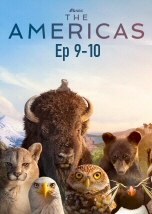
In the final two episodes, the journey reaches the Pacific edge of North America and the remote wilderness of Patagonia, two spectacular regions shaped by powerful oceans, towering forests and extreme weather. Along the West Coast, wolves comb the shoreline for food, sea otters battle crashing surf, blue whales gather in a rare display of speed and movement, and giant Pacific octopuses devote everything to protecting the next generation. High in the redwood canopy, even tiny salamanders perform extraordinary leaps to survive, revealing how life has adapted to one of the continent’s most dramatic coastal environments. The series then travels to the far south of the Americas, where Patagonia delivers a fittingly wild finale. Pumas stalk guanacos through snowy mountains, rockhopper penguins fight their way through violent waves to reach their colonies, giant stag beetles climb immense trees to compete for mates, and elephant seals clash for dominance along the coast. In one of the most remarkable scenes, a family of orcas passes down a dangerous hunting technique from one generation to the next, showing how survival here depends not only on strength, but also on experience, cooperation and learning.
Few managers have changed football as dramatically—or divided opinion as fiercely—as José Mourinho. From his explosive arrival at Chelsea in 2004, where confidence, tactical brilliance and relentless ambition quickly earned him the name The Special One, this documentary follows the rise of a coach who turned winning into an obsession and himself into one of the most recognizable figures in world sport. Frank Lampard, John Terry, Sir Alex Ferguson and other key voices recall the intensity of those early years, while Mourinho reflects on the victories, power struggles and confrontations that shaped both his teams and his reputation. The story then moves through his extraordinary triumphs at Inter Milan and the ferocious challenge of Real Madrid, where he set out to break Barcelona’s dominance and reignite one of football’s greatest rivalries. Zlatan Ibrahimović, Luís Figo, Iker Casillas, Samuel Eto’o and others offer an insider’s view of a manager capable of inspiring fierce loyalty, provoking bitter conflict and transforming the mentality of entire clubs. Presented here with all three episodes combined into a single video, viewers can follow the complete journey without interruption—from the birth of “The Special One” to the battles, trophies, controversies and personal sacrifices that made Mourinho one of football’s most successful and compelling managers.




.jpg "Montezuma")



In the first episode, Lincoln’s journey begins far from power. Growing up in hardship, enduring the death of his mother and receiving little formal education, he develops a fierce determination to rise beyond obscurity. Through hard physical labor, self-education, storytelling and an emerging talent for public speaking, he begins to build the character and political instincts that will define him. His early encounters with slavery, his move into law and politics, and the relationships that shape his ambitions reveal the making of a man who is still searching for his place in the world, but already driven by the conviction that his life must amount to something.