



Last Watched

"Atom"  Sort by

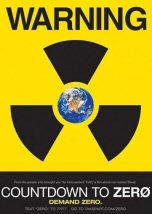
Countdown to Zero

   2010    Technology
A stunning documentary about the escalating global nuclear arms crisis, Countdown to Zero is a fascinating and frightening exploration of the dangers of nuclear weapons, exposing a variety of present day threats and featuring insights from a host of international statesmen and experts. Among the voices are President Jimmy Carter, Mikhail Gorbachev, Pervez Musharraf, Tony Blair, former CIA Operations Officer Valerie Plame Wilson, the Ploughshares Fund’s Joe Cirincione and Stanford political scientist Scott Sagan. traces the history of the atomic bomb from its origins to the present state of global affairs: nine nations possessing nuclear weapons capabilities and others racing to join them, with the world held in a delicate balance that could be shattered by an act of terrorism, failed diplomacy, or a simple accident. It makes a compelling case for worldwide nuclear disarmament, an issue more topical than ever with President Obama and other world leaders working to revive this goal today. Written and directed by Lucy Walker, Countdown to Zero was screened for attendees of this year’s Global Zero International Conference in Paris and the TED Conference in Long Beach, California.
Atom: The Illusion of Reality

   2007    Science
In the last in the series Professor Jim Al-Khalili explores how studying the atom forced us to rethink the nature of reality itself. He discovers that there might be parallel universes in which different versions of us exist, finds out that empty space isn't empty at all, and investigates the differences in our perception of the world in the universe and the reality.
Series: Atom

What are We Really Made of

   2011    Science
What is the universe made of? If you answered stars, planets, gas and dust, you'd be dead wrong. Thirty years ago, scientists first realized that some unknown dark substance was affecting the way galaxies moved. Today, they think there must be five times our understanding of the universe and the nature of reality itself has drastically changed over the last 100 years - and it's on the verge of another seismic shift. In a 17-mile-long tunnel buried 570 feet beneath the Franco-Swiss border, the world's largest and most powerful atom smasher, the Large Hadron Collider, is powering up. Its goal is nothing less than recreating the first instants of creation, when the universe was unimaginably hot and long-extinct forms of matter sizzled and cooled into stars, planets, and ultimately, us. These incredibly small and exotic particles hold the keys to the greatest mysteries of the universe. What we find could validate our long-held theories about how the world works and what we are made of -- or, all of our notions about the essence of what is real will fall apart.
Series: Through the Wormhole

Life and Death of a Star

   2007    Science
Ignited by the power of the atom, burning with light, heat and wrath, stars are anything but peaceful. They collide, devour each other, and explode in enormous supernovas--the biggest explosions in the Universe.
Series: The Universe

The Lives of the Stars

   1980    Science
The simple act of making an apple pie is extrapolated into the atoms and subatomic particles (electrons, protons, and neutrons) necessary. Many of the ingredients necessary are formed of chemical elements formed in the life and deaths of stars (such as our own Sun), resulting in massive red giants and supernovae or collapsing into white dwarfs, neutron stars, pulsars, and even black holes. These produce all sorts of phenomena, such as radioactivity, cosmic rays, and even the curving of spacetime by gravity. Cosmos Update mentions the supernova SN 1987A and neutrino astronomy.
Series: Cosmos

Hiding in the Light

   2014    Science
This episode explores the wave theory of light as studied by mankind, noting that light has played an important role in scientific progress, with such early experiments from over 2000 years ago involving the camera obscura by the Chinese philosopher Mozi. Tyson describes the work of the 11th century Arabic scientist Ibn al-Haytham, considered to be one of the first to postulate on the nature of light and optics leading to the concept of the telescope, as well as one of the first researchers to use the scientific method. Tyson proceeds to discuss the nature of light as discovered by mankind. Work by Isaac Newton using diffraction through prisms demonstrated that light was composed of the visible spectrum, while findings of William Herschel in the 19th century showed that light also consisted of infrared rays. Joseph von Fraunhofer would later come to discover that by magnifying the spectrum of visible light, gaps in the spectrum would be observed. These Fraunhofer lines would later be determined to be caused by the absorption of light by electrons in moving between atomic orbitals when it passed through atoms, with each atom having a characteristic signature due to the quantum nature of these orbitals. This since has led to the core of astronomical spectroscopy, allowing astronomers to make observations about the composition of stars, planets, and other stellar features through the spectral lines, as well as observing the motion and expansion of the universe, and the existence of dark matter.
Series: Cosmos: A Spacetime Odyssey
The Last Dance

The Last Dance

2020  Culture
Science and Islam

Science and Islam

2017  History
Enemies of Reason

Enemies of Reason

  Medicine
The Sky at Night

The Sky at Night

2018  Science
Follow This

Follow This

2018  Medicine
How Earth Made Us

How Earth Made Us

2010  Culture