In the final three episodes, the investigation takes a decisive turn when the Frankfurt luggage records and bomb-damaged clothing recovered from the wreckage lead Scottish detectives to Malta. A small clothes shop and the memory of a mysterious customer begin to connect the bomb to a wider international network, while cooperation between Scottish police, the FBI and the CIA becomes increasingly strained. As investigators follow the trail toward Libya, a secret CIA source and similarities with another aircraft bombing appear to offer the breakthrough they have been searching for. More than a decade after Pan Am Flight 103 was destroyed, the case finally reaches the courtroom. Following years of political negotiation, two Libyan suspects stand trial under Scottish law at Camp Zeist in the Netherlands. But the prosecution still depends on fragile witness testimony and painstaking forensic evidence assembled across several countries. As key witnesses are challenged and doubts emerge, the series builds toward a tense question that has haunted the victims’ families since 1988: will the investigation finally deliver justice?
As artificial intelligence accelerates at a breathtaking pace, filmmaker Daniel Roher sets out to understand whether humanity is approaching an extraordinary new era or a catastrophe of its own making. What begins as a personal investigation becomes far more urgent when he and his wife learn they are expecting a child. Faced with predictions ranging from revolutionary medical breakthroughs and powerful new tools for creativity to mass unemployment, deepfakes, autonomous systems and even existential risk, he asks some of the world’s leading AI thinkers a deceptively simple question: should we be excited about the future, or terrified of it? The film explores how generative AI works, why its capabilities are advancing so quickly and what could happen if increasingly powerful systems become difficult to control. Experts debate AI safety and alignment, the race between competing companies, the possibility of machines seeking greater power, and the social consequences of automation and concentrated wealth. At the same time, the documentary confronts the technology’s remarkable promise, from personalized education to scientific discovery and potential cancer treatments. Moving between anxiety and hope, Roher ultimately searches for a way to face an uncertain future not as a pessimist or a blind optimist, but as something in between: an “Apocaloptimist.”
Previously unreleased prison calls, firsthand testimony and archival footage open a disturbing window into the world Charles Manson created around himself. Against the backdrop of the late-1960s counterculture, Manson draws vulnerable and disillusioned young people into a tightly controlled group built on promises of love, freedom and belonging. His manipulation gradually deepens into paranoia, domination and violence, culminating in the 1969 murders committed by members of the Manson Family, including the killings at the home of Sharon Tate, and in Manson’s delusional belief that the crimes could help ignite a racial apocalypse he called “Helter Skelter.” The story then follows the investigation, arrests and extraordinary 1971 trial, where Manson and his followers turn the courtroom into a spectacle and become symbols of a darker side of the era. Recordings of Manson himself are joined by voices from people who lived through the events, including material connected to followers such as Charles “Tex” Watson, Susan Atkins and Leslie Van Houten, revealing how charisma, coercion and group loyalty were transformed into lethal obedience. Presented here with all three episodes combined into a single video, viewers can follow the complete story without interruption, from the formation of the Family to the murders, the trial and the disturbing legacy Manson left behind.
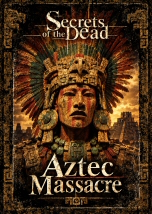
A mass grave at Zultepec, Mexico, containing more than 400 mutilated skeletons forces archaeologists to reconsider one of the most familiar stories of the Spanish conquest. Led by Aztec specialist Elizabeth Baquedano, the investigation follows forensic clues hidden in skulls, bones and artifacts to identify the victims and reconstruct what happened. Some remains prove to be European, including women, while Spanish-made iron objects and evidence of horses link the dead directly to the conquistadors who entered Mexico in the early sixteenth century. The evidence reveals a far more violent confrontation than the traditional image of an easy Spanish victory. Captured Spaniards and members of their entourage appear to have been imprisoned, ritually sacrificed, dismembered and, in some cases, consumed as part of ceremonial practices. By combining archaeology, forensic anthropology and Aztec codices, the documentary shows that indigenous resistance to the conquistadors could be organized, successful and terrifyingly effective, transforming Zultepec into crucial physical evidence of a conflict that history had long oversimplified.
The Housemartins return to Hull during their breakthrough year of 1986 and revisit the places where the band began. Paul Heaton, Stan Cullimore, Norman Cook and Hugh Whitaker talk about forming the group, their sudden success and their determination to remain rooted in ordinary life despite growing fame. The film follows them through Hull, mixes informal conversations with rehearsals and performances, and includes songs such as Happy Hour, Sheep, Think for a Minute and Caravan of Love. The members also speak openly about their socialist views, religion, money and their distrust of the music industry, revealing the ideas behind their deliberately unglamorous image and sharply observant lyrics. Ending with a concert for their home audience, this documentary captures The Housemartins at the moment they were becoming nationally famous while still maintaining the humour, friendship and political convictions that defined the band.
In the final two episodes of Season 2, Ragnar’s hopes of securing land in Wessex collide with King Horik’s hunger for revenge. As the Vikings advance towards King Ecbert’s villa, they walk straight into a carefully prepared Saxon response. The resulting battle is brutal, leaving Rollo gravely wounded and forcing Ragnar to reconsider what victory should really mean. While Horik still dreams of plunder and vengeance, Ragnar begins to see a different future: Farmland for his people, an alliance with Ecbert and the possibility of using Viking strength in the struggle for Mercia. Back in Kattegat, however, the most dangerous battle is no longer being fought with Saxons. Horik becomes convinced that Ragnar has grown too powerful and secretly prepares to destroy him and his entire family. Floki appears to turn against Ragnar, Siggy is drawn into Horik’s plans and every friendship suddenly becomes suspect. But beneath the deception, Ragnar is quietly testing the loyalty of those closest to him. What follows is a tense and violent reckoning in which betrayal is answered with betrayal, old alliances are shattered and Ragnar’s rise reaches a decisive new stage.



























More than a decade after Pan Am Flight 103 was destroyed, the case finally reaches the courtroom. Following years of political negotiation, two Libyan suspects stand trial under Scottish law at Camp Zeist in the Netherlands. But the prosecution still depends on fragile witness testimony and painstaking forensic evidence assembled across several countries. As key witnesses are challenged and doubts emerge, the series builds toward a tense question that has haunted the victims’ families since 1988: will the investigation finally deliver justice?