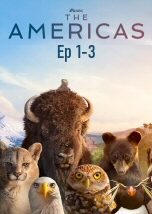















Across two continents and from one pole to the other, this spectacular wildlife series explores the wonders, mysteries and fragilities of the Americas. Narrated by Tom Hanks, it reveals extraordinary animal behaviour, dramatic struggles for survival and some of the planet’s most varied landscapes, from frozen wilderness and ancient forests to deserts, tropical seas and vast grasslands. Filmed over five years and more than 180 expeditions, the series combines intimate wildlife stories with remarkable natural spectacles, showing both the resilience of life and the delicate balance on which these ecosystems depend. In the first three episodes, the journey begins along the Atlantic Coast, where wild horses battle, bald eagles pursue ospreys, sharks move among great shoals of fish, raccoons adapt to city life and black bears search ancient forests for food. It then heads south into Mexico, where deserts meet the tropics and pygmy owls, hunting orcas, orchid bees and mysterious creatures in flooded caves reveal a hidden world of astonishing diversity. Finally, the Wild West brings an even harsher test of survival, as coyotes face a snowbound Yellowstone, hundreds of rattlesnakes emerge from their winter refuges, woodpeckers compete to store food, bison clash across the Great Plains and immense gatherings of cranes continue one of nature’s most ancient migrations.
What if aliens landed on Earth? Much of science fiction explores the moment of first contact – what will people do when the aliens land? From H. G. Wells’ pioneering The War of the Worlds to Independence Day, Men in Black, and District 9, Invasion deals with our fears of alien invasions of earth. David Tennant explains the appeal of Doctor Who’s Daleks and Cybermen while John Carpenter and Chris Carter explore the rich appeal of the paranoia fuelled by hidden aliens with The Thing and The X-Files. It also asks, what if the monsters were our own creation? With the aid of rarely seen animation tests, Phil Tippett takes us behind the scenes in the creation of the dinosaurs of Jurassic Park. But not all invasions are hostile. Peter Coyote and Richard Dreyfuss discuss the creation of Spielberg’s spellbinding classics E.T. the Extra-Terrestrial and Close Encounters of the Third Kind. There is more than one kind of invasion.
Be it foxes on city streets or wolves on the tundra, canines rely on sharp senses, athleticism and fierce determination to punch above their weight. But the real secret of their success is much more surprising. It's a story of their intimate side. It's what makes every dog, from pet pooch to wild dogs, one of the family.
In the first three episodes, the journey begins along the Atlantic Coast, where wild horses battle, bald eagles pursue ospreys, sharks move among great shoals of fish, raccoons adapt to city life and black bears search ancient forests for food. It then heads south into Mexico, where deserts meet the tropics and pygmy owls, hunting orcas, orchid bees and mysterious creatures in flooded caves reveal a hidden world of astonishing diversity. Finally, the Wild West brings an even harsher test of survival, as coyotes face a snowbound Yellowstone, hundreds of rattlesnakes emerge from their winter refuges, woodpeckers compete to store food, bison clash across the Great Plains and immense gatherings of cranes continue one of nature’s most ancient migrations.