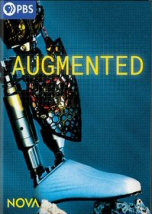
Follow the dramatic personal journey of Hugh Herr, a biophysicist working to create brain-controlled robotic limbs. At age 17, Herr’s legs were amputated after a climbing accident. Frustrated by the crude prosthetic limbs he was given, Herr set out to remedy their design, leading him to a career as an inventor of innovative prosthetic devices. Now, Herr is teaming up with an injured climber and a surgeon at a leading Boston hospital to test a new approach to surgical amputation that allows prosthetic limbs to move and feel like the real thing. Herr’s journey is a powerful tale of innovation and the inspiring story of a personal tragedy transformed into a life-long quest to help others.
A new era of space is dawning where small satellites no bigger than a shoebox will be deployed not in one or twos, but in their thousands - referred to as satellite swarms. It's been described as the democratization of space. What was once the preserve of governments and superpowers is evolving into a truly global industry. The catalyst for this dramatic change is this new generation of satellites.
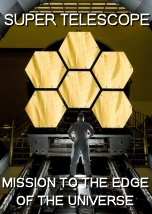
As NASA releases the first images from the James Webb Space Telescope, this film tells the inside story of the telescope's construction and the astronomers taking its first picture of distant stars and galaxies. Will it be the deepest image of our universe ever taken? The successor to Hubble, and 100 times more powerful, the James Webb is the most technically advanced telescope ever built. It will look further back in time than Hubble to an era around 200 million years after the Big Bang, when the first stars and galaxies appeared. Webb's primary mission is to capture the faint light from these objects on the edge of our visible universe so that scientists can learn how they formed, but its instruments are so sensitive it could also be the first telescope to detect signs of life on a distant planet. The James Webb Telescope is an £8 billion gamble on the skills of its engineering team. It’s the first telescope designed to unfold in space – a complicated two-week operation in which 178 release devices must all work - 107 of them on the telescope's sun shield alone. If just one fails, the expensive telescope could become a giant piece of space junk. From its conception in the late 1980s, the construction of Webb has posed a huge technical challenge. The team must build a mirror six times larger than Hubble’s and construct a vast sun shield the size of a tennis court, fold them up so they fit into an Ariane 5 rocket, then find a way to unfold them in space. This film tells the inside story of the James Webb Space Telescope in the words of the engineers who built it and the astronomers who will use it.
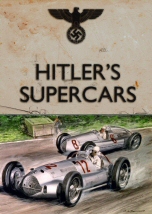
The film tells the story of the ill-fated Nazi Land Speed record attempts. This is a story of engineering excellence, Grand Prix racing, Nazi propaganda, celebrity, and an intense rivalry which would leave a speed record unbroken for 79 years and one of Nazi Germany's best racing drivers dead. During the rise of the Third Reich two German car manufacturers were ordered to build the most high performance vehicles the world had ever seen. What followed was a rivalry that would reap Grand Prix victories, international domination that was a propaganda coup, and provide world fame to its drivers who risked their lives smashing speed records that would stand for 79 years. All under the direct orders of the Fuhrer himself. Bugatti and Alfa Romeo dominated racing before 1934. But the years from 1934 to 1939 were six tumultuous years in which Grand Prix racing was dominated by the German Auto Union, the arranged marriage of Audi, Horch, Wanderer, and DKW, and Mercedes-Benz teams and provided a spectacle of speed, sound and fury never previously attained and never since matched. There are few periods of racing that have excited as much interest, event attendance and sophistication of equipment as the era of the Silver Cars. They were so far ahead of their time that many of their accomplishments were not duplicated until Mercedes went racing again in the early 1950s. There is also something about men who faced the challenges of staying in a cockpit of a highly sophisticated machine capable of 200 mph with no safety systems. They were giants and among them were Italian Tazio Nuvolari and two greatest German pilots of the thirties, Rudolf Caracciola of Mercedes and Auto Union's Bernd Rosemeyer who duelled with faster, more innovative and sleeker machines, developed in wind tunnels. This special documentary charts the rise of Nazi Germany's dominate 'Silver Arrow' Grand Prix and Speed Record cars of the 1930's. Leading motor racing and World War 2 experts James Holland, Richard Williams, Eberhard Reuss and Chris Routledge tell the story of the Nazi funded Auto Union and Mercedes Benz 'National Racing Cars'. Hitler's Supercars interweaves the rise of the Third Reich with the racing exploits it funded and what propaganda messages these racing cars where sending.
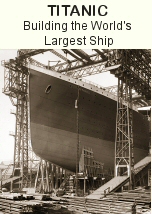
The untold story of the doomed steamship's construction, revealing how 15,000 men toiled day and night in life-threatening conditions to create a state-of-the-art floating city. Based on original blueprints and unseen archives, cutting-edge special effects bring this process back to life on screen, and explore how the outsize ambitions that made it all possible also led to the ship's dramatic demise.
Can skyscrapers be made safer, more efficient, and livable in our rapidly growing cities? Skyscrapers are gleaming symbols of prestige, and an ingenious way to save space in dense urban areas. But as buildings rise ever higher, what are the risks of these architectural behemoths? Do we truly know how they will hold up in earthquakes, fires and wind? What have--or haven’t—we learned from past tragedies? But even as we devise ways to defend them against potential disasters, can we also make them more livable, interactive, and eco-friendly?










Now, Herr is teaming up with an injured climber and a surgeon at a leading Boston hospital to test a new approach to surgical amputation that allows prosthetic limbs to move and feel like the real thing. Herr’s journey is a powerful tale of innovation and the inspiring story of a personal tragedy transformed into a life-long quest to help others.