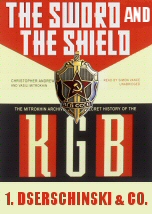












For the past century, Russian history has also been the history of its security services. They were used by the Soviet state to crush dissent. Millions suffered at their hands. Mass executions, secret wars, spies capable of stealing the atomic bomb, poisoning scandals all add up to the most extraordinary and dangerous security network the world has ever known. But even today, the security network is arguably stronger than ever. This is the History of the KGB, told through its veterans and its victims. Founded in 1917, Cheka was the predecessor organization of the KGB. Set up as a 'temporary' measure by Lenin, unknown number of Soviet citizens would die at the hands of the secret services as internal dissents in the 1920s. An inglorious chapter is the "Great Terror" phase, when millions of Soviet citizens were convicted and executed in mock trials under Stalin's rule in the 1930s. Outside the Soviet Union, during the WWII they were busy infiltrating German High Command, British Intelligence and America's Manhattan Project. The Cold War had begun in earnest.
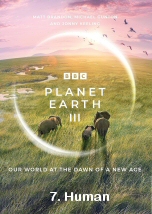
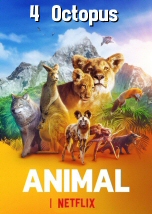
This featured episode of the documentary series takes viewers on a captivating journey around the world, showcasing the astonishing ways in which animals adapt to living alongside humans. In Sauraha, Nepal, a rhino navigates through human-inhabited areas in search of food. In Bali, long-tailed macaques have learned to trade stolen items for food, demonstrating their intelligence and adaptability. The bustling streets of New York City are home to pavement ants that thrive on human leftovers, while in India, revered cobras coexist with humans in a unique cultural relationship. Melbourne, Australia, features nocturnal frogmouths benefiting from urban lighting for hunting, and Lake Tahoe in North America sees black bears adapting to easy food sources in human settlements. The documentary also delves into the challenges faced by wildlife due to human expansion and climate change. It highlights the plight of African elephants in Kenya conflicting with farmers, the impact of overfishing on humpback whales in Vancouver Island, and the dramatic increase of desert locusts in northeastern Africa due to climate-induced conditions. The episode concludes by emphasizing the importance of reimagining our relationship with nature. It suggests a shift towards plant-based diets to reduce agricultural land use and the potential of vertical farming technologies, offering hope and solutions for a sustainable coexistence with wildlife.
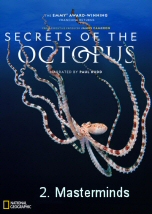
The second episode dives deeper into the enigmatic world of octopuses, uncovering the extraordinary intelligence of these cephalopods. From their ability to change color and shape in an instant to their sophisticated use of tools, this documentary reveals how octopuses navigate and survive in the ocean's most challenging environments. The documentary explores the profound cognitive abilities of octopuses, highlighting their potential for future planning, problem-solving, and even dreaming. Witness the coconut octopus's ingenious stilt-walking and shell-wielding tactics, and marvel at the giant Pacific octopus's intricate hunting strategies. Through stunning underwater footage and insights from leading scientists like Dr. Alex Schnell and Dr. C.E. O'Brien, viewers are invited to rethink what they know about intelligence in the animal kingdom. This captivating film showcases the remarkable adaptability and creativity of octopuses, making it a must-watch for anyone fascinated by the mysteries of the ocean.
In episodes 9 and 10 of this series, the war moves from the secrecy of codebreaking rooms to one of the most brutal battlefields in history. Far from the front lines, in the quiet English countryside, a hidden struggle unfolds at Bletchley Park, where brilliant mathematicians, linguists and intelligence officers race to crack Germany’s Enigma code. Every intercepted message could save ships, reveal enemy plans and alter the fate of entire campaigns, turning silence, patience and genius into weapons as powerful as tanks or bombers. The story then shifts to the Eastern Front, where Hitler launches Operation Blue in a desperate drive toward the Soviet oil fields and the city of Stalingrad. What begins as a strategic offensive becomes a nightmare of street-by-street combat, starvation, freezing conditions and unimaginable sacrifice. As German forces are pulled deeper into the ruins and Soviet resistance hardens, Stalingrad becomes more than a battle for a city; it becomes a turning point in World War II, where ambition, endurance and catastrophe collide on a scale that changed the course of the war.
Founded in 1917, Cheka was the predecessor organization of the KGB. Set up as a 'temporary' measure by Lenin, unknown number of Soviet citizens would die at the hands of the secret services as internal dissents in the 1920s. An inglorious chapter is the "Great Terror" phase, when millions of Soviet citizens were convicted and executed in mock trials under Stalin's rule in the 1930s. Outside the Soviet Union, during the WWII they were busy infiltrating German High Command, British Intelligence and America's Manhattan Project. The Cold War had begun in earnest.