Snakes are among the most feared yet misunderstood predators on Earth. Across the Americas, Australia, Africa, Asia and Europe, more than 100 species reveal extraordinary adaptations that allow them to survive in rainforests, deserts, wetlands, mountains and oceans. Boas and pythons overpower prey with immense strength, while rattlesnakes, cobras, vipers, mambas, taipans and sea snakes deploy some of nature’s most sophisticated venoms, camouflage and sensory abilities. Far from being simple killers, they also play a vital role in controlling rodents and maintaining healthy ecosystems. From black mambas battling for mates and spitting cobras defending themselves with remarkable accuracy to the thousands of pit vipers inhabiting China’s extraordinary Shedao Island, the series reveals hunting techniques and behaviours rarely seen in such detail. Presented here with all three episodes combined into a single video, it offers a spectacular journey into the hidden lives of these highly specialised animals, showing how evolution has made snakes some of the planet’s most efficient and fascinating survivors.
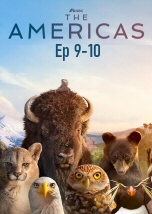
In the final two episodes, the journey reaches the Pacific edge of North America and the remote wilderness of Patagonia, two spectacular regions shaped by powerful oceans, towering forests and extreme weather. Along the West Coast, wolves comb the shoreline for food, sea otters battle crashing surf, blue whales gather in a rare display of speed and movement, and giant Pacific octopuses devote everything to protecting the next generation. High in the redwood canopy, even tiny salamanders perform extraordinary leaps to survive, revealing how life has adapted to one of the continent’s most dramatic coastal environments. The series then travels to the far south of the Americas, where Patagonia delivers a fittingly wild finale. Pumas stalk guanacos through snowy mountains, rockhopper penguins fight their way through violent waves to reach their colonies, giant stag beetles climb immense trees to compete for mates, and elephant seals clash for dominance along the coast. In one of the most remarkable scenes, a family of orcas passes down a dangerous hunting technique from one generation to the next, showing how survival here depends not only on strength, but also on experience, cooperation and learning.
In the final two episodes, the documentary investigates the immense geological forces that continue to reshape our planet. Scientists and adventurers travel to Guatemala's Volcán de Fuego, one of the most active volcanoes on Earth, capturing spectacular eruptions, rivers of lava, and towering ash clouds from astonishingly close range. Along the way, the series reveals how volcanoes are formed, how tectonic plates trigger earthquakes and tsunamis, and how volcanic activity can even create entirely new islands in the middle of the ocean. The journey then turns to one of nature's most breathtaking displays: the Aurora Borealis. In the frozen landscapes of northern Sweden, scientists uncover how powerful storms on the Sun send streams of charged particles towards Earth, illuminating the night sky with vast curtains of color. Combining stunning footage with cutting-edge research, the documentary explores solar activity, space weather, eclipses, and the remarkable connection between our planet and the forces that originate far beyond its atmosphere.
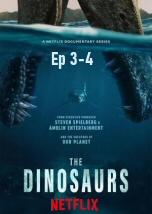
In the final two episodes of the series, produced by Steven Spielberg and narrated by Morgan Freeman, the Age of Dinosaurs reaches its most spectacular and dangerous chapter. After a harsh freeze reshapes life on Earth, the Cretaceous world emerges with rising seas, scattered islands and new hunting grounds where giant reptiles thrive. Pterosaurs glide across the skies searching for food while powerful predators patrol land and ocean in a planet completely ruled by dinosaurs. Among these rulers stands the most formidable hunter of all — Tyrannosaurus rex. Yet while these giants dominate the Earth, the planet itself is slowly changing. Continents drift apart, ecosystems evolve and an unseen threat begins its silent journey through space, foreshadowing the catastrophic event that will one day end the age of dinosaurs.
In his mid-eighties, when many believed his journey was winding down, David Attenborough embarked on a bold new chapter in natural history filmmaking. This adventure traces the epic story of life on Earth, from the first organisms that flourished on ancient seabeds hundreds of millions of years ago to the astonishing biodiversity of today. Revisiting iconic landscapes and harnessing cutting-edge technology, Attenborough reveals how our planet’s living tapestry was shaped across deep time. The three episodes can be enjoyed together in a single continuous viewing, creating one sweeping journey across continents and oceans. From the Galápagos Islands to the caves of Borneo, from China’s ancient tropics to the Great Barrier Reef, the series follows Attenborough’s global quest to understand how life rose, adapted, and endured. It is a grand exploration of evolution, resilience, and the fragile beauty of the world we inherit.
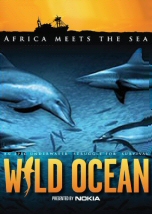
Each year an unbelievable feeding frenzy takes place in the oceans of South Africa as billions of sardines migrate up the KwaZulu-Natal Coast. Wild Ocean captures spectacular breaching whales, feeding sharks, diving gannets, and massive bait balls inside and up close on the screen. The migration has provided an annual food source for both life in the sea and the people living along the African shores for countless generations. The film demonstrates how business, government, and the local people have joined forces to protect this invaluable ecological resource. The film will delve audiences into an epic underwater struggle for survival and reveal the economic and cultural impact the migration has on the coastal communities. Wild Ocean is an explosive, symphonic documentary film about man and nature which captures one of natures greatest migration spectacles through the magic of IMAX.


















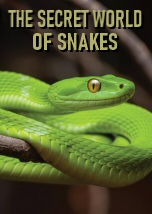





From black mambas battling for mates and spitting cobras defending themselves with remarkable accuracy to the thousands of pit vipers inhabiting China’s extraordinary Shedao Island, the series reveals hunting techniques and behaviours rarely seen in such detail. Presented here with all three episodes combined into a single video, it offers a spectacular journey into the hidden lives of these highly specialised animals, showing how evolution has made snakes some of the planet’s most efficient and fascinating survivors.