Deep in the mountains of West Virginia, the Green Bank Observatory has been receiving a mysterious signal from deep space. A team of astronomers has been detecting high-energy bursts erupting from unknown sources far off in space since years ago. But one of them is different from the rest. They call it FRB 121102. What is actually giving rise to this very powerful flash? Could this be a message from an advanced civilization, or is it a much stranger and violent occurrence? Visit the largest steerable radio telescope on the planet for answers.
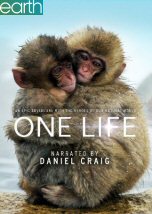
Growing up. Finding food. Seeking shelter. Finding a soul mate. Raising children. These universal themes touch the hearts of audiences everywhere. Parents will do anything to give their kids the best start in life. Witness the epic journey of a tiny poison arrow frog, scaling impossibly high trees to feed her tadpoles in the canopy. As the young grow, they confront the life long search for food. Capuchin monkeys spend up to eight years teaching their young the complex process of preparing a palm nut meal. For those creatures who successfully negotiated all the obstacles to adulthood, it’s time to face the ultimate test: to find a partner and to pass on their genes to the next generation. In what is one of the most spectacular and romantic courtship dances in the world, grebes step out across the surface of a lake in perfect unison. We see so much of ourselves in these different animals, and them in us – intelligence, strength, determination, courage, even love. The stories combine to reveal how every living thing on our planet shares the same desire – not just to live, but to foster new life. Relevant, engaging and above all, amazing. Narrated by Daniel Craig,
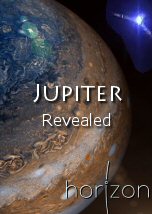
This documentary journeys with the scientists into the heart of a giant. Juno is the Nasa mission designed to peer through Jupiter's swirling clouds and reveal the wonders within. By projecting a 70-foot-wide, life-size Juno on a Houston rooftop, Scott Bolton, head of Juno, shows us how its fragile electronics are encased in 200kg of titanium. As Scott puts it, 'we had to build an armoured tank to go there.' Professor Andrew Ingersoll, Juno's space weatherman, reveals they have seen lightning inside Jupiter, perhaps a thousand times more powerful than Earth's lightning. This might be evidence for huge quantities of water inside Jupiter. Under the extreme conditions of Jupiter thousands of miles under the surface, hydrogen becomes a liquid metal. Juno is finding out how much liquid metallic hydrogen is inside Jupiter, and scientists hope to better understand how this flowing metal produces the most powerful aurora in the Solar System. But what is at Jupiter's heart? In Nice, Prof Tristan Guillot explains how Juno uses gravity to map the planet's centre. This can take scientists back to the earliest days of the solar system, because Jupiter is the oldest planet and it should contain clues to its own creation. By chalking out an outline of the Jupiter, Tristan reveals there is a huge rocky core - perhaps ten times the mass of Earth.
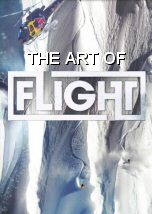
Snowboarding as you've never seen it, unless you are one of the handful of daredevils willing to risk life and limb for the glory revealed here. Jaw dropping footage with a pulse-pounding soundtrack, shot in some of the most rugged, remote and beautiful snow country on the planet. "The Art of Flight" gives iconic snowboarder Travis Rice and friends the opportunity to redefine what is possible in the mountains. Experience the highs, as new tricks are landed and new zones opened, alongside the lows, where avalanches, accidents, and wrong-turns strike. Directed by Curt Morgan ad converted by Venture 3D, one of Hollywood's leading 3D conversion companies, the feature combines meaningful storytelling and sport progressing action with some of the most captivating 3D visuals to date. The film was shot using state of the art equipment and technologies, much of which was custom designed for this project. The film transcends snowboarding with an inspirational message about adventure and exploration.
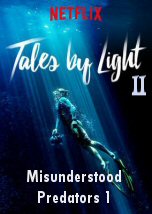
Discover our extraordinary world through a stunning cinematic experience -following the journeys of acclaimed photographers pursuing their personal projects. Their aim: changing people's perceptions through art. From the art of sacred nature, to the demons of the deep and the juxtaposition of life and death. Over the years Eric Cheng has dived with the planet's most magnificent creatures. Now he is determined to use his photography to tell the true story of the most misrepresented and demonised species.
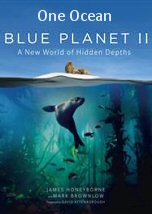
Nearly a generation after the acclaimed Blue Planet documentary was released, David Attenborough returns to narrate this groundbreaking sequel/reboot. Blue Planet II focuses more heavily on mankind's influence on the world's oceans through both global pollution and climate change. This series features a variety of revolutionary segments never before seen in a video documentary. One Ocean Footage of marine life in different environments around the north, beginning with a tropical coral reef which has medicinal properties for dolphins, and is used as a tool by tusk fish. In Japan, a shipwreck is home to the Asian sheepshead wrasse, which can change gender, while in the polar north, walruses struggle to find ice floes for their pups to rest on as climate change takes its toll on the environment.










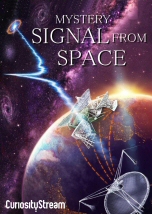



What is actually giving rise to this very powerful flash? Could this be a message from an advanced civilization, or is it a much stranger and violent occurrence? Visit the largest steerable radio telescope on the planet for answers.