As artificial intelligence accelerates at a breathtaking pace, filmmaker Daniel Roher sets out to understand whether humanity is approaching an extraordinary new era or a catastrophe of its own making. What begins as a personal investigation becomes far more urgent when he and his wife learn they are expecting a child. Faced with predictions ranging from revolutionary medical breakthroughs and powerful new tools for creativity to mass unemployment, deepfakes, autonomous systems and even existential risk, he asks some of the world’s leading AI thinkers a deceptively simple question: should we be excited about the future, or terrified of it? The film explores how generative AI works, why its capabilities are advancing so quickly and what could happen if increasingly powerful systems become difficult to control. Experts debate AI safety and alignment, the race between competing companies, the possibility of machines seeking greater power, and the social consequences of automation and concentrated wealth. At the same time, the documentary confronts the technology’s remarkable promise, from personalized education to scientific discovery and potential cancer treatments. Moving between anxiety and hope, Roher ultimately searches for a way to face an uncertain future not as a pessimist or a blind optimist, but as something in between: an “Apocaloptimist.”
Professor Brian Cox joins Chris Lintott and the team to investigate one of the most intriguing new mysteries in modern astronomy. Observations from the James Webb Space Telescope have revealed hundreds of compact, extraordinarily bright objects known as “little red dots”, appearing less than a billion years after the Big Bang. Many may hide rapidly growing supermassive black holes, raising a profound question: how could such enormous objects have formed so early in cosmic history? The journey begins with the strange physics of black holes themselves, from event horizons and singularities to the supermassive black hole at the centre of the Milky Way and the gigantic black hole in the galaxy M87. With cosmologist Emma Chapman and Professor Sadegh Khochfar, the programme explores radical explanations for these ancient monsters, including primordial black holes born soon after the Big Bang and massive black holes formed directly from collapsing clouds of gas, bypassing stars altogether. Cutting-edge computer simulations recreate the first billion years of the universe and reveal how the earliest galaxies and black holes may have emerged within the cosmic web. These discoveries are forcing astronomers to reconsider not only how supermassive black holes grow, but how galaxies and the early universe itself evolved.
In the final three episodes of the series, Chris Packham follows three extraordinary evolutionary journeys to discover how the relentless demands of survival transformed simple early animals into some of the most remarkable creatures alive today. In Borneo, the voracious appetite of the bat leads back more than half a billion years to the origins of the through-gut, the first anus, heads and jaws, revealing how the need to find and consume food helped reshape animal life and ultimately produced the bat’s extraordinary powers of hearing. In the Bahamas, the intelligence of dolphins opens an even deeper story: from ancient cells able to sense light to the evolution of eyes, complex brains, sophisticated senses and the remarkable minds of modern dolphins. The journey culminates with one of nature’s supreme athletes. Tracing the horse’s ancestry through hundreds of millions of years, Packham reveals how primitive muscle cells evolved into increasingly powerful systems for movement, how beating hearts supplied those muscles with oxygen, and how limbs became ever more effective tools for locomotion. Slithering, swimming, walking and running eventually converge in an animal built for extraordinary speed and endurance. Together, these final episodes reveal a breathtaking truth: hunger, perception and movement were not merely necessities of survival—they were powerful evolutionary forces that helped create the astonishing complexity of animal life.
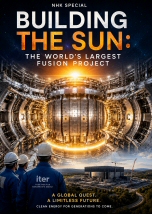
An ambitious scientific quest is underway to recreate the power of the Sun here on Earth. This fascinating documentary takes viewers inside one of the most complex engineering projects ever attempted: the construction of the world's largest nuclear fusion reactor. Bringing together thousands of scientists, engineers, and technicians from dozens of countries, the project seeks to harness the same process that powers the stars and transform it into a virtually limitless source of clean energy for future generations. With unprecedented access to the massive ITER facility in southern France, the documentary reveals the extraordinary challenges of building a machine capable of containing plasma hotter than the Sun itself. Through stunning visuals, cutting-edge technology, and firsthand accounts from the people making it possible, the film explores the race to unlock fusion energy, the scientific breakthroughs required to achieve it, and the potential to revolutionize humanity's energy future if this historic experiment succeeds.
This documentary dives into the rapidly expanding world of anti-ageing science and longevity research, following a determined journey to separate bold promises from real breakthroughs. Guided by a curious and questioning approach, it explores cutting-edge laboratories, emerging therapies and the scientists who are challenging one of humanity’s oldest limitations. From biological age reversal to experimental treatments, the film reveals both the excitement and the uncertainty surrounding a field that could redefine how we understand life itself. As the investigation unfolds, it raises compelling questions about what it truly means to live longer—and at what cost. By confronting the hype, ethical dilemmas and scientific realities, the story offers a balanced and thought-provoking look at a future where ageing might no longer be inevitable. It’s an eye-opening exploration that invites viewers to reconsider the boundaries of human lifespan and the possibilities that lie ahead.
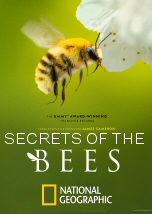
A hidden world unfolds as cutting-edge cameras follow bees closer than ever before, revealing the inner workings of their hives and the intelligence behind their behavior. Over several years, the documentary captures how these tiny pollinators build, communicate, and survive through changing seasons, while playing a critical role in sustaining a third of the food we depend on. Along the way, it exposes the growing threats they face and why their survival is essential for the balance of life on Earth. Both episodes of this series are combined into a single video, so you can experience the full story in one continuous viewing. With never-before-seen footage and expert insight, it offers a clear and fascinating look at one of nature’s most important—and most overlooked—species.

















The film explores how generative AI works, why its capabilities are advancing so quickly and what could happen if increasingly powerful systems become difficult to control. Experts debate AI safety and alignment, the race between competing companies, the possibility of machines seeking greater power, and the social consequences of automation and concentrated wealth. At the same time, the documentary confronts the technology’s remarkable promise, from personalized education to scientific discovery and potential cancer treatments. Moving between anxiety and hope, Roher ultimately searches for a way to face an uncertain future not as a pessimist or a blind optimist, but as something in between: an “Apocaloptimist.”