In episodes 9 and 10 of this series, the war moves from the secrecy of codebreaking rooms to one of the most brutal battlefields in history. Far from the front lines, in the quiet English countryside, a hidden struggle unfolds at Bletchley Park, where brilliant mathematicians, linguists and intelligence officers race to crack Germany’s Enigma code. Every intercepted message could save ships, reveal enemy plans and alter the fate of entire campaigns, turning silence, patience and genius into weapons as powerful as tanks or bombers. The story then shifts to the Eastern Front, where Hitler launches Operation Blue in a desperate drive toward the Soviet oil fields and the city of Stalingrad. What begins as a strategic offensive becomes a nightmare of street-by-street combat, starvation, freezing conditions and unimaginable sacrifice. As German forces are pulled deeper into the ruins and Soviet resistance hardens, Stalingrad becomes more than a battle for a city; it becomes a turning point in World War II, where ambition, endurance and catastrophe collide on a scale that changed the course of the war.
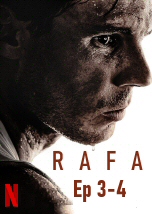
This intimate documentary explores Rafael Nadal’s extraordinary tennis career from the inside, revealing not only the champion who conquered the sport, but the man behind the intensity, discipline and sacrifice. Through unseen archives, family moments, behind-the-scenes access and personal reflections, it follows his rise from Mallorca to global legend, his battles with pain and injury, and his difficult journey back to competitive play in 2024 after a devastating 2023. More than a record of victories, it is a powerful portrait of resilience, legacy and the emotional cost of greatness. In the first two episodes, the story begins with an emotional Nadal preparing to announce his retirement to the world, while looking back at the Davis Cup final that launched his career two decades earlier. As he chases one final triumph, his body becomes both his greatest obstacle and the reminder of everything he has given to the game. The series then returns to the early years of his rivalry with Roger Federer, when one unforgettable match ignites one of the greatest duels in tennis history, setting the stage for a story of ambition, respect, suffering and glory.
In episodes 11 and 12, the Allies try to turn victory in North Africa into a direct road toward Nazi Germany, only to discover that Italy will be anything but the “soft underbelly” Winston Churchill imagined. From Sicily to Salerno, Anzio, Monte Cassino and the long road to Rome, the campaign becomes a grinding test of endurance, strategy and sacrifice. What was hoped to be a swift breakthrough into the heart of Hitler’s Reich turns into months of mud, mountains, shattered towns and devastating losses, revealing the brutal cost of forcing open a new front in Europe. The story then rises into the skies, where another deadly battle is being fought above the continent. Allied bomber crews fly from England into the heart of Nazi-occupied Europe, facing freezing altitude, flak, fear and the lethal power of the German Luftwaffe. As B-17s, fighter escorts and air commanders struggle to win control of the air, every mission becomes a gamble between destruction and survival. Together, these episodes show a war closing in on Germany from the ground and from the sky, where courage, technology and human endurance collide on a terrifying scale.
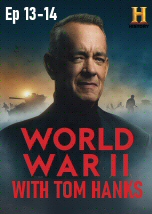
In episodes 13 and 14, the war reaches a decisive new stage as the Allies prepare to launch Operation Overlord and open the long-awaited second front in Nazi-occupied France. Behind the invasion of Normandy lies an enormous gamble of planning, deception, weather, timing and nerve, with Dwight D. Eisenhower carrying the weight of one of the most dangerous military decisions in history. From the beaches of D-Day to the struggle to break through Hitler’s Atlantic Wall, the episode captures the fear, scale and sacrifice of the operation that begins the liberation of Western Europe. The story then moves to World War II’s often overlooked Asian theater, where Allied forces and Japan fight across jungles, mountains, plains and impossible supply routes. In Burma, India and China, commanders such as Joseph Stilwell, William Slim and Lord Mountbatten face a brutal war of disease, exhaustion, monsoon terrain and relentless Japanese resistance. From the Burma Road and the deadly airlift over the Hump to the fighting at Myitkyina, Imphal and Saipan, these episodes reveal a vast and punishing conflict far from Europe’s headlines, where survival itself becomes a battle and victory demands endurance on a staggering scale.
Dean Potter emerges as one of the most daring and controversial figures in modern adventure, a climber, highline walker and BASE jumper driven by an almost mystical need to move toward fear. Through breathtaking footage, personal reflections and the voices of those who knew him, this documentary explores how he turned cliffs, voids and impossible lines into places of freedom, beauty and danger. But behind the legendary ascents and world records lies a more fragile and divided man, struggling with relationships, identity, obsession and the heavy cost of living as if every boundary were meant to be broken. In the first two episodes, Dean finds escape and joy in extreme climbing, pushing himself through bold ascents, speed records and free-solo feats that make him both admired and misunderstood. As his rebellious image grows, so do the pressures around his personal life and the risks he is willing to take. He searches for peace in highlining, BASE jumping and the terrifying purity of climbing without a rope, while his “Dark Wizard” persona attracts devoted followers and fierce criticism. Then a new force enters the climbing world: Alex Honnold, whose arrival threatens Dean’s place at the edge of the sport and turns admiration, rivalry and fear into a powerful new chapter.
Set in a brutal, mysterious and dangerous world of warriors, gods and ambition, this first season follows Ragnar Lothbrok, a Viking farmer and fighter who refuses to accept the limits imposed by tradition. While others look east for poor and familiar lands, Ragnar dreams of sailing west across the ocean, convinced that richer kingdoms lie beyond the horizon. His hunger for discovery, glory and freedom puts him on a collision course with the old powers of his society, turning one man’s vision into the beginning of a legend that could change the Viking world forever. In the first two episodes, Ragnar begins his son Bjorn’s passage into manhood while secretly preparing for a far greater initiation of his own: a forbidden voyage into the unknown. With the help of Floki’s new ship and a small crew willing to risk death, disgrace and the wrath of Earl Haraldson, he chooses to break the law rather than bury his dream. As family loyalty, political fear and ancient belief collide in Kattegat, the stage is set for the first journey west, where the promise of treasure is matched only by the danger of challenging everything his people think they know.























The story then shifts to the Eastern Front, where Hitler launches Operation Blue in a desperate drive toward the Soviet oil fields and the city of Stalingrad. What begins as a strategic offensive becomes a nightmare of street-by-street combat, starvation, freezing conditions and unimaginable sacrifice. As German forces are pulled deeper into the ruins and Soviet resistance hardens, Stalingrad becomes more than a battle for a city; it becomes a turning point in World War II, where ambition, endurance and catastrophe collide on a scale that changed the course of the war.