
Last Watched

"Witness"  Sort by

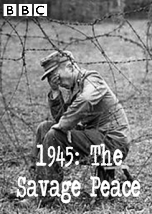
1945 The Savage Peace

   2015    History
When the Second World War ended, the people of liberated Europe celebrated their freedom from Nazi tyranny. Their years of suffering had ended, but for millions of Germans, the end of the conflict opened a new and terrible chapter. They suffered the appalling violence meted out to the defeated, especially to those ethnic Germans who had lived peacefully for centuries in neighbouring countries". Savage Peace uses rare and unseen archive film, the documentary tells a harrowing story of vengeance against German civilians, which mirrored some of the worst cruelty of the Nazi occupiers during the years of war. The Savage Peace includes the unique testimony of eyewitnesses and victims, who recall the horrors with searing clarity, their memories undimmed 70 years after the events took place. This a story that has, until now, been untold amidst the justified celebration of an end to an unspeakable tyranny. But as the writer George Orwell said, the treatment of the defeated Germans was a terrible crime that has gone unpunished.

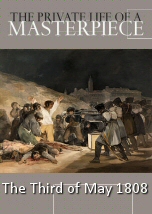
The Third of May 1808

   2004    Art
Arguably the most powerful painting about war ever achieved. It portrays the slaughter of civilians after Napoleonic troops entered Madrid in 1808. The programme reveals the historical truths behind the painting and shows exactly how Goya achieved this masterpiece of protest. he painting's content, presentation, and emotional force secure its status as a groundbreaking, archetypal image of the horrors of war. Although it draws on many sources from both high and popular art, The Third of May 1808 marks a clear break from convention. Diverging from the traditions of Christian art and traditional depictions of war, it has no distinct precedent, and is acknowledged as one of the first paintings of the modern era.
According to the art historian Kenneth Clark, The Third of May 1808 is 'the first great picture which can be called revolutionary in every sense of the word, in style, in subject, and in intention'. Discover how Goya used drawings by authentic witnesses to depict a real firing squad.
Series: The Private Life of a Masterpiece

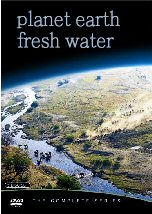
Freshwater

   2007    Nature
Fresh water is our most precious resource and it defines the distribution of life on land. Follow the descent of rivers from their mountain sources to the sea. Watch spectacular waterfalls, fly inside the Grand Canyon and explore the wildlife below the ice in the world's deepest lake. Witness unique and dramatic moments of animal behaviour: a showdown between smooth-coated otters and mugger crocodiles; deep-diving long tailed macaques; massive flocks of snow geese on the wing and a piranha frenzy in the perilous waters of the world's largest wetland.
Series: Planet Earth

Edge Of The Ice

   2003    Nature
Journey through the long-vanished corners of prehistoric North America, beginning when man first entered the vast, unspoiled continent some 14,000 years ago, in this appealing BBC documentary. Witness ancient beasts, mammoths, mastodons, giant bears, and sabre-toothed cats, and see the legacies each has passed to their modern successors. Computer animation and digital effects bring to life mammoths, saber-toothed cats, giant ground sloths, short-faced bears, glyptodonts, and a plethora of smaller animals in a lush Ice Age mosaic. Discoveries from sites across America are the basis for the reconstructions.
Series: Prehistoric America

Total Eclipse

   2010    Science
Once they were dreaded and thought to be dragons eating the sun--but modern science has dispelled mythology and we now look forward to total Solar Eclipses as one of the most spectacular phenomena in the heavens. Explore the complex movements of Earth, Moon and Sun that produce these unusual events and hear details why we may be the only intelligent beings in the known Universe to witness eclipses like we see on Earth. Man-made eclipses also figure into the science in the form of instruments called "coronagraphs." They blot out the sun and reveal its corona, uncovering secrets which, while enlightening, also warn of a disaster that could make our advanced technology crash and burn. Finally, travel into deep space, where the tiny eclipses caused by planets circling distant stars is now beginning to reveal hundreds more stars where "exoplanets" exist... perhaps even those in habitable zones like the Earth.
Series: The Universe

Supersocieties

   2005    Nature
Invertebrates don't always operate alone. True society was the last feature to evolve in invertebrates, as recently as the time of Tyrannosaurus. In the last programme see the tensions below the surface in some of the great social structures built by insects, and witness the carnage when an ant colony and a termite colony wage war.
Series: Life in the Undergrowth