Technology is defining the future of warfare, providing capabilities that were previously unreachable. Every technological leap redraws the battle lines we once knew. The future of warfare lies beyond battlefields to the uncharted reaches of outer space, and even to the digital realm. In the first episode, artificial intelligence and autonomy are no longer just the field of science fiction; they are a key part of the fourth industrial revolution, and successfully harnessing the power of this new technology will be integral to the success of future warfare.
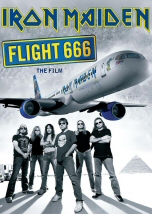
Come fly with Iron Maiden and enjoy the hospitality of Flight 666 as the boys' take on the biggest tour of their career, flying around the world in their own private Boeing 757. This insight into the background noise that is the logistical workings' of the '2008 Somewhere Back in Time' World Tour is captivating, both behind the scenes as well as on stage. Performing in front of sell out crowds, this 'Rocumentary' is an insight into the minds, bodies and souls of the family that is Iron Maiden. The film is a complete chronological account of the band's 2008 world tour through India, Australia, Japan, USA, Canada, Mexico and South America in a jet piloted by the band's front man, Bruce Dickinson. Features interviews with the musicians, their road crew and fans.
Athens, Alexandria, Tikal and Rome: these legendary cities are some of the world's most famous archaeological sites. And yet, they still have not revealed all their secrets. The ambition of this series is to resuscitate the first megalopolises of universal history. In the first episode, the extraordinary city of Athens, the richest and most powerful in all of ancient Greece. The film leads us in the footprints of a nation of extraordinary builders, thinkers, and inventors of incredible machines.
The film explores the revolutionary gene-editing tech now giving humankind the freedom to redraw the blueprint of biological life itself. We investigate not only the tremendous potential the technology holds, whether in the fight to eliminate diseases or in transforming agriculture to adapt to unprecedented climate extremes, but also probe the inherent risks involved and the potential for widespread abuse, dangers that could take our future down a very dark, dystopian path.
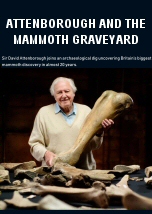
David Attenborough joins an archaeological dig uncovering Britain’s biggest mammoth discovery in almost 20 years. In 2017, in a gravel quarry near Swindon, two amateur fossil hunters found an extraordinary cache of Ice Age mammoth remains and a stone hand-axe made by a Neanderthal. Professor Ben Garrod joins the team at DigVentures during the excavation as they try to discover why the mammoths were here and how they died. Could the Neanderthals have killed these Ice Age giants?
Following engineers and scientists on a groundbreaking mission as they build, test and launch the James Webb Space Telescope, the most powerful observatory ever constructed, and discovers the astonishing cosmological enigmas it will investigate. Using the latest CGI animation technology, the film will follow the journey and share the incredible cosmological images and mysteries that scientists believe the telescope will capture. This super-telescope is the next generation successor to the Hubble Space Telescope, with a mirror 6 times bigger. It will also be able to peer back in time. For the first time in space exploration, scientists will be able to explore the formation of the first stars and galaxies and search for planets that can support life.
















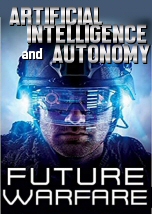






In the first episode, artificial intelligence and autonomy are no longer just the field of science fiction; they are a key part of the fourth industrial revolution, and successfully harnessing the power of this new technology will be integral to the success of future warfare.