Friendship, love, peace and freedom-these ideals drew young hearts from around the globe to Nova's EDM music festival in the South of Israel. But as the sun rose on October 7th, the fantasy shattered. Rockets sliced through the sky, and the dancing stopped. Confusion morphed into fear as gunfire erupted amidst the chaos. Terror breached the border fence and unleashed violence on the unsuspecting people in its rawest form. The film is a stark portrayal of the experiences of those who survived and those who didn't. The film meticulously reconstructs the events, capturing the raw emotions and heroism that emerged.
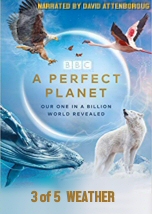
Weather controls the distribution of freshwater on Earth. David Attenborough narrates how this uneven distribution has given rise to an incredible diversity of species and habits, from the driest desert to the lushest tropical rainforest. Featuring a colony of ants banding together into a raft every time its home in the Amazon floods, a rain frog that manages to eke out an existence in one of the world's driest habitats on Earth, and the last wild camels that survive the Gobi Desert's bitter winters by eating snow that blows in from Siberia.
In July 2022, the James Webb Space Telescope (JWST) unveiled its first breathtaking images, offering an unprecedented level of detail of stars, galaxies, and planets. But for scientists, these images were just the start of an exciting journey to uncover the universe's secrets. This documentary follows Chris Lintott as he embarks on a road trip to meet the researchers who have been eagerly analyzing JWST's data, revealing groundbreaking discoveries about exoplanet atmospheres, the outer planets of our solar system, and the earliest galaxies in the cosmos. To mark the second anniversary of JWST's first images, Chris, along with presenters Maggie Aderin-Pocock and George Dransfield, revisits these scientists to explore the telescope's successes and challenges. From new jet streams on Jupiter to quirks on Uranus and Neptune, and insights into the ancient universe, the documentary showcases the remarkable findings made possible by JWST. Additionally, resident astronomer Pete Lawrence guides viewers on how to observe the night sky's wonders, aligning their stargazing with the telescope's targets. This captivating journey into space science promises to inspire and intrigue.
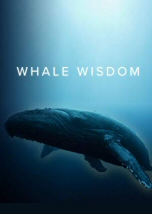
Whales have long been a profound mystery to us. They live in a world so removed from our own that we can barely imagine their lives. Their environment is different, their senses are different, their relationships are different. How might such almost alien creatures see the world?, Narrated by David Attenborough.
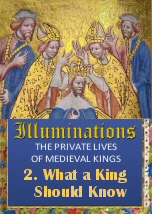
Dr Janina Ramirez shows how medieval manuscripts gave power to the king and united the kingdom in an age of plague, warfare and rebellion, discovers that Edward III used the manuscripts he read as a boy to prepare him for his great victory at the battle of Crecy and reveals how a vigorous new national identity bloomed during the 100 Years War with France. In the British Library's Royal Manuscripts collection Dr Ramirez finds out that magnificent manuscripts like the Bedford Hours, taken as war booty from the French royal family, were adapted for the education of English princes. She also explores how knowledge spread through a new form of book - the encyclopaedia.
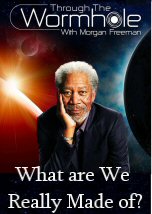
What is the universe made of? If you answered stars, planets, gas and dust, you'd be dead wrong. Thirty years ago, scientists first realized that some unknown dark substance was affecting the way galaxies moved. Today, they think there must be five times our understanding of the universe and the nature of reality itself has drastically changed over the last 100 years - and it's on the verge of another seismic shift. In a 17-mile-long tunnel buried 570 feet beneath the Franco-Swiss border, the world's largest and most powerful atom smasher, the Large Hadron Collider, is powering up. Its goal is nothing less than recreating the first instants of creation, when the universe was unimaginably hot and long-extinct forms of matter sizzled and cooled into stars, planets, and ultimately, us. These incredibly small and exotic particles hold the keys to the greatest mysteries of the universe. What we find could validate our long-held theories about how the world works and what we are made of -- or, all of our notions about the essence of what is real will fall apart.







The film is a stark portrayal of the experiences of those who survived and those who didn't. The film meticulously reconstructs the events, capturing the raw emotions and heroism that emerged.