




Last Watched

"Earth"  Sort by

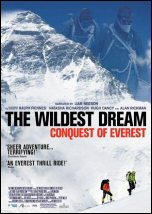
The Wildest Dream Conquest of Everest

   2010    History
The film explores George Mallory's obsession with becoming the first person to reach the highest place on Earth. Told through the explorer's poignant and evocative letters to his wife, Ruth, previously unseen photos and film archive from 1924 (restored from the original nitrate especially for the film), dramatization and a modern-day expedition retracing the original route taken in 1924, Mallory's incredible adventure lives again. The expedition was led by renowned mountaineer Conrad Anker, whose life became inextricably linked with Mallory after he found Mallory s body on Everest in 1999. Using replica 1920s-era clothing and equipment, Anker sets out to solve the great mystery of whether Mallory succeeded in summiting Everest before he died he was last seen just 800 feet from the summit before the clouds closed in and he disappeared into legend. The most heart-breaking clue: All of Mallory's belongings were found intact on his body, except the photograph of his beloved Ruth, which he promised to leave at the top of the world if he succeeded.
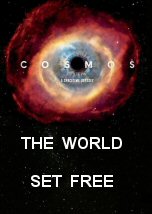

The World Set Free

   2014    Nature
This episode explores the nature of the greenhouse effect (discovered by Joseph Fourier and Svante Arrhenius), and the evidence demonstrating the existence of global warming from humanity's influence. Tyson begins by describing the long-term history of the planet Venus; based on readings from the Venera series of probes to the planet, the planet had once had an ocean and an atmosphere, but due to the release of carbon dioxide from volcanic eruptions, the runaway greenhouse effect on Venus caused the surface temperatures to increase and boiled away the oceans. Tyson then notes the delicate nature of the amount of carbon dioxide in the atmosphere can influence Earth's climate due to the greenhouse effect, and that levels of carbon dioxide have been increasing since the start of the 20th century. Evidence has shown this to be from mankind's consumption of oil, coal, and gas instead of from volcanic eruptions due to the isotopic signature of the carbon dioxide. The increase in carbon dioxide has led to an increase in temperatures, in turn leading to positive feedback loops of the melting polar ice caps and dethawing of the permafrost to increase carbon dioxide levels. Tyson then notes that humans have discovered means of harvesting solar power, such as Augustin Mouchot's solar-driven motor in the 19th century, and Frank Shuman's solar-based steam generator in the 1910's. Tyson points out that in both cases, the economics and ease of using cheap coal and oil caused these inventions to be overlooked at the time. Today, solar and wind-power systems would be able to collect enough solar energy from the sun easily. Tyson then compares the motivation for switching to these cleaner forms of energy to the efforts of the Space race and emphasizes that it is not too late for humanity to correct its course.
Series: Cosmos: A Spacetime Odyssey

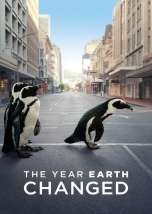
The Year Earth Changed

   2021    Nature
Narrated by David Attenborough, never-before-seen footage shows how our living in lockdown opened the door for nature to bounce back and thrive. Across the seas, skies, and lands, Earth found its rhythm when we came to a stop. The film is a fresh new approach to the global lockdown and the uplifting stories that have come out of it. People all over the world have had the chance to engage with nature like never before.

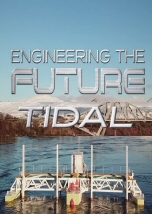
Tidal

   2021    Technology
As tides rise and fall twice a day, vast amounts of water swirl around the earth. This is a huge energy source that's currently largely untapped. An estimated 3000 gigawatts are available to be harvested globally, enough to power a third of the earth's homes. Yet compared to wind and solar, the technology needed to harness tidal power is still in its infancy. The power of the ocean’s tides is the last great untapped energy source on Earth. From sub-sea kites to floating platforms, teams of engineers are racing to perfect the technology to harness the vast flows of water.
Series: Engineering the Future Series 3

To Infinity and Beyond

   2010    Science
By our third year, most of us will have learned to count. Once we know how, it seems as if there would be nothing to stop us counting forever. But, while infinity might seem like an perfectly innocent idea, keep counting and you enter a paradoxical world where nothing is as it seems. Mathematicians have discovered there are infinitely many infinities, each one infinitely bigger than the last. And if the universe goes on forever, the consequences are even more bizarre. In an infinite universe, there are infinitely many copies of the Earth and infinitely many copies of you. Older than time, bigger than the universe and stranger than fiction. This is the story of infinity.

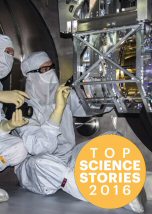
Top Science Stories of 2016

   2016    Science
From the detection of gravitational waves generated in space over a billion years ago, to discoveries in genetics here on Earth, we've collected the most compelling science breakthroughs and advances of 2016. Thanks to magnificent, hard-working scientists and researchers around the world, science keeps marching ever forward. And this year saw some discoveries that are absolutely brimming with the promise of greater discoveries, breakthroughs and quality of life in the future.
Series: Top Science Stories
Human

Human

2025  History
Prehistoric Planet

Prehistoric Planet

2022  Science
The Jinx

The Jinx

2015  History
Strangest Things

Strangest Things

2021  History
Atom

Atom

2007  Science
The Crime of the Century

The Crime of the Century

2021  Medicine
The Sky at Night

The Sky at Night

2015  Culture